
From ponds to Prairies Why Frogs Matter More Than You Think
Read this article for free:
or
Already have an account? Log in here »
We need your support!
Local journalism needs your support!
As we navigate through unprecedented times, our journalists are working harder than ever to bring you the latest local updates to keep you safe and informed.
Now, more than ever, we need your support.
Starting at $15.99 plus taxes every four weeks you can access your Brandon Sun online and full access to all content as it appears on our website.
Subscribe Nowor call circulation directly at (204) 727-0527.
Your pledge helps to ensure we provide the news that matters most to your community!
To continue reading, please subscribe:
Add Brandon Sun access to your Free Press subscription for only an additional
$1 for the first 4 weeks*
*Your next subscription payment will increase by $1.00 and you will be charged $20.00 plus GST for four weeks. After four weeks, your payment will increase to $24.00 plus GST every four weeks.
Read unlimited articles for free today:
or
Already have an account? Log in here »
Kermit the frog once crooned: It’s not easy being green. And he would probably add “or tan or grey or spotted or brown.” And with human pressure on the environment, it’s not easy for any frog out there.
World Frog Day on March 20 is a day that aims to draw attention to the conservation of frogs and their amphibian and reptilian buddies.
Because of their unique qualities, frogs are considered to be “bioindicators,” animals whose health and numbers act as a kind of “D.E.W. Line” – Distant Early Warning system for the state of the environment, says Brandon Univeristy herpetologist Pamela Rutherford, a scientist who studies reptiles and amphibians.
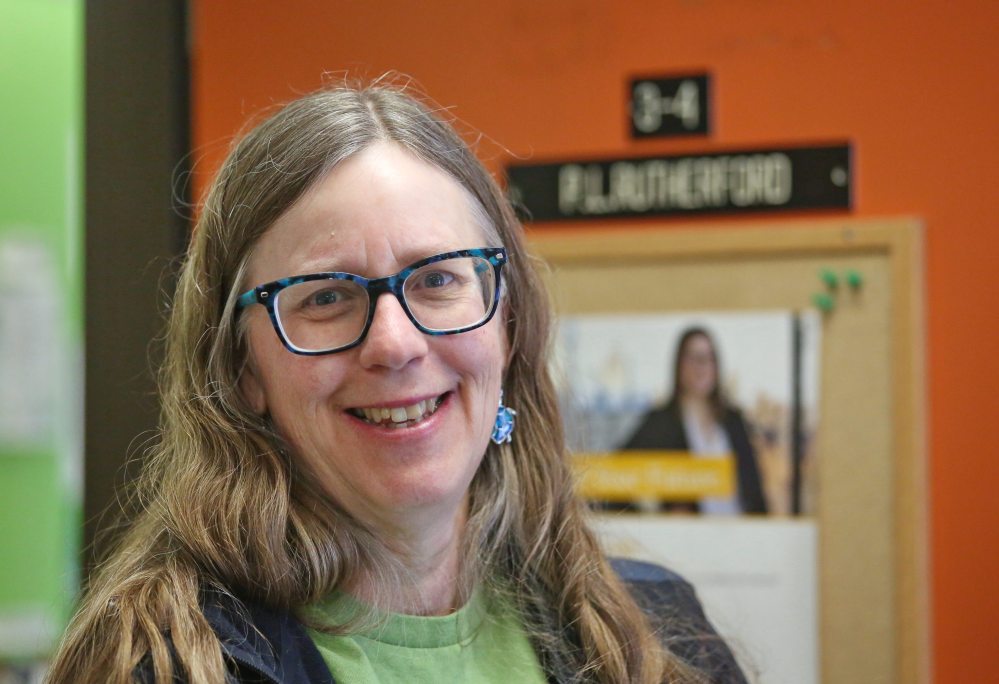
“We know with ecosystems, if you take things out, then often the whole ecosystem sort of ceases to function,” says Rutherford, who holds an associate professor position in the university’s biology department.
Frogs are excellent bioindicators because of their semi-permeable skin and their environmental requirements.
“For frogs, there is a strong linkage between both the terrestrial and aquatic ecosystems, because they’ll lay their eggs and then they’ll hatch as tadpoles and live in those aquatic environments,” she says. “And then they’re going to transform and strap their legs on and crawl up out of the water and move into terrestrial environments. So they tell us about both the terrestrial and aquatic ecosystems.”
Rutherford has also just been appointed for a second four-year term as co-chair of the Committee on the Status of Endangered Wildlife in Canada (COSEWIC), the organization under the Environment Canada Climate Change Committee responsible for determining whether species are endangered or threatened. As co-chair, she and her colleagues assess and manage reports for all of Canada’s amphibians and reptiles. She says Manitoba is particularly interesting as a central region.
“We have species that you find west of here and then species that you get east of here. There’s been lots of research to look at it, and the area where they overlap is called a hybrid zone,” she says.
She says her favourites include two species — identical in appearance — Cope’s grey tree frog and the eastern gray tree frog.
“They’re curious because they look identical, but one of them is diploid, which means it has two copies, like the standard chromosome format that humans have, and one of them is tetraploid, which means it’s got four copies of everything,” she says.
“They’re super cool because they’ve evolved a mechanism to prevent them from interbreeding because they look exactly the same and they’re breeding at the exact same time. They actually have different calls. The females will hear the correct call and breed with the correct male.”
Rutherford says the Species at Risk Act protects federal lands and there are some provincial protections as well. Private lands are more challenging but setting aside non-arable land could be a win-win. Other concerns include tracking the spread of diseases which can decimate populations, continued loss of wetlands and widespread use of pollutants such as pest- and herbicides.
A big challenge is improving public awareness. Rutherford says there are things that people can do to support frogs — starting with something as small as resisting the urge to pick them up.
“I know it’s fun — and I was a kid once too — but because of the thin skin it is really better if they’re not handled,” she says.
For residences with water nearby, leaving grassy areas close to shore unmowed gives frogs cover when moving in and out of the water. And minimizing the use of chemicals, herbicides, pesticides, or at least keeping them in more targeted areas is also helpful.
She adds one other piece about tracking the presence of frogs and other animals and plants you encounter in nature: it’s to sign up and create an account with a phone app called iNaturalist Canada (inaturalist.ca) “Canada’s gateway to a global species data sharing community.”
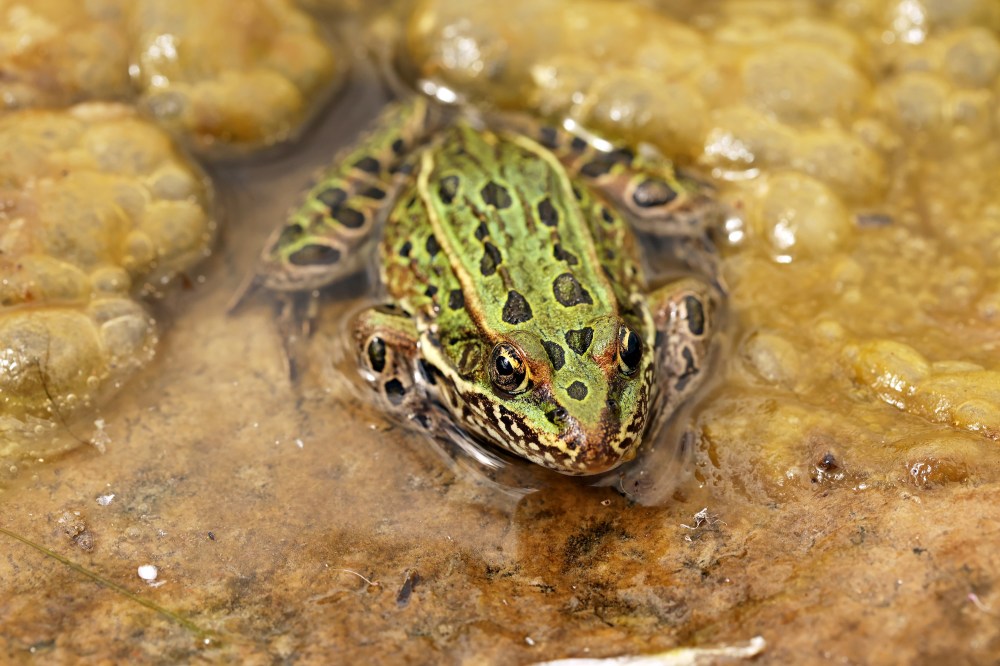
Under the umbrella of the Canadian Wildlife Federation, iNaturalist is a way to submit information about where you have observed something in nature simply by taking a photo and submitting it your account. Location data will be in the phone and AI can help to determine the species.
“When that information gets posted on iNaturalist, it’s incredibly helpful to people like myself with COSEWIC because we can’t be everywhere and we don’t have the time or money to do all these surveys and with lots of these species, we don’t really know where they are,” Rutherford says.
Photos don’t have to be of rare animals. Information about common species is also useful – like gray tree frogs, for example.
“These gray tree frogs – over my whole career, I’ve not seen a ton of them. They’re just really good hiders. It would be so amazing to get more records of them,” she says.
“And the app is a fantastic thing you could use with your kids. If you take a picture and upload that into iNaturalist it’ll say: This is where you are and these are the other records in the area, so this is likely what this thing is.”
With a little public awareness, and the iNaturalist.ca app, nature lovers could even make frog watching as popular as bird watching.
“That’s the hope. And frogs are usually way easier to take pictures of. I’m not very good at taking pictures of birds,” says Rutherford, laughing.
“Frogs are great. Tree frogs just sit there. You’ve got all the time in the world to get that photo.”
» wendyjbking@gmail.com