
Feds move to crack down on nuisance ballots
Advertisement
Read this article for free:
or
Already have an account? Log in here »
We need your support!
Local journalism needs your support!
As we navigate through unprecedented times, our journalists are working harder than ever to bring you the latest local updates to keep you safe and informed.
Now, more than ever, we need your support.
Starting at $15.99 plus taxes every four weeks you can access your Brandon Sun online and full access to all content as it appears on our website.
Subscribe Nowor call circulation directly at (204) 727-0527.
Your pledge helps to ensure we provide the news that matters most to your community!
To continue reading, please subscribe:
Add Brandon Sun access to your Free Press subscription for only an additional
$1 for the first 4 weeks*
- Enjoy unlimited reading on brandonsun.com
- Read the Brandon Sun E-Edition, our digital replica newspaper
*Your next Free Press subscription payment will increase by $1.00 and you will be charged $20.95 plus GST for four weeks. After four weeks, your payment will increase to $24.95 plus GST every four weeks.
Read unlimited articles for free today:
or
Already have an account? Log in here »
The federal government introduced new legislation on Thursday that would crack down on overly long election ballots, ban digital deepfakes and protect nomination and leadership contests.
Brandon-Souris Conservative MP Grant Jackson, who was part of the committee that made recommendations about the lengthy ballots, said he is pleased by the speed with which the Liberal government acted on them.
“I’m just very glad to see both the report get tabled and the government being willing to take some action on this. I think it’s an important issue,” Jackson, who was part of an inter-parliamentary committee, told the Sun on Friday.
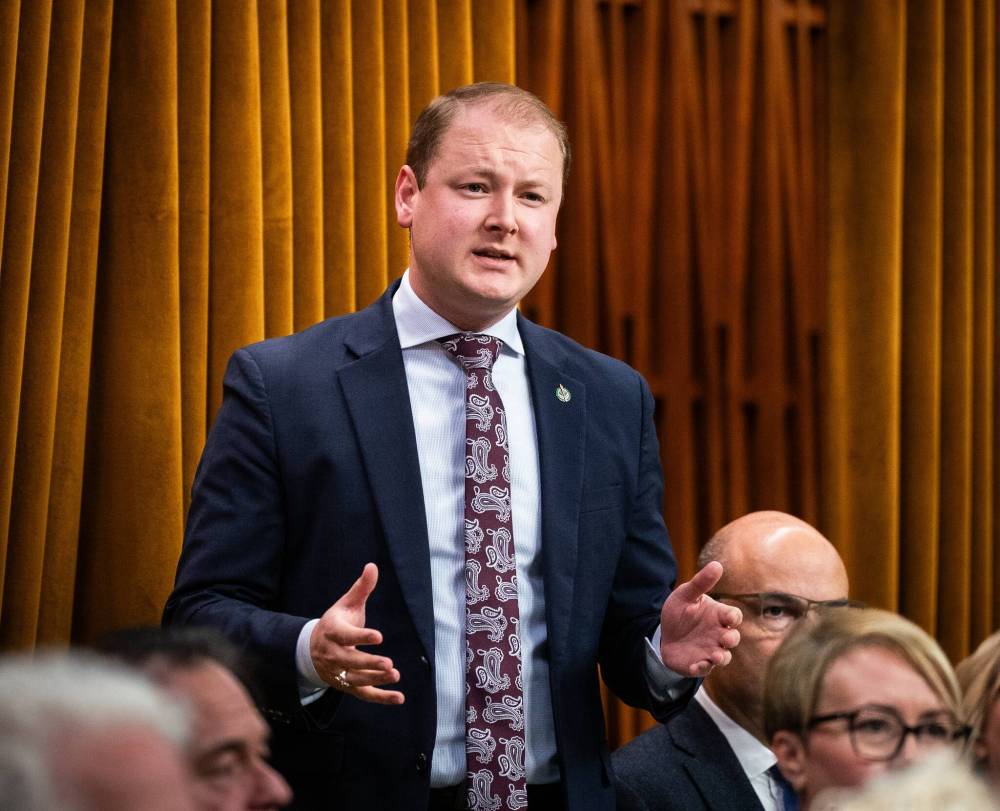
Brandon-Souris MP Grant Jackson speaks during question period in the House of Commons in Ottawa last fall. Jackson said he is pleased by the speed with which the Liberal government acted on recommendations from the standing committee on procedure and House affairs to address the problem of overly long election ballots. (The Brandon Sun files)
The standing committee on procedure and House affairs — made up of five Liberals, four Conservatives and one Bloc Québécois member — made eight recommendations about the ballots, which helped shape part of the legislation.
They included only having one official agent and prohibiting voters from signing more than one set of nomination papers.
Those main recommendations are part of the proposed legislation.
“I was really pleased with our eight recommendations in the report, and so hopefully we can get this legislation to a point where it encompasses all of those recommendations,” Jackson said.
Last year, Jackson started a petition to disallow an official agent from representing multiple candidates, and for candidates to present a $500 deposit, which would be refunded if they received more than 0.1 per cent of the vote.
The petition was started after the Longest Ballot Committee targeted Conservative Leader Pierre Poilievre’s riding in Ottawa, signing up dozens of candidates in protest of Canada’s electoral system.
The high number of candidates caused Elections Canada to print off ballots that were nearly a metre long, and strained staff tasked with counting votes.
The committee later in the year targeted Poilievre in a rural Alberta riding after the leader lost his Ottawa seat. Elections Canada changed its ballots to a write-in system, so it wouldn’t have to print 214 names on every ballot.
Jackson called the Longest Ballot Committee’s actions “a farce,” while Government House Leader Steven MacKinnon, who spoke to reporters about the legislation on Thursday, called it “harassing behaviour.”
Jackson’s petition garnered 1,252 signatures and was read in the House of Commons last fall.
In response to the petition, Prime Minister Mark Carney said the government “recognizes the challenges to election administration and voter accessibility caused by the actions of the Longest Ballot Committee.”
“The Government of Canada shares Canadians’ concerns and is carefully considering this matter, including findings from the study into the actions of the Longest Ballot Committee by the Standing Committee on Procedure and House Affairs,” Carney said in a statement posted to the government’s website in November, which was signed by Winnipeg North MP Kevin Lamoureux, Carney’s parliamentary secretary.
Aside from the long ballots, the bill would make it illegal to knowingly spread false or misleading information about election activities or the voting process with the intent to disrupt an election or affect the outcome.
The Liberals insist that measure would apply only to individuals who choose to spread information they know is untrue. Good-faith views, opinions believed to be true, and parody or satire will not be affected, says a background document on the legislation.
The Liberals say the bill would protect nomination and leadership contests from threats, including undue foreign influence, bribery and intimidation.
The legislation also includes measures on political financing. Political parties and third parties would be prohibited from accepting donations in forms that are difficult to trace, such as cryptocurrency, money orders and prepaid cards.
Jackson said he hasn’t had much time to look at the legislation aside from the longest-ballot portion, adding he would have liked to see the topics brought forward in different bills.
“For ease of process, we would have preferred the government just do a bill specifically on the longest ballot issue, and then … deal with deep fakes and some other things (in) separate legislation,” Jackson said.
He said other parts of the legislation, including deepfakes, weren’t studied by the House affairs committee, and it would have to interview more witnesses to give recommendations.
“But that’s the government’s decision as to what to include in bills and what not to — it’s a government bill. So, the Liberals have made this decision, and so we’ll work with it as we move forward,” Jackson said.
He said the Conservatives will debate the legislation after the House of Commons returns from spring break.
The Longest Ballot Committee currently has dozens of candidates signed up in the Quebec riding of Terrebonne, one of three federal ridings set to have a byelection next month.
If passed, the proposed legislation won’t have any impact on that byelection, as the legislation cannot be implemented by the time voters in Terrebonne head to the polls on April 13.
» alambert@brandonsun.com, with files from The Canadian Press