
Board hears pitch for school composting
Advertisement
Read this article for free:
or
Already have an account? Log in here »
We need your support!
Local journalism needs your support!
As we navigate through unprecedented times, our journalists are working harder than ever to bring you the latest local updates to keep you safe and informed.
Now, more than ever, we need your support.
Starting at $15.99 plus taxes every four weeks you can access your Brandon Sun online and full access to all content as it appears on our website.
Subscribe Nowor call circulation directly at (204) 727-0527.
Your pledge helps to ensure we provide the news that matters most to your community!
To continue reading, please subscribe:
Add Brandon Sun access to your Free Press subscription for only an additional
$1 for the first 4 weeks*
- Enjoy unlimited reading on brandonsun.com
- Read the Brandon Sun E-Edition, our digital replica newspaper
*Your next Free Press subscription payment will increase by $1.00 and you will be charged $20.95 plus GST for four weeks. After four weeks, your payment will increase to $24.95 plus GST every four weeks.
Read unlimited articles for free today:
or
Already have an account? Log in here »
A company called Smiley Worms made a pitch to the Brandon School Division board of trustees this week for school-based composting programs.
The local business, which specializes in vermicomposting, told trustees Monday that the program would make the division a national leader in environmental sustainability.
“This is not just about waste, it is about what we choose to value as a community. Every day, our schools throw away organic materials that can become something meaningful,” company representative Elena Dupuis told the board.
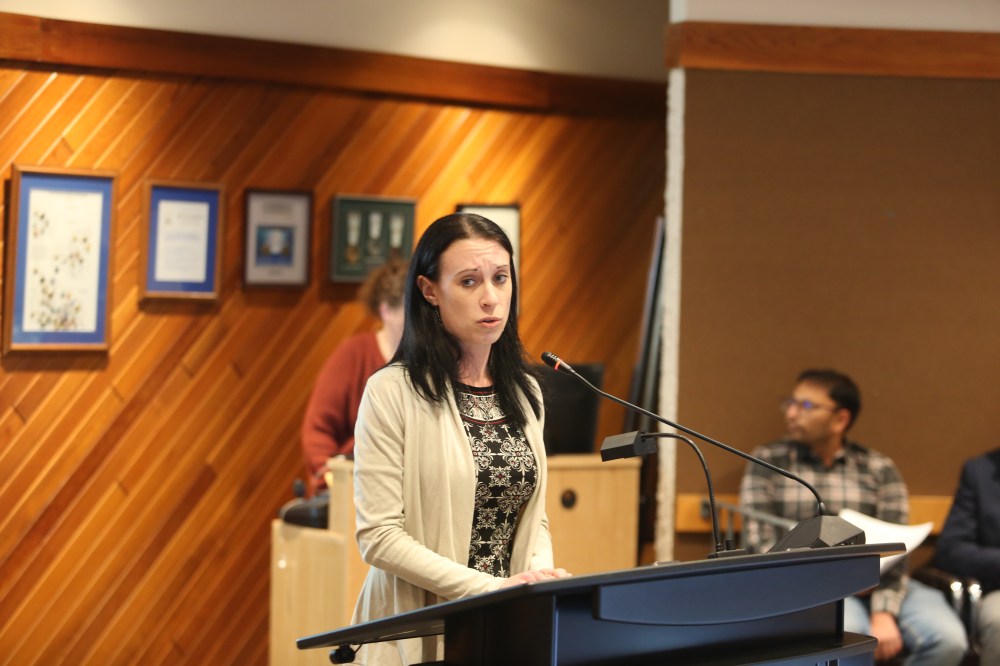
Smiley Worms proposes division-wide organic waste collection services to support landfill diversion, sustainability education and improved waste management practices across schools.
Dupuis said the program operates on a circular model, turning food waste into nutrient-rich compost that can be returned to the soil and gardens.
“The program provides reliable weekly organic waste pickup while supporting the division’s environmental leadership goals and creating meaningful learning opportunities for students,” she said.
She said the hands-on learning aspect for students is important.
“Students see the full cycle from waste to growth. They learn responsibility, sustainability and leadership through real action,” she said.
If approved, 20 schools would be serviced by the company with one bin each and four high schools with two bins each. Two schools in Shilo and Alexander could also be captured in the program, she said.
The composting program would cost an estimated $156.82 per month for standard schools, while high schools requiring two bins would each pay about $313.64 per month, the budget document provided by Smiley Worms to trustees stated.
The document also notes a rural service adjustment for schools in Shilo and Alexander, where costs would range between $175 and $185 per month per bin.
The estimated annual cost of the program is $43,909.60, based on 20 schools operating one bin each for 10 months ($31,364) and four high schools operating two bins each over the same period ($12,545.60).
The company is currently running a pilot program with Eco Club at Crocus Plains Regional Secondary School, a student-led composting group, and Meadows School’s Earth Savers Club.
Kat Hunkin, who runs the Eco Club, said the initiative has the potential to transform both environmental outcomes and student learning.
“If accepted and supported by yourselves, it could make us here in Brandon leaders, not only within Manitoba, but across Canada, in terms of student-driven, sustainable action … and a circular economy,” Hunkin said.
She said the program focuses on tackling food waste, a global issue with local consequences.
“Globally, 40 per cent of food that is grown for the consumption of people is thrown away before it reaches our plate,” Hunkin said. “In Canada, the number is approaching 60 per cent.”
Students from Meadows School’s Earth Savers Club shared how composting programs are already making a difference at the school level.
“We are passionate about sustainability and making our school more environmentally friendly,” a member of the group said. “We focused on four main areas: composting, recycling, playground cleanup and awareness. This helps reduce waste and build better habits.”
Hunkin said early education is key.
“If students are being taught how to compost in elementary school, it’ll make a huge difference when they come to Crocus,” Hunkin said.
“In just over a year, what we have seen … is not only a rise in the leadership potential of our students and staff — we’ve seen an immediate environmental impact in the amount of waste that’s going out with these bins every week.”
However, she said broader adoption is limited without division-wide backing.
“At Crocus Plains, it feels like we’re a band of renegades … and a lot of this has to do with the way that we have funded and put together this program,” Hunkin said. “What we’re asking from you tonight is for your support and for your belief that this program is worthwhile.”
The board did not make an immediate decision but expected to deliberate in the next meeting and get back to the group.
» aodutola@brandonsun.com
» X: @AbiolaOdutola