
Ottawa leaving First Nations ill-equipped to fight deadly fires: retired fire chief
Advertisement
Read this article for free:
or
Already have an account? Log in here »
We need your support!
Local journalism needs your support!
As we navigate through unprecedented times, our journalists are working harder than ever to bring you the latest local updates to keep you safe and informed.
Now, more than ever, we need your support.
Starting at $15.99 plus taxes every four weeks you can access your Brandon Sun online and full access to all content as it appears on our website.
Subscribe Nowor call circulation directly at (204) 727-0527.
Your pledge helps to ensure we provide the news that matters most to your community!
To continue reading, please subscribe:
Add Brandon Sun access to your Free Press subscription for only an additional
$1 for the first 4 weeks*
*Your next subscription payment will increase by $1.00 and you will be charged $20.00 plus GST for four weeks. After four weeks, your payment will increase to $24.00 plus GST every four weeks.
Read unlimited articles for free today:
or
Already have an account? Log in here »
OTTAWA – After three house fires ripped through a First Nation in northern Ontario in less than a week, killing a small child, a retired fire chief said First Nations’ firefighting operations in the region are being set up to fail by a lack of federal funding for equipment and training.
Monique Belair worked for 39 years for Kingston Fire and Rescue and now works with a group of five northern Ontario First Nations, the Independent First Nations Alliance, to help with fire services and emergency preparedness.
She told The Canadian Press the severe lack of funding and proper equipment in the region is making attending fire calls unreasonably dangerous.
She said her old colleagues in Kingston never had to cope with the conditions that face First Nations firefighters in the region.
“My firefighters (weren’t) driving in a 40-year-old truck,” Belair said. She added First Nations fire services in northern Ontario use donated equipment which other fire departments in the province are no longer permitted to use because it is considered expired.
“The commitment of these people to keep coming out to call after call in the cold without the proper equipment is inspiring to me,” she said.
Belair said when a house fire broke out last week in a northern Ontario First Nation, community members were unable to enter to attempt a rescue operation because they did not have the proper breathing equipment.
That fire took the life of a three-year-old boy, the grandson of Kitchenuhmaykoosib Inninuwug Chief Donny Morris, and left two others with serious injuries.
Jacob Ostaman, the director of lands and environment for Kitchenuhmaykoosib Inninuwug and a former chief of that community, told The Canadian Press Tuesday his community is still reeling from the loss.
Ostaman said the community relies on volunteer firefighters who are not trained in the same way as those working outside First Nations communities, and they’re operating without a fire chief or a properly equipped fire hall.
“It’s tragic because the funding is not there,” he said. “And it’s tragic the way (Indigenous Services) is treating us. And it’s more tragic when a child dies in a house fire.”
The Independent First Nations Alliance, which includes Kitchenuhmaykoosib Inninuwug, filed a Canadian Human Rights Commission complaint in August 2025 alleging Indigenous Services Canada has systemically discriminated against their communities by underfunding on-reserve fire services.
The alliance says that case has been languishing since it was submitted, and it has not received updates from the commission since it asked for one nine weeks after submitting the complaint.
The Canadian Human Rights Commission told The Canadian Press last week it was “deeply saddened” to hear of the three-year-old child dying, but it could not comment about cases before it.
The commission said there is “a trend of turning to the complaints system under the Canadian Human Rights Act to address underfunding of services on reserve, often when requests for adequate funding have been ignored.”
The alliance has called on the federal auditor general to investigate the commission. Alliance lawyer, Julian Falconer, sent a letter to Auditor General Karen Hogan last week asking for such a probe.
In an emailed statement Tuesday, Hogan’s office said it had received the First Nations’ request for an investigation of the commission but it “does not conduct investigations of the nature requested.”
“The (office) does consider requests for audits received from parliamentarians and the public. Audit selection is determined through a strategic, risk-based process that also takes into account our mandate, significance to parliamentarians and Canadians, planned audit work, and available resources,” wrote Natasha Leduc.
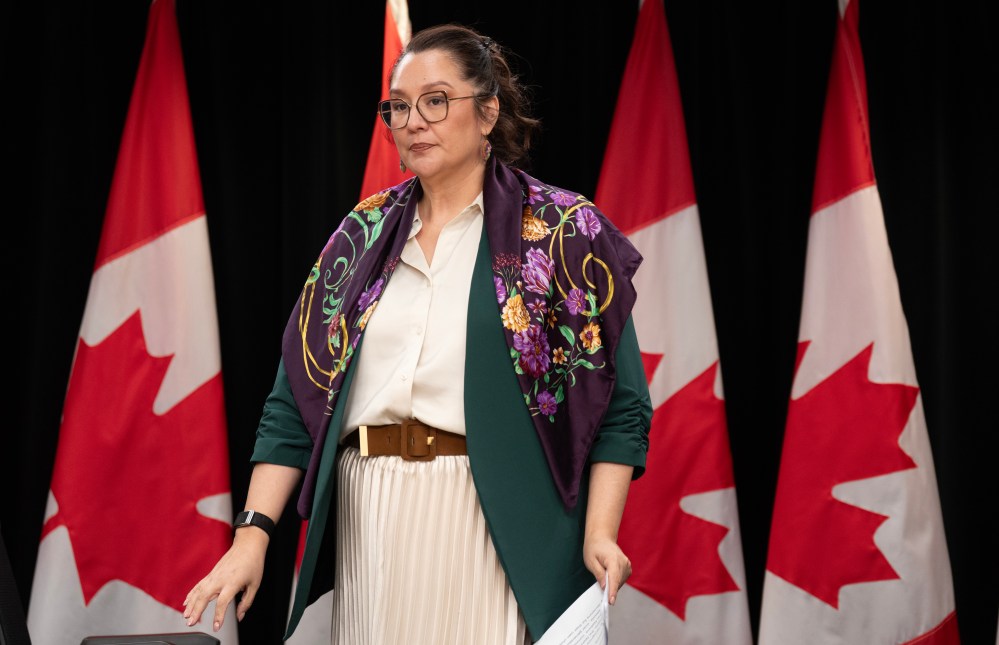
Asked Monday about the fires and what the First Nations say is a severe lack of funding for their communities, Indigenous Services Minister Mandy Gull-Masty said the situation is “tragic” and she’s looking forward to engaging with the community.
“I’m not going to be speaking publicly on this file until I’ve had an opportunity to really show my respect to the community and the loss they have encountered,” she said.
The First Nations’ submission to the Canadian Human Rights Commission cites staggering statistics: on-reserve First Nations people are 10 times more likely than non-First Nations people to die in a fire, while First Nations children under 10 years old are 86 times more likely to die in a fire than non-First Nations children, according to Statistics Canada.
Kitchenuhmaykoosib Inninuwug is located 600 kilometres northwest of Thunder Bay, Ont. The community of 1,500 received $132,000 for fire protection and training from Indigenous Services Canada in 2024-25, while a non-First Nations community about 250 kilometres northwest of Thunder Bay budgeted $360,000 for similar services.
Belair said volunteer firefighters in smaller towns are often paid for their work and receive proper gear, while First Nations in the communities she serves are unpaid and often enter dangerous sites to help their relatives.
The community is trying to be proactive by making sure homes have working smoke alarms, she said.
But “without proper funding, there is no moving forward,” she said, adding the communities can only operate on donations for so long.
“How can I package (old fire gear) up and send it to an Indigenous fire service saying, ‘Well, it’s not safe for my firefighters to wear, so I’ll send it to an Indigenous community and let them wear it because something is better than nothing?'” she said.
“That’s not the attitude we should be adopting. Everybody needs the same level of protection.”
This report by The Canadian Press was first published March 31, 2026.