
Alberta to mandate teachers be balanced on all issues, pushing neutrality in schools
Advertisement
Read this article for free:
or
Already have an account? Log in here »
We need your support!
Local journalism needs your support!
As we navigate through unprecedented times, our journalists are working harder than ever to bring you the latest local updates to keep you safe and informed.
Now, more than ever, we need your support.
Starting at $15.99 plus taxes every four weeks you can access your Brandon Sun online and full access to all content as it appears on our website.
Subscribe Nowor call circulation directly at (204) 727-0527.
Your pledge helps to ensure we provide the news that matters most to your community!
To continue reading, please subscribe:
Add Brandon Sun access to your Free Press subscription for only an additional
$1 for the first 4 weeks*
- Enjoy unlimited reading on brandonsun.com
- Read the Brandon Sun E-Edition, our digital replica newspaper
*Your next Free Press subscription payment will increase by $1.00 and you will be charged $20.95 plus GST for four weeks. After four weeks, your payment will increase to $24.95 plus GST every four weeks.
Read unlimited articles for free today:
or
Already have an account? Log in here »
EDMONTON – An Alberta bill tabled Tuesday aims to make sweeping changes to teacher conduct and education priority rules, including a new mandate for teachers to discuss all issues in a balanced and neutral way.
“Students need to learn how to think, not what to think,” Education Minister Demetrios Nicolaides told reporters after the bill was introduced.
He said the changes are broadly aimed at ridding classrooms of politics and ideology.
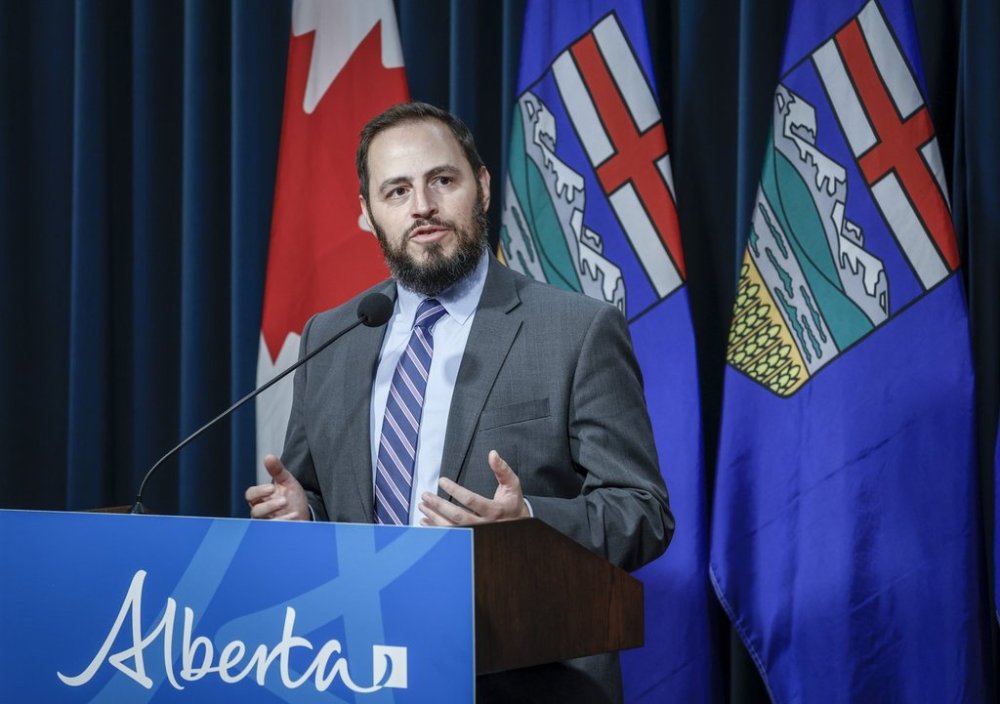
“I’m confident that these changes will help protect teachers, ensure classrooms remain neutral and keep our schools focused on what matters most.”
As part of the proposed changes — to be made through the bill or separate regulations developed later this year for the next school year — the government is also looking to create new rules for flags in schools, set priorities for school boards and require the national anthem be played at least once per week.
It would create code of conduct principles for school trustees aimed at protecting freedom of speech and “decorum.”
At the same time, there would be a rule for school boards to “refrain” from issuing statements on political, social or ideological issues that fall outside of education matters.
While the province wants teachers to leave their beliefs at the door, it’s looking to encourage students to share their views in the classroom.
Briefing materials shared by the province say changes to the provincial Education Act would ensure “students can express diverse views” and require teachers to support them in doing so.
Nicolaides was asked if he thinks there should be a line in presenting some issues neutrally, such as slavery. He repeated that educators should stay free of bias at all times.
“One of the key responsibilities of a school division is to ensure that they are presenting items or discussing issues in a balanced way and in an impartial way, free from any kind of personal opinion,” he said.
“(Students) need to know how to engage in diverse views and develop and foster their critical thinking skills.”
Nicolaides said some recent incidents point to a need for the new rule, including in January when a social studies teacher north of Edmonton was recorded denigrating conservative viewpoints.
Premier Danielle Smith shared the recording on social media and said at the time that she was “deeply disappointed” by what she heard.
The minister told the Edmonton Journal that he also expects teachers not to speak about political and social issues not covered in the curriculum, including Alberta’s separatist movement.
The proposed legislation wouldn’t create new penalties for teachers, and any infractions or complaints would be handled through the existing disciplinary process.
Government officials said it would be up to school boards to define some of the key terms, including neutrality and ideology.
Opposition NDP education critic Amanda Chapman said she thinks the United Conservative Party government is legislating an issue that doesn’t exist.
“I don’t believe that this is some sort of persistent problem in our education system,” she said. “It just comes down to a government, again, that really has all the wrong priorities.”
Alberta Teachers’ Association president Jason Schilling called the proposed changes a “grab bag” that would affect teachers positively but also negatively.
The bill is called An Act to Remove Politics and Ideology From Classrooms and Amend the Education Act.
“We need to look beyond the clickbait title of this bill to understand its full scope — it has very little to do with politics and ideology, at least in the classroom,” Schilling said in a statement.
He said he expects the union, which represents more than 51,000 teachers across the province, to be consulted as the government develops regulations to implement the changes.
The government is also aiming to change the definition of what kind of learning environment is expected in schools.
The province said stakeholders raised concerns with the current definition, stated in the briefing document as “welcoming, caring, respectful and safe learning environments that respect diversity and nurture a sense of belonging and a positive sense of self.”
The bill proposes a new definition: schools must be “a safe and caring environment that fosters and maintains respectful and responsible behaviours.”
Chapman said the change rubs her the wrong way and she questions if the government just doesn’t want schools to be welcoming spaces anymore.
The bill would also require public school boards to get approval from Nicolaides to name or rename schools.
Nicolaides said he doesn’t have any issues with existing school names but that the government wants an opportunity to have a say, as it’s planning to build a substantial number of new schools in the coming years.
The bill would also give an exemption to a 2024 provincial law that requires ministerial approval for teaching materials brought in by a third party, if they deal primarily with gender and sexual identity and sexual orientation. Materials used for religious instructions wouldn’t need approval, the government said.
This report by The Canadian Press was first published March 31, 2026.
Note to readers:This is a corrected story. A previous version used incorrect information supplied by the government that said both public and Catholic school boards would need approval to name or rename schools.