
A timeline of British Columbia’s 10-year overdose health emergency
Advertisement
Read this article for free:
or
Already have an account? Log in here »
We need your support!
Local journalism needs your support!
As we navigate through unprecedented times, our journalists are working harder than ever to bring you the latest local updates to keep you safe and informed.
Now, more than ever, we need your support.
Starting at $15.99 plus taxes every four weeks you can access your Brandon Sun online and full access to all content as it appears on our website.
Subscribe Nowor call circulation directly at (204) 727-0527.
Your pledge helps to ensure we provide the news that matters most to your community!
To continue reading, please subscribe:
Add Brandon Sun access to your Free Press subscription for only an additional
$1 for the first 4 weeks*
- Enjoy unlimited reading on brandonsun.com
- Read the Brandon Sun E-Edition, our digital replica newspaper
*Your next Free Press subscription payment will increase by $1.00 and you will be charged $20.95 plus GST for four weeks. After four weeks, your payment will increase to $24.95 plus GST every four weeks.
Read unlimited articles for free today:
or
Already have an account? Log in here »
VANCOUVER – The 10 years of British Columbia’s public health emergency due to drug overdoses has been marked by a catastrophic death toll, which now stands at more than 18,000.
Here are some key dates in the crisis.
April 14, 2016
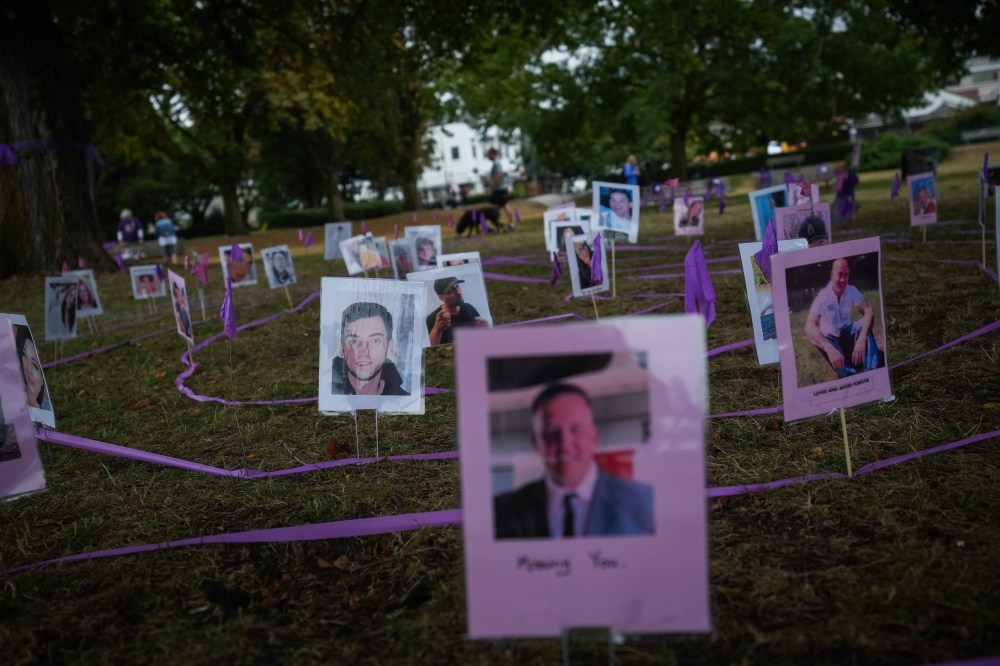
British Columbia declares a public health emergency over a spike in fatal overdoses. The province had reported 474 apparent illicit drug deaths in 2015, representing a 30 per cent increase from the year before. The 76 deaths in January 2016 were the most in a single month since at least 2007.
July 27, 2016
A task force on overdose response is launched with representatives from public health, police and the BC Centre of Disease Control to “provide expert leadership and advice to the province” on how to respond to the crisis.
The province also says it will “work with the federal government on the establishment of additional supervised consumption sites in B.C., restricting access to pill presses and tableting machines, limiting access to the materials used to manufacture fentanyl and escalating charges for the importation and trafficking of fentanyl.”
September 2017
The provincial government announces $322 million in new funding over three years to address the overdose crisis. The money includes funding for regional response teams and community action teams.
2019
After years of steady climbing, the number of overdose deaths drops 37 per cent in 2019. The coroner reports 992 deaths, compared with 1,566 in 2018.
2020
Deaths from drug overdoses soar in the first year of the COVID-19 pandemic, up 79 per cent to 1,775 people.
March 26, 2020
British Columbia becomes the first jurisdiction in North America to launch a safer supply policy. The new policy allows for the prescription of pharmaceutical-grade opioids and stimulants to protect those at risk from the poisoned illegal supply.
Sept. 16, 2020
Provincial health officer Dr. Bonnie Henry issues an order under the Health Professions Act, authorizing registered nurses and registered psychiatric nurses to prescribe pharmaceutical alternatives to street drugs.
May 31, 2022
Groundwork is laid for B.C.’s drug decriminalization experiment, with Health Canada granting the provincial government’s request for an exemption of the federal Controlled Drugs and Substances Act that would allow adults to possess a small amount of illicit drugs for personal use without risk of arrest. The exemption is hoped to reduce stigma against those with substance use disorder, while increasing their access to health and social services.
2023
Deaths from overdoses hit a record 2,590 in B.C. in 2025, as the province embarks on drug decriminalization.
Jan. 31, 2023
The three-year exemption is implemented, decriminalizing adult personal possession of up to 2.5 grams cumulatively of opioids, crack and powdered cocaine, methamphetamine and MDMA. Possession continues to be prohibited around schools, child-care facilities and airports, and during the operation of motor vehicles.
Nov. 1, 2023
A coroner death review panel recommends providing controlled drugs without prescriptions to people in British Columbia. The pitch is immediately shot down by the provincial government.
May 7, 2024
Health Canada grants an amendment that curtails B.C.’s exemption. Decriminalization is restricted to possession in private homes and places where homeless people are legally sheltering, as well as overdose prevention, drug checking and supervised consumption sites, and health-care clinics providing outpatient addiction services.
June 5, 2024
Dr. Daniel Vigo is named the province’s chief scientific adviser for psychiatry, toxic drugs and concurrent disorders. His job is to analyze “existing mental-health and addictions treatment services in B.C., review data and best practices, and look to other jurisdictions for proven solutions that can be implemented in B.C.”
Sept. 15, 2024
The government announces plans to improve care for people with severe, overlapping mental-health and substance-use challenges, including through involuntary care.
Feb. 7, 2025
A Ministry of Health document distributed by the Opposition B.C. Conservatives says a “significant portion” of opioids prescribed in British Columbia are being diverted, and prescribed alternatives are being trafficked provincially, nationally and internationally. The document says the government has been conducting an investigation into an alleged scheme involving “incentives” paid by dozens of pharmacies to patients, doctors and housing providers.
Feb. 19, 2025
The province revises its Prescribed Alternatives Program to require that the consumption of all prescribed alternatives be witnessed by health professionals.
Jan. 14, 2026
The termination of the decriminalization experiment is confirmed when Health Minister Josie Osborne announces the province will not seek an extension of its exemption agreement with Health Canada. Osborne says the goal of the pilot project was to make it easier for people to come forward and seek help, but it “hasn’t delivered the results” officials hoped for.
This report by The Canadian Press was first published April 8, 2026.