
Manitoba government says enforcement continues, but reporting stops on COVID tickets
Advertisement
Read this article for free:
or
Already have an account? Log in here »
We need your support!
Local journalism needs your support!
As we navigate through unprecedented times, our journalists are working harder than ever to bring you the latest local updates to keep you safe and informed.
Now, more than ever, we need your support.
Starting at $15.99 plus taxes every four weeks you can access your Brandon Sun online and full access to all content as it appears on our website.
Subscribe Nowor call circulation directly at (204) 727-0527.
Your pledge helps to ensure we provide the news that matters most to your community!
To continue reading, please subscribe:
Add Brandon Sun access to your Free Press subscription for only an additional
$1 for the first 4 weeks*
- Enjoy unlimited reading on brandonsun.com
- Read the Brandon Sun E-Edition, our digital replica newspaper
*Your next Free Press subscription payment will increase by $1.00 and you will be charged $20.95 plus GST for four weeks. After four weeks, your payment will increase to $24.95 plus GST every four weeks.
Read unlimited articles for free today:
or
Already have an account? Log in here »
WINNIPEG – The Manitoba government has stopped publicly releasing data on how much money it has collected from fines issued to people accused of violating public health restrictions during the COVID-19 pandemic.
The province’s online dashboard has not been updated since June of last year. It shows about $1.6 million — roughly 17 per cent — had been collected of fine amounts totalling $9.5 million.
“We don’t have a public-facing dashboard that’s available, but within the department of course, just like any other fine, we track those and we are of course looking to collect all of those fines that are still outstanding,” Justice Minister Matt Wiebe said in an interview.
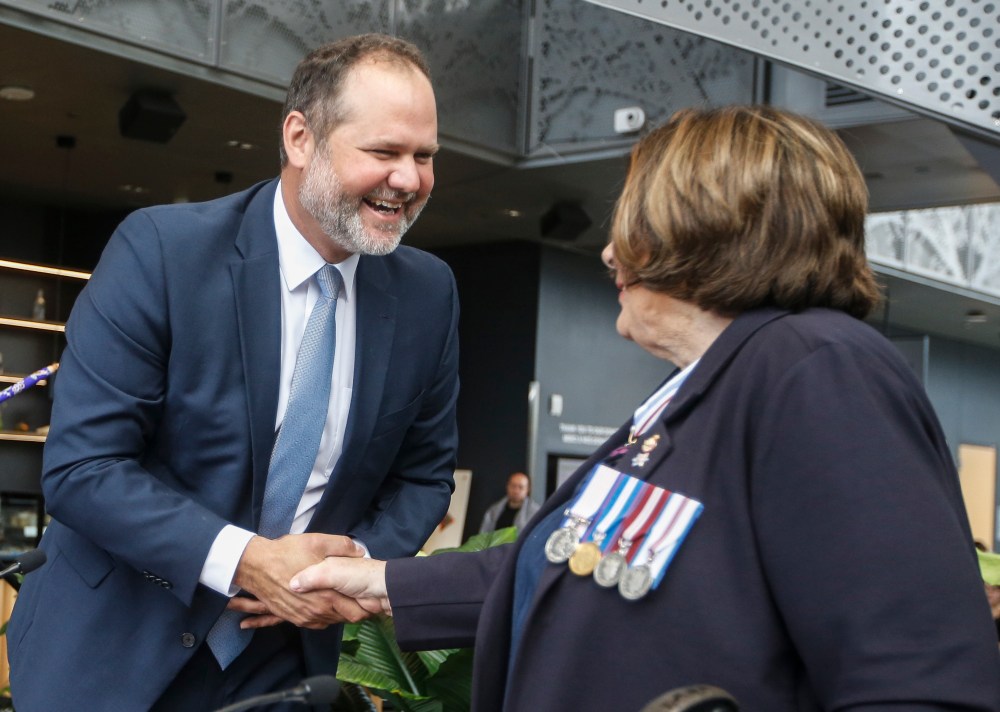
The dashboard was set up by the previous Progressive Conservative government. Wiebe said he and his NDP colleagues are putting efforts elsewhere.
“It doesn’t serve a good purpose now. We’ve redistributed the resources to track and to collect these fines. We want to make sure that Manitobans know that folks need to be held to account if they break the rules, if they break the law.”
Wiebe and his staff were not able to provide an updated collection number.
At various times during the pandemic, public health orders required different measures to be taken by people and businesses.
The fine for not wearing a mask in a public setting was $298 for a first offence. Some other offences for individuals ran over $1,200. Individuals who violated federal quarantine rules faced fines of $8,550. Businesses that broke public health restrictions faced penalties of $5,000.
Like any other fine, money may be unpaid for a variety of reasons. Someone could contest a ticket and win in court, or the Crown could stay charges. Someone who lost a court battle could be given years to pay up, and that fine would be deemed unpaid until the money was received.
In one high-profile case, five Manitobans who repeatedly violated public health restrictions unsuccessfully fought their tickets in court and were given fines in 2022 ranging from $14,000 to just under $35,000. They were given seven years to make payment.
Some cases are still before the courts and others saw people fail to pay fines and the matter was referred to collections, Wiebe said.
“There’s a detailed process that we have internally to make sure we can collect those fines … just like any other fine or judgment,” Wiebe said.
As of the last update, fewer than 100 of the 3,723 tickets issued during the pandemic were still considered “active” — either before the courts or still within an authorized period of time for payment.
Just over 1,500 tickets had not been paid on time and had been referred to collections officials.
This report by The Canadian Press was first published April 8, 2026