
Feedback sought on beef cattle code of conduct
Advertisement
Read this article for free:
or
Already have an account? Log in here »
We need your support!
Local journalism needs your support!
As we navigate through unprecedented times, our journalists are working harder than ever to bring you the latest local updates to keep you safe and informed.
Now, more than ever, we need your support.
Starting at $15.99 plus taxes every four weeks you can access your Brandon Sun online and full access to all content as it appears on our website.
Subscribe Nowor call circulation directly at (204) 727-0527.
Your pledge helps to ensure we provide the news that matters most to your community!
To continue reading, please subscribe:
Add Brandon Sun access to your Free Press subscription for only an additional
$1 for the first 4 weeks*
- Enjoy unlimited reading on brandonsun.com
- Read the Brandon Sun E-Edition, our digital replica newspaper
*Your next Free Press subscription payment will increase by $1.00 and you will be charged $20.95 plus GST for four weeks. After four weeks, your payment will increase to $24.95 plus GST every four weeks.
Read unlimited articles for free today:
or
Already have an account? Log in here »
The National Farm Animal Care Council has drafted a new code of practice for beef producers and is looking for feedback from the public.
The code of practice sets out requirements and guidelines for handling beef cattle on farms. A number of changes incorporating advancements in technology have been drafted to update beef stewardship since the last code in 2013.
The comment period opened this month and remains open until June 12.
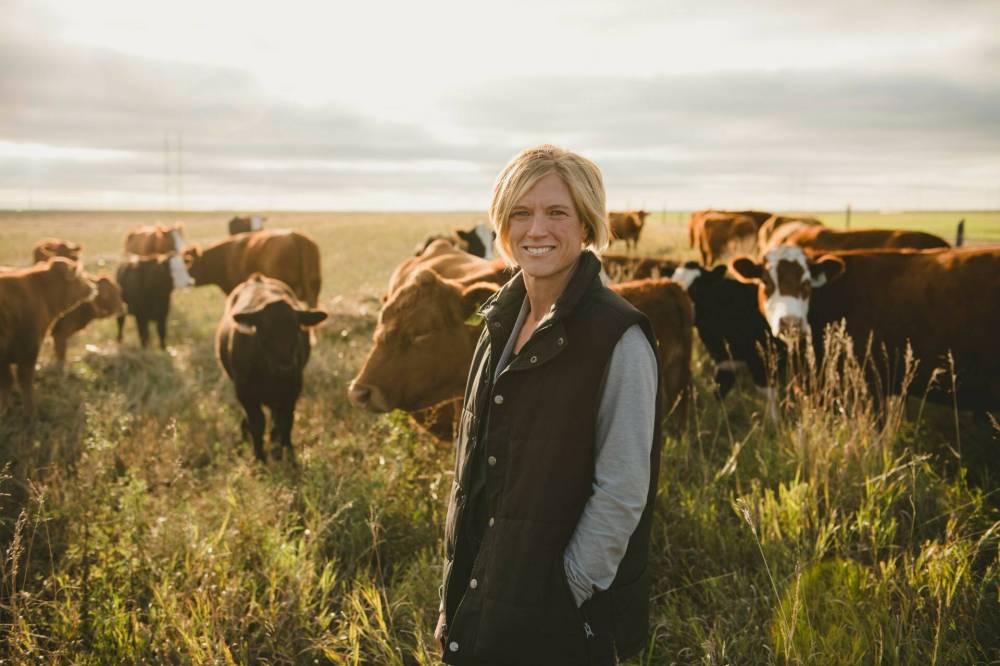
Dr. Leigh Rosengren, chief veterinary officer for the Canadian Cattle Association, said the code of practice update is designed to last 10 years. (Supplied)
Among the new requirements introduced in the draft policy, producers must more frequently monitor cattle during heat waves and cold, provide shelter from high winds during cold and use pain control during difficult calving in consultation with a veterinarian.
The requirements are used to inform regulations around animal welfare, as well as to audit producers in the Verified Beef Production Plus program, the chief veterinary officer for the Canadian Cattle Association, Dr. Leigh Rosengren, told the Sun.
“The standards that producers meet when they’re in Verified Beef Producer Plus for welfare are informed by the code,” she said. “They’re audited to that standard.”
The draft is expected to go through more review before a final code is introduced in 2027.
Manitoba Beef Producers research and extension specialist Melissa Atchison said that updating the code is a steady improvement process finding a balance that is practical while also guarding animal welfare. Comments from the public serve an important role in informing the decision-making and have led to significant changes in the past, she added.
“It’s about considering all those things while also making sure that the practicality of implementation is there,” she said. “I implore everybody to go and check out the code, and the changes, and provide thoughtful comments on it.”
The goal of updating the code is to find an acceptable standard for cattle welfare given new developments in science, systems, techniques and medicine, Atchison said.
On the code’s new requirement of using pain control during procedures like difficult calving, disbudding and dehorning, Atchison said that it is practical in that it ends up good for the producer. She said better animal welfare translates into better product.
“I’m a producer myself, and when we are administering pain medication during painful procedures, there are better production outcomes. Anecdotally, for us, you know, cattle recover faster. They are able to keep on eating, drinking, behaving normally and just get back to life. So that’s in our best interest.”
Affordable pain treatments have become more accessible since the last code was published more than 10 years ago, she said.
The code update is designed to last 10 years, Rosengren said, adding that the comment period is very important for a number of reasons.
“The code committee worked very hard on this draft, and we are proud of the work that we’ve done, but undoubtedly we have missed something or forgotten something,” she said. “We don’t have every perspective around the table.”
Public feedback will most likely flag an improvement that had not been considered before, she said. It will also show the committee whether it has hit the nail on the head with its draft.
“It’s a bit of a temperature check,” she said. “To judge the temperature, whether we have met, in general, the expectations of all of the various stakeholders that the codes need to serve.”
The process also lets producers, as one large stakeholder, be engaged in what will affect them in the industry, she said.
The committee will meet several times after the comment period, review feedback and consider modifying the code, Rosengren said.
A member will be tasked with collating the comments received and present them to the committee, Jackie Wepruk, division director the National Farm Animal Care Council, told the Sun. Depending on how much feedback is provided, the comments may be summarized or presented directly in raw form, she said.
The process is important to the committee and has always led to modifications in the past, she said.
“We have never had a code that has not undergone changes as a result of a comment period,” Wepruk said. “They really do value the feedback that comes in.”
The finalized code is expected to be released in the second quarter of 2027.
The code of practice was drafted in partnership with the Canadian Cattle Association.
To view the drafted code and submit comments, visit nfacc.
» cmcdowell@brandonsun.com