
BSD unveils ‘layered, system-wide’ safety audit
Advertisement
Read this article for free:
or
Already have an account? Log in here »
We need your support!
Local journalism needs your support!
As we navigate through unprecedented times, our journalists are working harder than ever to bring you the latest local updates to keep you safe and informed.
Now, more than ever, we need your support.
Starting at $15.99 plus taxes every four weeks you can access your Brandon Sun online and full access to all content as it appears on our website.
Subscribe Nowor call circulation directly at (204) 727-0527.
Your pledge helps to ensure we provide the news that matters most to your community!
To continue reading, please subscribe:
Add Brandon Sun access to your Free Press subscription for only an additional
$1 for the first 4 weeks*
- Enjoy unlimited reading on brandonsun.com
- Read the Brandon Sun E-Edition, our digital replica newspaper
*Your next Free Press subscription payment will increase by $1.00 and you will be charged $20.95 plus GST for four weeks. After four weeks, your payment will increase to $24.95 plus GST every four weeks.
Read unlimited articles for free today:
or
Already have an account? Log in here »
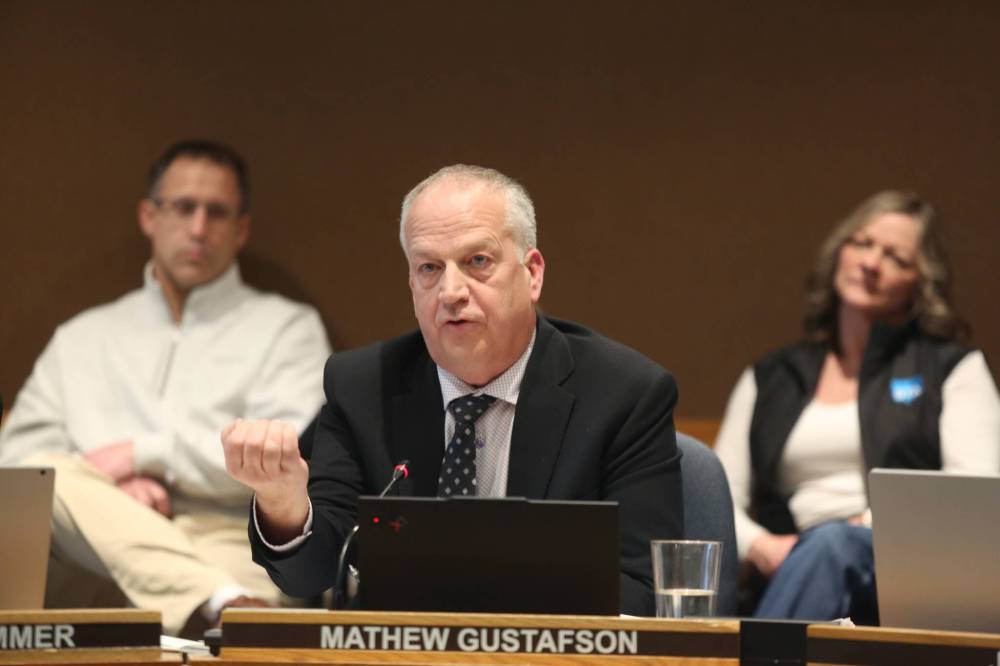
The Brandon School Division’s senior administration presented a new safety audit with a “more layered, system-wide approach” during Monday’s general board meeting.
Supt. Mathew Gustafson told trustees the audit is designed not as a one-time checklist, but as a structured, ongoing process to evaluate how well safety systems are working across schools.
“This presentation is about how we assess how those systems are working,” he said. “The division already uses an incident command system and an all-hazards approach to emergency planning.”
The audit builds on site assessments conducted in the summer of 2024 and follows a December 2025 provincial announcement supporting school safety reviews.
It aims to address a gap seen in many jurisdictions, where physical security measures are assessed. Broader factors such as school climate, student behaviour and mental health supports are often examined separately, Gustafson said.
The new model brings those elements together, he said.
“Safety is the result of multiple co-ordinated layers of protection. Physical security, behavioural threat assessment, communication systems and school climate are interconnected pieces.”
The audit evaluates safety across six key areas: prevention, assessment, deterrence, detection, response and recovery. He said it also examines both division-level governance and individual school operations, including staff training, student and parent roles, emergency preparedness and co-ordination with external agencies such as police and fire services.
A key feature is the inclusion of student and parent input — something Gustafson said is often missing in traditional safety reviews.
“Students need to know how to report worrisome behaviour, and parents also play a role, especially in emergencies like reunification,” he said.
The audit framework incorporates best practices from organizations such as the Cybersecurity and Infrastructure Security Agency and the Partner Alliance for Safer Schools, along with principles from Crime Prevention Through Environmental Design, he said.
The audit also introduces new components often overlooked in safety planning, including traffic flow analysis around schools and enhanced focus on early threat detection — such as bullying, cyberbullying and emerging online influences.
Trustee Breeanna Sieklicki raised questions about communication with families during emergencies, particularly around lockdowns and student pickup procedures.
“Parents can be left uncertain if a lockdown extends close to dismissal time,” she said. “Clearer guidance on reunification plans and communication timelines is needed.”
Gustafson acknowledged the challenge and said communication systems are a critical — but complex — part of school safety.
“In an emergency, there is no single recipe,” he said. “There are protocols in place, but situations can differ. Building trust with stakeholders comes through communication and continuous improvement.”
He said that while the audit will help identify risks and areas for improvement, it cannot eliminate risk.
“The purpose is not to eliminate risk, but to reduce it,” Gustafson said.
The division plans to consult with multiple stakeholders — including school administrators, emergency services, and provincial partners — before rolling out the audit across schools, he said.
“Each school will then receive a tailored report and action plan based on its unique layout, culture and risk profile,” he said.
Trustees ultimately voted to receive the report for information, with further implementation steps expected to follow.
» aodutola@brandonsun.com
» X: @AbiolaOdutola