
Iran’s rial currency hits record low as shaky ceasefire with US and Israel still holds
Advertisement
Read this article for free:
or
Already have an account? Log in here »
We need your support!
Local journalism needs your support!
As we navigate through unprecedented times, our journalists are working harder than ever to bring you the latest local updates to keep you safe and informed.
Now, more than ever, we need your support.
Starting at $15.99 plus taxes every four weeks you can access your Brandon Sun online and full access to all content as it appears on our website.
Subscribe Nowor call circulation directly at (204) 727-0527.
Your pledge helps to ensure we provide the news that matters most to your community!
To continue reading, please subscribe:
Add Brandon Sun access to your Free Press subscription for only an additional
$1 for the first 4 weeks*
- Enjoy unlimited reading on brandonsun.com
- Read the Brandon Sun E-Edition, our digital replica newspaper
*Your next Free Press subscription payment will increase by $1.00 and you will be charged $20.95 plus GST for four weeks. After four weeks, your payment will increase to $24.95 plus GST every four weeks.
Read unlimited articles for free today:
or
Already have an account? Log in here »
TEHRAN, Iran (AP) — Iran’s national rial currency hit a record low Wednesday of 1.8 million to $1 as a shaky ceasefire with the U.S. and Israel still holds.
The rial had remained stable in the early weeks of the war, which began Feb. 28, in part because there was little trading or imports coming into the country.
The rial began to slide two days ago, hitting the record low Wednesday.
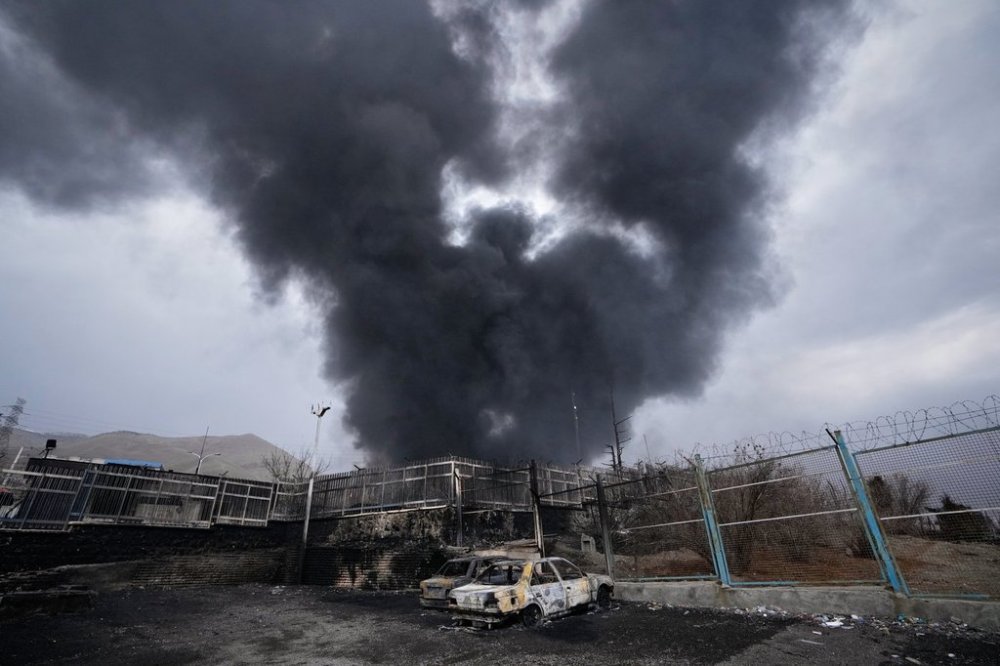
Experts warn the fall of the rial is likely to further fuel inflation in a country where many imported goods, from food and medicine to electronics and raw materials, are affected by the dollar rate.
The war is now in a ceasefire, but a U.S. blockade has continued to increase pressure on Iran’s already-battered economy, cutting into a key source of government revenue and hard currency by stopping or intercepting oil shipments.
The latest slide comes months after a previous currency shock helped fuel nationwide protests in January. At the time, the rial weakened from about 1.4 million to 1.6 million to the dollar in less than a week, deepening public anger over rising prices and fears about the country’s economic future.
Iran’s economy has faced decades of sanctions, chronic inflation and a widening gap between official and open-market exchange rates. The war, which lasted weeks, added new strain to businesses, households and state finances.
Prices of basic household goods had already been rising before the latest fall in the rial, adding to pressure on Iranian families even before the currency hit its newest record low. Over the past two weeks, people buying daily essentials have faced higher prices for milk, yogurt, cooking oil, bread, rice, cheese and detergents.
The increases point to broader inflationary pressure in the economy, driven by uncertainty after the war, supply disruptions, higher transport and production costs and the continuing impact of the U.S. naval blockade. The rial’s latest slide is likely to add further pressure in the coming days, particularly on goods tied to imports, packaging and raw materials.
The economic pressure also has extended to the labor market. The reformist Shargh newspaper reported Monday that 500 workers at Pinak in Rasht and 700 workers at Borujerd Textile Factory had been laid off since the beginning of the new Iranian calendar year in late March after their contracts ended.
The reported layoffs add to concerns that rising costs, weaker demand and uncertainty after the war and blockade are forcing some companies to cut jobs or avoid renewing temporary contracts.