
Supreme Court voids majority Black congressional district in Louisiana, boosting Republican chances
Advertisement
Read this article for free:
or
Already have an account? Log in here »
We need your support!
Local journalism needs your support!
As we navigate through unprecedented times, our journalists are working harder than ever to bring you the latest local updates to keep you safe and informed.
Now, more than ever, we need your support.
Starting at $15.99 plus taxes every four weeks you can access your Brandon Sun online and full access to all content as it appears on our website.
Subscribe Nowor call circulation directly at (204) 727-0527.
Your pledge helps to ensure we provide the news that matters most to your community!
To continue reading, please subscribe:
Add Brandon Sun access to your Free Press subscription for only an additional
$1 for the first 4 weeks*
- Enjoy unlimited reading on brandonsun.com
- Read the Brandon Sun E-Edition, our digital replica newspaper
*Your next Free Press subscription payment will increase by $1.00 and you will be charged $20.95 plus GST for four weeks. After four weeks, your payment will increase to $24.95 plus GST every four weeks.
Read unlimited articles for free today:
or
Already have an account? Log in here »
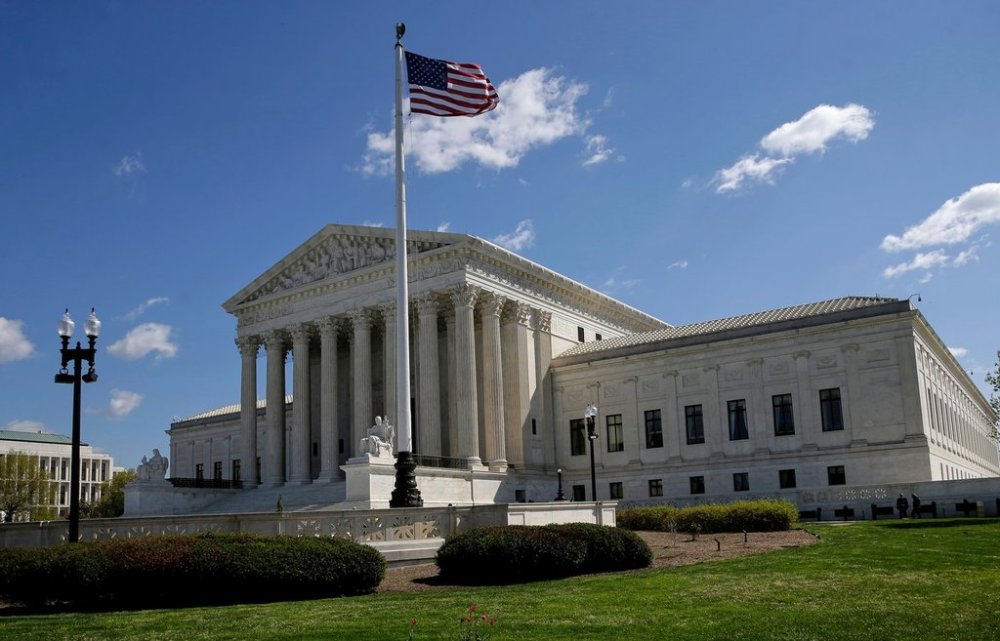
WASHINGTON (AP) — The Supreme Court on Wednesday struck down Louisiana’s second majority Black congressional district in a decision that could open the door for Republican-led states to eliminate Black and Latino electoral districts that tend to favor Democrats and affect the balance of power in Congress.
In a 6-3 ruling, the court’s conservative majority found that the district, represented by Democrat Cleo Fields, relied too heavily on race. Chief Justice John Roberts had described the district as a “snake” that stretches more than 200 miles (320 kilometers) to link parts of the Shreveport, Alexandria, Lafayette and Baton Rouge areas.
“That map is an unconstitutional gerrymander,” Justice Samuel Alito wrote for the six conservatives.
The decision weakens a landmark voting rights law’s protections against discrimination in redistricting. It’s unclear how much is left of the provision, known as Section 2, the main way to challenge racially discriminatory election practices.
Not much, Justice Elena Kagan wrote in a dissent for the three liberal justices. “The consequences are likely to be far-reaching and grave. Today’s decision renders Section 2 all but a dead letter,” Kagan wrote.
The 1965 voting rights law, the centerpiece legislation of the Civil Rights Movement, succeeded in opening the ballot box to Black Americans and reducing persistent discrimination in voting.
Nearly 70 of the 435 congressional districts are protected by Section 2, election law expert Nicholas Stephanopoulos has estimated.
Alito wrote that “allowing race to play any part in government decisionmaking represents a departure from the constitutional rule that applies in almost every other context.” He said Section 2 is effectively limited to instances of intentional discrimination, a very high standard.
Kagan said the upshot of the decision is that states “can, without legal consequence, systematically dilute minority citizens’ voting power.”
The court heard the case for a second time in October and it’s not clear whether the decision was issued early enough for some states, including Louisiana, to consider a new round of redistricting ahead of the 2026 midterm elections, in which Republicans are trying to preserve a thin majority.
President Donald Trump had already touched off a nationwide redistricting battle to boost Republican chances.
Legislatures already are free to draw extremely partisan districts because of a 2019 Supreme Court decision.
The court’s decision was released as Florida legislators debated a proposed redrawing of the state’s congressional lines, submitted by Republican Gov. Ron DeSantis and intended to give the GOP a chance to pick up as many as four seats in the state’s U.S. House delegation.
Democrats in the Florida Senate urged the Republican supermajority to delay debate to at least offer lawmakers a chance to read the decision and consult lawyers on how it might affect DeSantis’ proposal. Republicans refused.
In the Supreme Court’s Louisiana ruling, the justices did an about-face from a decision in a similar case from Alabama less than three years ago that led to a new congressional map for the state that sent two Black Democrats to Congress.
Roberts and Justice Brett Kavanaugh joined the three liberals to form a majority in the Alabama case. Both joined Alito’s opinion Wednesday.
The Alabama decision also prompted Louisiana lawmakers to add a second majority Black district. About a third of Louisianans are Black and they now form majorities in two of the state’s six congressional districts. Alabama has a separate appeal pending at the Supreme Court.
___
Associated Press writer Sara Cline in Baton Rouge, La., contributed to this report.
___
Follow the AP’s coverage of the U.S. Supreme Court at https://apnews.com/hub/us-supreme-court.