
Carney says clean electricity strategy promised weeks ago is still on its way
Advertisement
Read this article for free:
or
Already have an account? Log in here »
We need your support!
Local journalism needs your support!
As we navigate through unprecedented times, our journalists are working harder than ever to bring you the latest local updates to keep you safe and informed.
Now, more than ever, we need your support.
Starting at $15.99 plus taxes every four weeks you can access your Brandon Sun online and full access to all content as it appears on our website.
Subscribe Nowor call circulation directly at (204) 727-0527.
Your pledge helps to ensure we provide the news that matters most to your community!
To continue reading, please subscribe:
Add Brandon Sun access to your Free Press subscription for only an additional
$1 for the first 4 weeks*
- Enjoy unlimited reading on brandonsun.com
- Read the Brandon Sun E-Edition, our digital replica newspaper
*Your next Free Press subscription payment will increase by $1.00 and you will be charged $20.95 plus GST for four weeks. After four weeks, your payment will increase to $24.95 plus GST every four weeks.
Read unlimited articles for free today:
or
Already have an account? Log in here »
OTTAWA – The federal government still has not announced its clean electricity strategy, despite Prime Minister Mark Carney saying it would land weeks ago.
At a news conference in Halifax on March 26, Carney told reporters the government would be releasing “next week” a strategy to expand the electricity grid through hydro, nuclear and renewable energy.
When asked on his way into a caucus meeting Wednesday for an update on the electricity strategy, Carney said only, “It’s coming.”
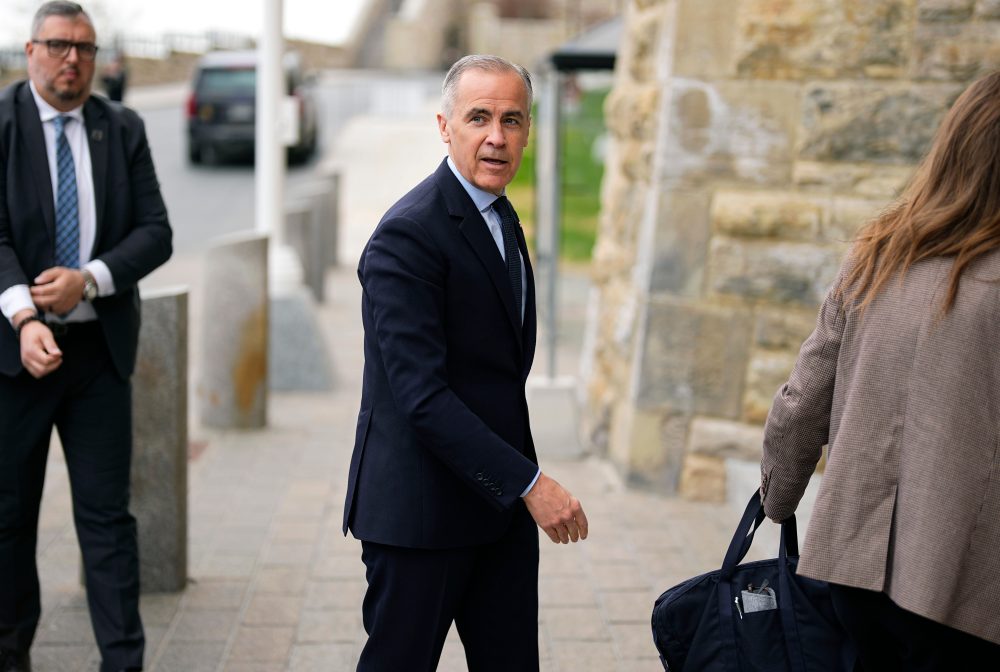
The Prime Minister’s Office told The Canadian Press it had nothing further to add.
In the spring economic update released on Tuesday, the government said it was planning to issue a “discussion paper” to seek input from provinces and territories on how to modernize the grid.
The economic update did say the government intends to release a new nuclear energy strategy. Energy Minister Tim Hodgson said Wednesday the strategy will be unveiled “in the coming weeks.”
Speaking at a Canadian Nuclear Association conference in Ottawa, Hodgson referred to a “nuclear renaissance” and said it offers an opportunity for climate and energy security.
“We must de-risk nuclear investments, facilitate private and public financing, advance Indigenous partnership and prioritize projects that make economic and strategic sense,” Hodgson said.
The minister said the government is also looking into the feasibility of microreactors in Canada’s North as part of the Defence Industrial Strategy, which seeks to build dual-use infrastructure in the Arctic.
“The Department of National Defence is investing over $40 million this fiscal year to examine whether next-generation microreactors can safely and reliably provide heat and electricity for remote and northern DND and Canadian Armed Forces facilities,” Hodgson said.
All Nunavut communities — and most remote ones in the N.W.T. and Yukon — rely on diesel generation for their electricity. But those power grids could be overwhelmed as Canada builds a larger military footprint in the North, primarily through the construction of planned Northern Operational Support Hubs.
The military has announced plans to build such hubs in Iqaluit and Resolute, with scaled-down versions in Rankin Inlet and Cambridge Bay.
“Importantly, while this work supports defence and sovereignty in remote regions, it also has broader civilian potential and could support remote communities and other industrial sites looking for clean, dependable power,” Hodgson told the conference.
Hodgson said the nuclear strategy would be complemented by the broader electricity strategy.
In its energy deal with Alberta last year, Ottawa and the province committed to working together to developing the province’s own nuclear generation strategy with the goal of bringing nuclear power to the grid by 2050.
This report by The Canadian Press was first published April 29, 2026.