
Shifting costs merely shifts responsibility
Advertisement
Read this article for free:
or
Already have an account? Log in here »
We need your support!
Local journalism needs your support!
As we navigate through unprecedented times, our journalists are working harder than ever to bring you the latest local updates to keep you safe and informed.
Now, more than ever, we need your support.
Starting at $15.99 plus taxes every four weeks you can access your Brandon Sun online and full access to all content as it appears on our website.
Subscribe Nowor call circulation directly at (204) 727-0527.
Your pledge helps to ensure we provide the news that matters most to your community!
To continue reading, please subscribe:
Add Brandon Sun access to your Free Press subscription for only an additional
$1 for the first 4 weeks*
- Enjoy unlimited reading on brandonsun.com
- Read the Brandon Sun E-Edition, our digital replica newspaper
*Your next Free Press subscription payment will increase by $1.00 and you will be charged $20.95 plus GST for four weeks. After four weeks, your payment will increase to $24.95 plus GST every four weeks.
Read unlimited articles for free today:
or
Already have an account? Log in here »
Canada has been, over the years, a model country when it comes to taking in and resettling refugee claimants.
According to the Immigration, Refugees and Citizenship Canada website, this country resettled 51,081 refugees in 2023 alone, positioning Canada as second in the world in terms of sheer numbers.
For a country that likes to view itself as a welcoming and multicultural nation, those numbers suggest a well-earned reputation.
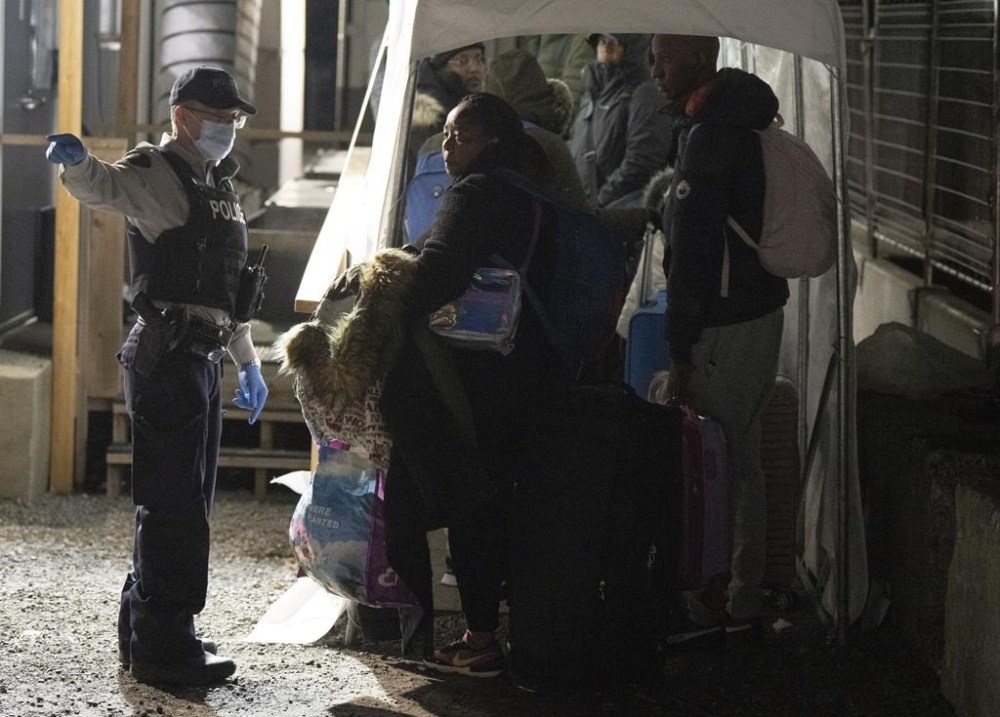
Many of these refugees end up in Manitoba, with this province receiving between 1,500 and 2,200 individuals per year from many different countries. And some often make their way here to Brandon and Westman as well, with significant numbers from Afghanistan, Syria and Ukraine in recent years.
But bringing the world’s refugees to our shores — those who carry stories characterized often by profound trauma and challenge, and who face exceptional hurdles fitting into Canadian society — requires that our society also take responsibility for their welfare when we do.
Recent changes to Canada’s Interim Federal Health Program, which is specifically geared to help refugees in Canada, suggest we are not owning up to that responsibility.
For decades, the Interim Federal Health Program has ensured refugees receive comprehensive health coverage until they qualify for provincial plans.
It’s not a handout; it’s a bridge — one that recognizes newcomers often arrive with complex medical and psychological needs after fleeing war, persecution or extreme hardship.
As of last week, that bridge has been weakened.
Under measures announced in the last federal budget, refugees must now pay $4 per prescription and 30 per cent of the cost of supplemental health services, including mental health counselling, dental care, vision care and essential equipment like wheelchairs.
On paper, that may not sound like much. In practice, for people living in deep poverty, it’s the difference between receiving care and going without.
Doctors, nurses and refugee advocates across the country have been clear about what happens next. When people can’t afford medication, they stop taking it.
When they can’t pay for counselling, untreated trauma festers. When dental issues go unaddressed, infections spread. None of this saves money. It simply delays care until problems become acute and far more expensive to treat.
When that happens, the costs don’t disappear. They land squarely on provincial health systems, particularly in emergency departments.
If a refugee with diabetes skips medication because they can’t afford even a small co-payment, the likely outcome isn’t savings — it’s a trip to the ER with serious complications.
If someone grappling with severe trauma can’t access therapy, the risk of crisis escalates, potentially requiring hospitalization. These are not hypothetical scenarios; they are predictable outcomes, confirmed by front-line physicians.
So while Ottawa trims its spending, provinces pick up the tab. Emergency room visits, hospital stays and urgent interventions cost exponentially more than preventive care and basic supports.
It’s a cost shift masquerading as fiscal prudence.
There’s also a deeper question here about what kind of country Canada wants to be. A federal court already weighed in on a previous round of cuts to this program in 2014, ruling they amounted to “cruel and unusual” treatment under the charter. Those cuts were more severe, but the principle still applies: deliberately restricting access to basic health care for a vulnerable population crosses a moral line.
Refugees are not typically arriving in Canada with disposable income. Many are living in shelters, relying on food banks and struggling to navigate a new language and culture. Expecting them to absorb even small health costs ignores that reality.
Investing in the health of refugees is one of the fastest ways to help them integrate and contribute. Healthy individuals are more likely to learn English or French, find employment and transition off public supports. Delayed care prolongs dependence and reduces long-term economic participation.
In other words, this isn’t just about compassion — though that should be reason enough. It’s also about smart policy.
If the goal is to save money, this policy is likely to fail. If the goal is to appear tough on spending, it does so at the expense of people least able to bear the burden. It risks compounding human suffering while shifting bigger costs onto already strained provincial health systems.
And if the goal is to build a healthier, more productive society, it moves in the opposite direction.
There are smarter ways to manage public finances than offloading costs onto provinces and denying basic care to vulnerable people. Restoring full coverage under the Interim Federal Health Program would be a good place to start.
» Winnipeg Free Press and The Brandon Sun