
Did Speaker go too far in limiting free speech?
Advertisement
Read this article for free:
or
Already have an account? Log in here »
We need your support!
Local journalism needs your support!
As we navigate through unprecedented times, our journalists are working harder than ever to bring you the latest local updates to keep you safe and informed.
Now, more than ever, we need your support.
Starting at $15.99 plus taxes every four weeks you can access your Brandon Sun online and full access to all content as it appears on our website.
Subscribe Nowor call circulation directly at (204) 727-0527.
Your pledge helps to ensure we provide the news that matters most to your community!
To continue reading, please subscribe:
Add Brandon Sun access to your Free Press subscription for only an additional
$1 for the first 4 weeks*
- Enjoy unlimited reading on brandonsun.com
- Read the Brandon Sun E-Edition, our digital replica newspaper
*Your next Free Press subscription payment will increase by $1.00 and you will be charged $20.95 plus GST for four weeks. After four weeks, your payment will increase to $24.95 plus GST every four weeks.
Read unlimited articles for free today:
or
Already have an account? Log in here »
Both Manitoba Premier Wab Kinew and NDP House Leader Nahanni Fontaine have publicly stated that Speaker Tom Lindsey was wrong to ban politicians from calling each other racist, bigoted, misogynist, homophobic or transphobic.
And in fact, Kinew told CBC Manitoba “Information Radio” host Marcy Markusa on Thursday morning that he has asked Lindsey to reverse his decision.
Are the premier and Fontaine right to complain about these restrictions, and has the Speaker gone too far in limiting free speech? It’s a complicated question, with an equally complicated answer.
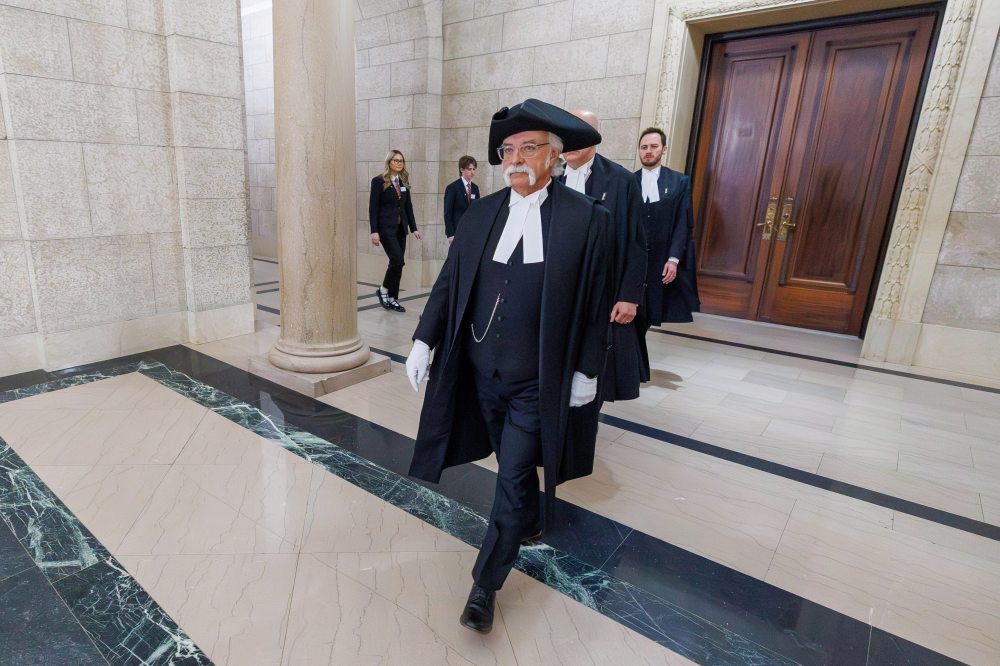
Last Monday, Lindsey spoke in the Manitoba legislature just before the start of question period, saying that he had heard complaint and concerns from members of the public and school groups about MLA behaviour in the chamber.
As a result of these concerns, Lindsey presented a list of banned words in the assembly chamber.
“Setting this new standard for our legislature is necessary to ensure that the people’s business is conducted in a civil, orderly manner consistent with the practices of the federal parliament and every other jurisdiction in Canada,” Lindsey told returning MLAs.
It has been no secret over the last several years that Wab Kinew and Progressive Conservative Party Leader Obby Khan more than merely dislike each other. There seems to be a visceral hatred between the two men.
The outright hostility has been obvious ever since April 13, 2023, when Khan — then a Progressive Conservative cabinet minister — alleged that Kinew as opposition leader had sworn at him multiple times, insulted him and shoved his stomach during a “handshake” after Khan suggested adding PC and Liberal banners to a Turban Day ceremony in the legislature rotunda.
There is no friendly banter, no respect given as political peers. And that inability to act rationally and civilly within the Manitoba legislature has set the tone for members in both parties.
The same day that Lindsey banned the words “bigot” and “homophobe” from the chamber, he also evicted Tory MLA Wayne Ewasko for refusing to apologize after heckling Kinew last month by saying “Hey — quit drinking” at the premier.
Khan himself was rebuked for “hateful” comments he made in April targeting Health Minister Uzoma Asagwara, calling them a “terrible person” and adding “whatever you are,” to his statement.
Speaker Lindsey also noted that there has been frequent yelling and ordered that if an MLA heckles excessively and is called to order more than three times, they will be barred from speaking for the rest of the day.
Just last November, we stated on this page that the leaders of Manitoba’s two largest parties have a responsibility to lead by example because how they operate as government leaders sets the tone for the entire province.
It would appear, however, that they are incapable of acting within the best interests of ordinary Manitobans — the same people who voted them into their positions in the first place — using a rational and civil tongue.
For what it’s worth, we don’t blame Lindsey from growing frustrated with the puerile and thoughtless behaviour on display within the chamber. Manitoba’s political class have only themselves to blame for this situation. In his defence, Lindsey has already stated his belief that his imposed changes do not infringe on the privileged freedom of speech that elected members enjoy.
“These words would be ruled unparliamentary in other legislatures because, like the word “liar,” they constitute reflection on a member’s character or integrity rather than debating policy,” Lindsey said.
There is, however, an argument to be made that banning words like “racist” and “bigot” prevents MLAs from calling out bad behaviour. In questioning the Speaker’s decision, Fontaine said her role as government house leader is to ensure her colleagues — which include black, Sikh, Asian, queer and trans individuals — are protected.
Historically, speech within a Parliament or legislature — known as parliamentary privilege or parliamentary immunity — exists to allow legislatures to debate, legislate and hold the government to account without fear of legal, executive or external intimidation.
This immunity allows representatives to speak freely and raise issues that fall within the public interest, even if such comments would prove defamatory or up for legal action outside the chamber.
Without this protection, MLAs would likely hesitate to make necessary accusations and disclosures. Placing restrictions on this kind of speech does introduce a chilling effect that may ultimately prevent and deter full and open debate.
The question here is whether the ability to call the member opposite a word such as “bigot” should remain part of that protected speech.
While we do not like or condone the questionable actions of our elected officials during question period in the legislature, we have to wonder if Lindsey made a misstep in trying to rein in an unruly political class. We’re talking about the actions of grown men and women who should — and do — know better.
If our politicians wish to be despised by Manitobans who are witness to their lack of good character and undisciplined behaviour, perhaps they should be allowed to reap the disdain that they willingly sow.
» Matt Goerzen, editor