
NDP urged to restore 50-50 transit funding
Advertisement
Read this article for free:
or
Already have an account? Log in here »
We need your support!
Local journalism needs your support!
As we navigate through unprecedented times, our journalists are working harder than ever to bring you the latest local updates to keep you safe and informed.
Now, more than ever, we need your support.
Starting at $15.99 plus taxes every four weeks you can access your Brandon Sun online and full access to all content as it appears on our website.
Subscribe Nowor call circulation directly at (204) 727-0527.
Your pledge helps to ensure we provide the news that matters most to your community!
To continue reading, please subscribe:
Add Brandon Sun access to your Free Press subscription for only an additional
$1 for the first 4 weeks*
- Enjoy unlimited reading on brandonsun.com
- Read the Brandon Sun E-Edition, our digital replica newspaper
*Your next Free Press subscription payment will increase by $1.00 and you will be charged $20.95 plus GST for four weeks. After four weeks, your payment will increase to $24.95 plus GST every four weeks.
Read unlimited articles for free today:
or
Already have an account? Log in here »
Calls to restore dollar-for-dollar funding for public transit are growing, with Brandon Mayor Jeff Fawcett and the city’s transit union urging the province to step up.
Fawcett said the city has been asking for a return to 50-50 funding from the province since it was scrapped in 2017 by the Progressive Conservative government.
“We have to try to do the best for cost recovery as we can,” Fawcett said. “It increases the cost of people participating in transit, and it just increases the cost locally to offer a service.”
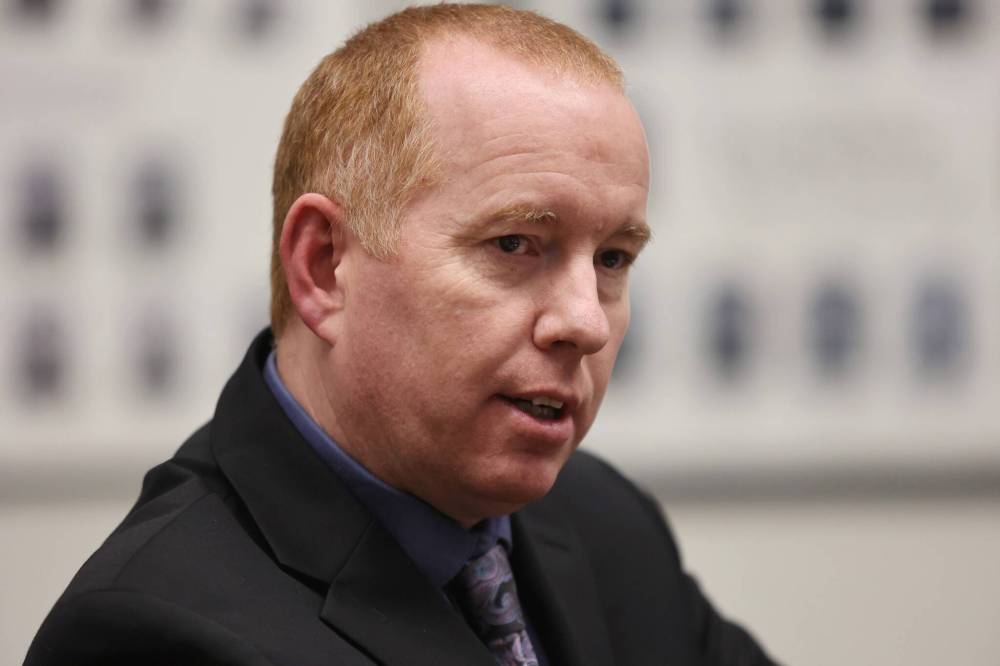
Greg Brown, acting director of transportation services for the City of Brandon. (Alex Lambert/The Brandon Sun files)
Fawcett said the city has been forced to reduce transit services since the province stopped increasing its funding in step with the rising cost of the system. The number of buses running on some routes has fallen and fares charged to riders have increased, he said.
The provincial government currently provides $2,034,488 for Brandon’s bus system, an amount that hasn’t changed since 2016, a city transit official said.
The city earmarked $5,206,967 in the 2026 budget toward the $7.2-million total cost of the service.
The province’s share represents about 28 per cent of transit’s funding.
Ridership in Brandon transit hit an all-time high in 2024 with 1.3 million boardings. Last year, the city saw about 1.2 million boardings, with the lower total due to the drop in international students. The city also saw a drop in riders in the first two months of this year.
“We’ve done lots of heavy lifting by getting additional buses, by doing lots of the maintenance. We’ve been really committing to our transit to try to not only have that increased ridership have better service, but to continue to increase ridership,” Fawcett said.
Fawcett said as the city expands, the provincial funding needs to keep pace.
In recent years, transit has been a big part of budget discussions, he said.
Last weekend, more than 100 people went to the legislative building in Winnipeg, including representatives of the Amalgamated Transit Union 1505, to urge the province to increase financial support for transit services across the province.
The union, which represents 1,400 drivers in Brandon and Winnipeg, brought a Winnipeg transit bus to the rally to help spur change.
Union president James Van Gerwen said transit systems “will slowly fall down” if funding doesn’t keep pace with municipal growth.
“It’s going to fall behind. You’re going to get service gaps, the buses are going to get more crowded and there’s going to be longer wait times,” Van Gerwen said.
He said the province is looking to become greener, and this is the perfect way to do that, as transit gets people out of their cars.
With Brandon embarking on a new transit master plan, which was approved earlier this year and will start being implemented in the fall, now is an important time for more funding, he added.
Municipal Relations Minister Glen Simard wasn’t made available for an interview on Tuesday, but said in a statement to the Sun: “We’ve increased support for municipalities year after year because we know strong communities depend on reliable stable and predictable funding increases.”
Simard, the MLA for Brandon East, also highlighted the province’s 2026 budget promise to provide free transit for youth, which he said encourages more people to use transit and helps families with the cost of living.
A followup question specifically related to 50-50 funding wasn’t answered.
The city’s acting director of transportation services, Greg Brown, said the city is currently unsure of how free transit for youth will work from the city’s end, but it “presumes” the city will be compensated for lost revenue.
In the years following the end of matching provincial funding, the city reduced services on Sundays and reduced the frequency of some routes. The master plan, which will be phased in over multiple years, will return those services, but at a larger cost to residents.
“Those budget impacts are significant,” Brown said. “The cost of transit continues to go up because the cost of everything is increasing, and so without additional funding from the province, the cost of that comes directly from the taxpayer in Brandon, whether that be through municipal taxes or increases in fares.”
Community consultations in the past have highlighted the public’s demand for increased services, he said.
“Ideally, we’d like to see it go back to the 50-50 split with the province, because that basket of funding that they provide — $2 million a year in provincial funding that we received — has not increased since 2016.”
The 2016 funding after inflation would equal $2,662,809 in 2026 dollars, according to the Bank of Canada.
“The costs continue to increase, because the cost of equipment, the cost of fuel, the cost of everything continues to rise,” Brown said. “And so the municipality has to make choices, and really your options are increase fares, reduce service frequency and coverage, or find more money.”
He said reliable, sustainable and affordable transit is important for a community, especially as it “disproportionately” serves lower income households.
Under a 50-50 model, the province’s funding would be “significantly more” than the current amount adjusted for inflation, he said. He estimated it would be “probably a couple million dollars more.”
It would also allow the city to spend less money on transit and be able to spend more on transit-related programs or investing in more equipment, routes and drivers to accommodate planned growth.
Van Gerwen said Saturday’s rally in Winnipeg was really a “campaign launch” for 50-50 funding, and that this isn’t the end of calls for more money.
» alambert@brandonsun.com, with files from The Winnipeg Free Press