
20 years after a 22-minute ovation, Guillermo del Toro and ‘Pan’s Labyrinth’ return to Cannes
Advertisement
Read this article for free:
or
Already have an account? Log in here »
We need your support!
Local journalism needs your support!
As we navigate through unprecedented times, our journalists are working harder than ever to bring you the latest local updates to keep you safe and informed.
Now, more than ever, we need your support.
Starting at $15.99 plus taxes every four weeks you can access your Brandon Sun online and full access to all content as it appears on our website.
Subscribe Nowor call circulation directly at (204) 727-0527.
Your pledge helps to ensure we provide the news that matters most to your community!
To continue reading, please subscribe:
Add Brandon Sun access to your Free Press subscription for only an additional
$1 for the first 4 weeks*
- Enjoy unlimited reading on brandonsun.com
- Read the Brandon Sun E-Edition, our digital replica newspaper
*Your next Free Press subscription payment will increase by $1.00 and you will be charged $20.95 plus GST for four weeks. After four weeks, your payment will increase to $24.95 plus GST every four weeks.
Read unlimited articles for free today:
or
Already have an account? Log in here »
CANNES, France (AP) — Twenty years ago, Guillermo del Toro premiered “Pan’s Labyrinth” at the Cannes Film Festival. He went in anxious. It was toward the end of the festival and many journalists had left. The movie’s production had been a nightmare.
Then the audience gave it a 22-minute standing ovation, the longest in Cannes history.
“It’s a commute,” joked del Toro. “That’s about what it takes me to get from home to the office. Alfonso Cuaron, who made this movie with me as producer, turned to me at some point and said, ‘Let it in. Relax.’ I was very tense. I’m not very good with praise.”
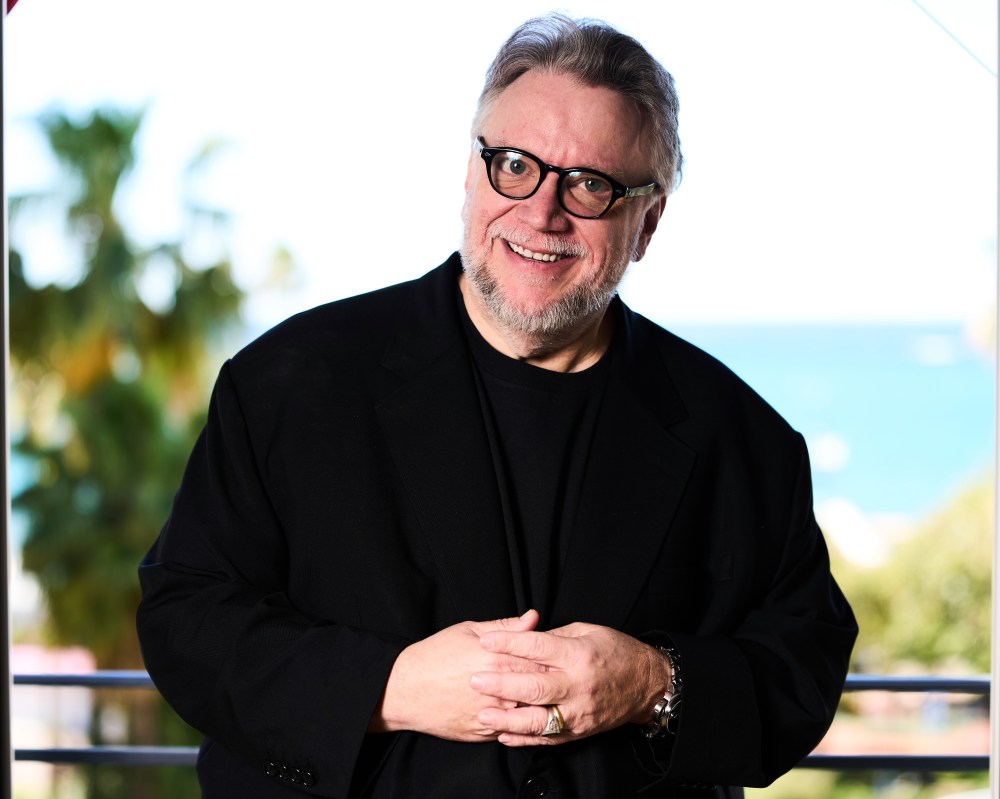
Del Toro returned to Cannes on Tuesday to screen a restoration of one of his most beloved films. Shortly beforehand, he met a reporter for an interview at a hotel on the Croisette, a few steps away from where his filmmaking life changed two decades ago.
A lush fairy tale set against 1944 Francoist Spain, “Pan’s Labyrinth” is about the young Ofelia (Ivana Baquero) who has come with her mother to stay with her new fascist stepfather, Captain Vidal (Sergi López). Taking place largely in the northern Spain, it’s Del Toro at his earthiest and most imaginative.
Books become alive when held. Doors manifest out of a chalk outline. And creatures — fairies, a faun, the unforgettable Pale Man, with eyes in the palms of his hands — reveal a world of deeper and darker enchantment.
A pivot point for del Toro
Del Toro, who has since made “The Shape of Water” and “Frankenstein,” grants that he wouldn’t have become the filmmaker he is today if he hadn’t made “Pan’s Labyrinth.” At the time, he was the well-regarded but not well-known filmmaker of “Hellboy” and “Blade 2.”
“I was getting all the Marvel offers from Avi Arad. It was a real choice to go make the movie no one wanted to finance,” del Toro says. “It was one of the few times in my life that I made a choice. And I made it over and over again because everything that could go wrong went wrong, every door that could have slammed in my face, slammed in my face.”
Del Toro made “Pan’s Labyrinth,” which Cineverse and Fathom Entertainment will rerelease in theaters Oct. 9, for $19.5 million — the same budget for his best picture-winning “The Shape of Water.” But just after del Toro moved his family to Spain for the shoot, a major financier pulled out.
“I said: I’m staying. We’re going to make this movie,” the filmmaker recalls.
Forest fires in Spain were another complication. Verdant and magical as the forest is in “Pan’s Labyrinth,” it took months of irrigation to bring it to life. “Every lush tree you see, we made lush,” says del Toro. “Every fern we planted.”
The iconic tree of the film, though, was the work of Eugenio Caballero’s art design. Del Toro has long been renown for his textured artistry, but “Pan’s Labyrinth” includes some of his most memorable creations. At a time when artificial intelligence is making inroads into moviemaking, the movie’s handcrafted beauty stands out all the more.
“I think people intrinsically know when you’ve made an effort,” says del Toro. “They sense that it’s important to you in the craftsmanship. We don’t only go to movies to see the world. We go to see a world we don’t recognize. The more the design is something you haven’t seen before, that was made by hand, you can sense it.”
“Virtual filmmaking to me is not as interesting,” he adds. “You’re not courting an accident. You’re not courting humanity.”
Growing up with ‘Pan’s Labyrinth’
Nothing is more human in “Pan’s Labyrinth” than its young protagonist. Baquero was just 11 when she shot the film, but del Toro calls her “the most mature actor I’ve ever directed.” Baquero, now 31, also came to Cannes for the screening.
“During the audition process, he didn’t baby me,” says Baquero. “He treated me like an adult. He gave me a lot of homework. He gave me a lot of movie references, some of which were — like ‘Grave of Fireflies’ — very dark.”
“Pan’s Labyrinth,” an R-rated fable with bloody spurts of violence, isn’t quite for children. But Baquero was shielded from none of its cruelties. She grew up with “Pan’s Labyrinth.”
“I can enjoy more and more as time goes by,” she says. “I can distance myself from being in the movie and watch it with different eyes. I almost don’t see myself as that girl anymore. I do, but it was 20 years ago.”
After its Cannes premiere, “Pan’s Labyrinth” was hailed as a masterpiece and went on to land six Oscar nominations, winning three (for cinematography, art direction and makeup). But del Toro calls his experience screening the movie for Stephen King “my Oscar.” He traveled up to Maine, carrying his film reels, to show it to the author he grew up revering. “The Pale Man had him squirming big time,” del Toro says.
In “Pan’s Labyrinth,” there are hidden, eternal forces underground that outlast the evil scourges that might trod above. There is magic in the world, but you have to know where to look. Two decades later, del Toro still believes that.
“I have experienced it in the real world. Not fauns and pale men and fairies,” he says, chuckling. “But I find that when your will lines up with the life stream of the cosmos, you see things that happen that are tremendous. When you swim against the life stream, things go wrong.”