
Poll suggests politics, geography and trust play roles in vaccine hesitancy
Advertisement
Read this article for free:
or
Already have an account? Log in here »
We need your support!
Local journalism needs your support!
As we navigate through unprecedented times, our journalists are working harder than ever to bring you the latest local updates to keep you safe and informed.
Now, more than ever, we need your support.
Starting at $15.99 plus taxes every four weeks you can access your Brandon Sun online and full access to all content as it appears on our website.
Subscribe Nowor call circulation directly at (204) 727-0527.
Your pledge helps to ensure we provide the news that matters most to your community!
To continue reading, please subscribe:
Add Brandon Sun access to your Free Press subscription for only an additional
$1 for the first 4 weeks*
- Enjoy unlimited reading on brandonsun.com
- Read the Brandon Sun E-Edition, our digital replica newspaper
*Your next Free Press subscription payment will increase by $1.00 and you will be charged $20.95 plus GST for four weeks. After four weeks, your payment will increase to $24.95 plus GST every four weeks.
Read unlimited articles for free today:
or
Already have an account? Log in here »
OTTAWA – A new online survey suggests nearly a quarter of Canadians say they’ve declined to get a vaccine recommended by their doctor, and the data indicates most of them did so because they were concerned about potential side effects.
A report from Proof Strategies released Thursday — which is World Vaccine Day — explores how Canadians feel about vaccines and why some of them hesitate to get the shots.
Bruce MacLellan, chair of Proof Strategies, said the organization decided to ask specific questions about vaccines in its annual trust index after Canada lost its measles elimination status in 2025.
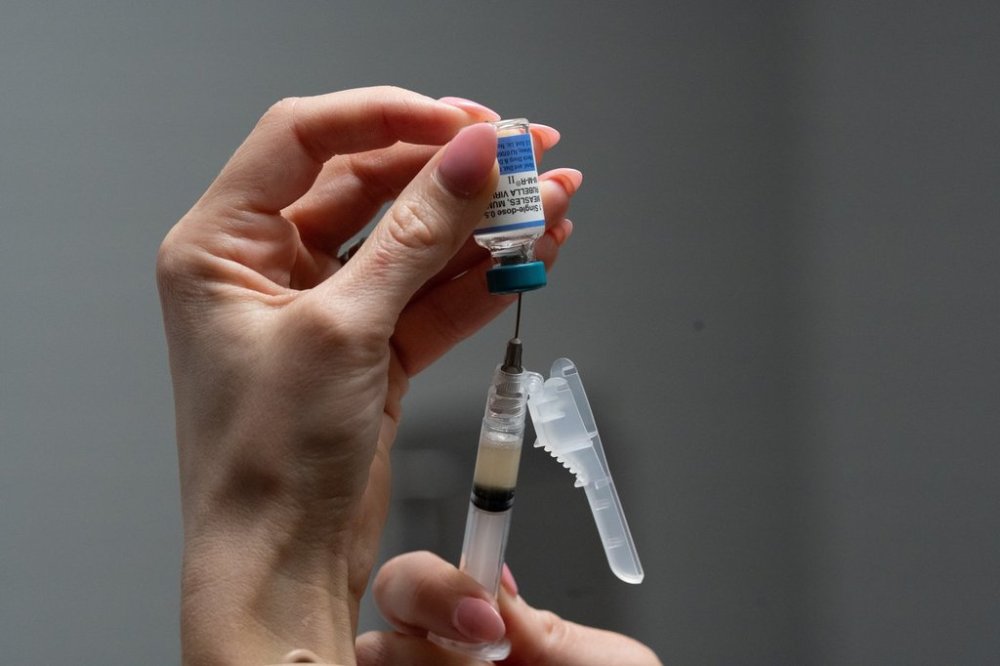
“We think it’s an emerging and important public health issue,” he said.
MacLellan said the picture of vaccine hesitancy that emerges from the data is complex.
“What health care professionals and public health officials need to understand is that Canadians who have hesitated about vaccines come from different places and have different reasons for why they’re hesitant, and it would be really important not to make it a political issue,” he said.
Twenty-four per cent of people who took the survey said they had declined to get a vaccine after it was recommended by a doctor. They cited different reasons for that choice, including the cost of vaccines that are not covered by provincial health plans.
The most common reason for refusal, however, was concern about negative outcomes or side effects.
Millennial women and Gen Z men were, at 30 per cent, the most likely to say they passed on a shot for themselves. The report says 20 per cent of Gen Z women surveyed declined a vaccine.
Dr. Joss Reimer, Canada’s chief public health officer, said Thursday it’s troubling to hear people are choosing not to get vaccinated.
“Vaccines are one of the most successful medical inventions we’ve ever had,” she said.
She added that people are “often bombarded with misinformation” about vaccines and that millions of Canadians don’t have a family doctor.
“We often hear the term ‘anti-vaxxers’ and I think that that’s a term that applies to a very tiny group of people,” she said. “Most people that are not caught up on their vaccines, it’s not because they are against vaccines — they may have some hesitancy, or they may just have competing priorities in their life.”
Overall, the survey found women were more likely than men to pass on a recommended vaccine, and people with a high school education or less were more likely to decline a vaccine than those with a university-level education.
Fewer people expressed hesitation about vaccinating their children, with just 16 per cent of survey respondents with kids saying they’d said no to a recommended shot. Parents of children between the ages 11 and 15 reported the highest level of vaccine refusal, at 27 per cent.
People in Alberta stood out, with 35 per cent of respondents in that province reporting they had said no to a shot. Quebecers were least likely to turn down a recommended vaccine, at 19 per cent.
“In our research over 10 years, Alberta has become the least trusting province in Canada, whether we’re talking about vaccines or government or corporations or news media,” MacLellan said.
The poll also found a sharp divide along partisan lines, with supporters of the Conservative party far more likely to say they declined a recommended vaccine, at 39 per cent.
That dropped to 26 per cent among those who said they don’t support any political party, 14 per cent among supporters of the Bloc Québécois, 13 per cent among Liberal supporters and 12 per cent among supporters of the New Democrats.
“The Conservative party has, at least under the current leader, made itself the party of the outsider, the party of the angry and the outsider segment who don’t feel represented in government. So that feeds into a feeling of mistrust,” MacLellan said.
But MacLellan urged public health officials not to politicize vaccine hesitancy and to avoid the polarization that happened during the COVID-19 pandemic.
The bright spot, he said, is that a large majority of Canadians from all provinces and all political stripes report that they trust health care professionals — particularly family doctors — to give them accurate information.
MacLellan’s advice to public health officials is to work to better understand the people who feel hesitant about vaccines “and then develop communications and messages that can be used by health care workers to address those specific factors.”
Reimer said the Public Health Agency of Canada is working to ensure people have accurate and reliable information, and that doctors and front-line health providers have consistent messages for their patients.
Proof Strategies surveyed 1,501 Canadians between Jan. 7-15 on a variety of topics, and compiled information specifically on vaccines this month.
The Canadian Research Insights Council, an industry organization that promotes polling standards, says online surveys cannot be assigned a margin of error because they do not randomly sample the population.
This report by The Canadian Press was first published May 14, 2026.