
B.C. privacy adjudicator finds short-term rental addresses should remain private
Advertisement
Read this article for free:
or
Already have an account? Log in here »
We need your support!
Local journalism needs your support!
As we navigate through unprecedented times, our journalists are working harder than ever to bring you the latest local updates to keep you safe and informed.
Now, more than ever, we need your support.
Starting at $15.99 plus taxes every four weeks you can access your Brandon Sun online and full access to all content as it appears on our website.
Subscribe Nowor call circulation directly at (204) 727-0527.
Your pledge helps to ensure we provide the news that matters most to your community!
To continue reading, please subscribe:
Add Brandon Sun access to your Free Press subscription for only an additional
$1 for the first 4 weeks*
- Enjoy unlimited reading on brandonsun.com
- Read the Brandon Sun E-Edition, our digital replica newspaper
*Your next Free Press subscription payment will increase by $1.00 and you will be charged $20.95 plus GST for four weeks. After four weeks, your payment will increase to $24.95 plus GST every four weeks.
Read unlimited articles for free today:
or
Already have an account? Log in here »
VANCOUVER – British Columbia’s Office of the Information and Privacy Commissioner says the City of Vancouver is required to refuse to disclose addresses of short-term rental operators because it would reveal where “they live their private lives.”
An adjudicator’s ruling this week is the latest decision in a years-long freedom of information dispute with housing advocate Rohana Rezel, a tech industry worker who has been campaigning for greater transparency on short-term rentals and first sought business licence and address information on Airbnb operations in 2019.
The decision says disclosing the addresses of short-term rental operations would expose operators to potential “harassment, financial harm, and reputational damage.”
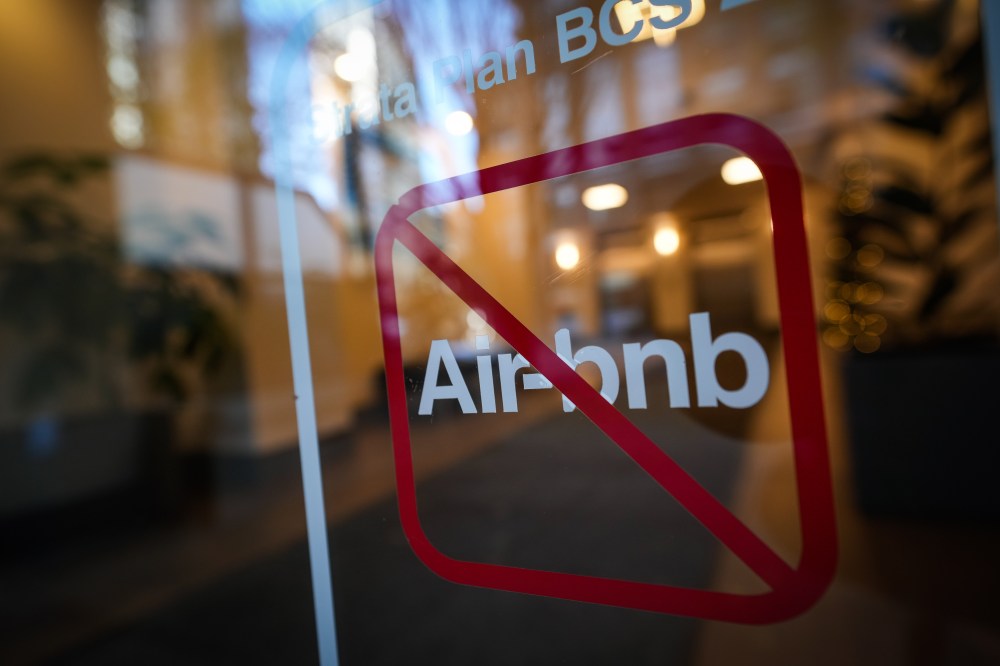
The adjudicator ruled business licence numbers were not sensitive, with that information already available online.
But Rezel wanted the operators’ home addresses to prove whether they were in breach of rules requiring Vancouver short-term rentals to be restricted to an owner’s principal residence, and licensed to a person living there.
Rezel said he also wanted to determine if long-term tenants were instead being evicted to make way for short-term renters.
He said provincial and city regulations had been strengthened since he began raising concerns about short-term rentals’ impacts on the rental housing market.
The adjudicator’s decision said both the city and the company opposed releasing the disputed information based on concerns that short-term rental operators would be exposed to harassment and “vigilante activities.”
Airbnb and the City of Vancouver did not immediately respond to a request for comment.
Operators also argued that they were worried about enabling theft and vandalism if their addresses were exposed, but the adjudicator found those arguments “too speculative.”
Rezel said he felt the years of seeking transparency from the city and company were worth it, even if he wasn’t ultimately successful, now that “scofflaws” have to contend with short-term rental regulations from both the city and province.
He said his public activism has been tamed since he became a father, and his son was still in diapers when he began the freedom-of-information fight. Now he’s in elementary school.
“I just don’t have the means to do it and even if I do it, I’m up against a billion-dollar company, billion-dollar city, right? I’m not going to win. I’m realistic now,” Rezel said.
He said he still had “very strong feelings” about how to solve the housing crisis “because I don’t believe the market is ever going to solve the crisis.”
“It’s never been done anywhere in the world. The most hypercapitalist place in the world is probably Singapore, and they solved it through government housing, or government-backed housing. I fundamentally still believe that.”
Rezel says his advocacy is more behind the scenes now, and he’s since set his sights on the recent announcement of data centres being built in Vancouver, believing it will be the “new battle” to watch.
“Yesterday, I filed a (freedom of information) request about Ken Sim’s AI usage,” he said. “You might lose a court battle, but the awareness that you’ve raised, or … the stink you’ve raised contributes to a better society in the long run.”
This report by The Canadian Press was first published May 14, 2026