
Rwandan genocide suspect Kabuga dies in custody in The Hague at age 91
Advertisement
Read this article for free:
or
Already have an account? Log in here »
We need your support!
Local journalism needs your support!
As we navigate through unprecedented times, our journalists are working harder than ever to bring you the latest local updates to keep you safe and informed.
Now, more than ever, we need your support.
Starting at $15.99 plus taxes every four weeks you can access your Brandon Sun online and full access to all content as it appears on our website.
Subscribe Nowor call circulation directly at (204) 727-0527.
Your pledge helps to ensure we provide the news that matters most to your community!
To continue reading, please subscribe:
Add Brandon Sun access to your Free Press subscription for only an additional
$1 for the first 4 weeks*
- Enjoy unlimited reading on brandonsun.com
- Read the Brandon Sun E-Edition, our digital replica newspaper
*Your next Free Press subscription payment will increase by $1.00 and you will be charged $20.95 plus GST for four weeks. After four weeks, your payment will increase to $24.95 plus GST every four weeks.
Read unlimited articles for free today:
or
Already have an account? Log in here »
KIGALI, Rwanda (AP) — A Rwandan suspect charged in connection with the 1994 genocide died in a hospital while in custody in The Hague, Netherlands, a U.N. court said Saturday, three years after the court declared him unfit to continue standing trial.
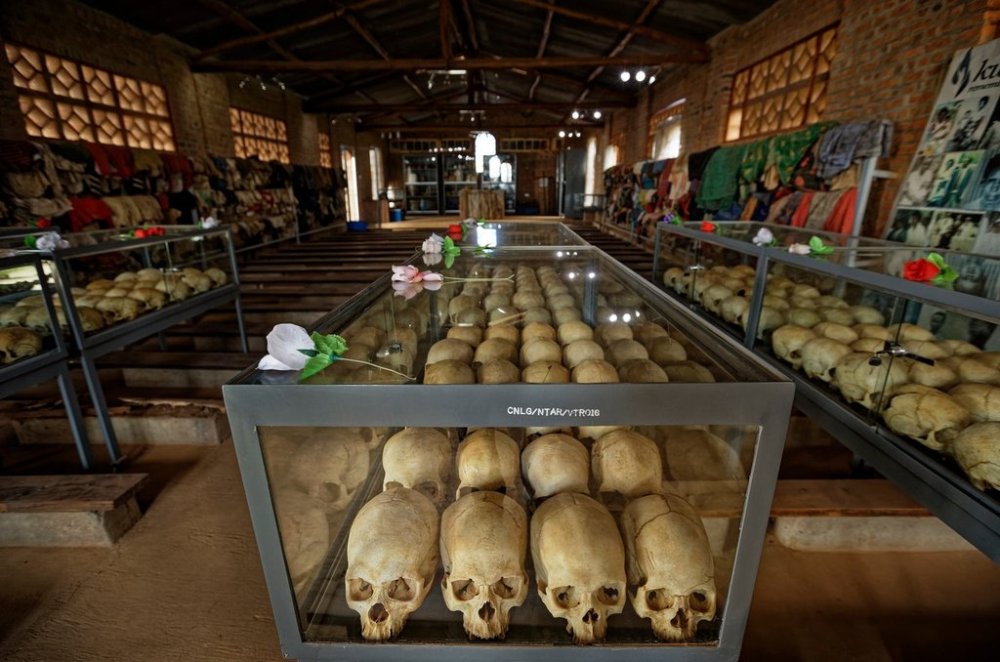
Félicien Kabuga, 91, was accused of encouraging and bankrolling the mass killing of Rwanda’s Tutsi minority. His trial began in 2022, nearly three decades after the 100-day massacre that left 800,000 dead.
In 2023, the judges declared him unfit to continue standing trial because he had dementia and said they would establish a procedure to continue hearing evidence without the possibility of convicting him.
On Saturday, the U.N. International Residual Mechanism for Criminal Tribunals said in a statement that Kabuga died while hospitalized in The Hague, and the medical officer of the U.N. Detention Unit was notified immediately.
An investigation into his death has been ordered to establish the circumstances of how he died, the statement said.
An arrest warrant for Kabuga was issued in 2013, and a $5 million bounty was announced. He was arrested in 2020 in France, and his trial started in 2022.
Kabuga was charged with genocide, incitement to commit genocide, conspiracy to commit genocide, as well as persecution, extermination and murder. He pleaded not guilty. If he had been convicted, he would have faced a maximum sentence of life imprisonment.
After the court declared him unfit to stand trial, he remained in detention, pending the resolution of the issue of his provisional release to a state willing to accept him on its territory.
His lawyer had said that he wouldn’t return to his home country, Rwanda, which had offered to take him, as he feared he would be mistreated.
The declaration that he was unfit for trial angered many genocide survivors in Rwanda, who felt his crimes deserved the maximum sentence.
The genocide was triggered on April 6, 1994, when a plane carrying President Juvénal Habyarimana was shot down and crashed in the capital, Kigali, killing the leader who, like the majority of Rwandans, was an ethnic Hutu. Kabuga’s daughter married Habyarimana’s son.