
Portuguese procession held in Montreal despite permit refusal
Advertisement
Read this article for free:
or
Already have an account? Log in here »
We need your support!
Local journalism needs your support!
As we navigate through unprecedented times, our journalists are working harder than ever to bring you the latest local updates to keep you safe and informed.
Now, more than ever, we need your support.
Starting at $15.99 plus taxes every four weeks you can access your Brandon Sun online and full access to all content as it appears on our website.
Subscribe Nowor call circulation directly at (204) 727-0527.
Your pledge helps to ensure we provide the news that matters most to your community!
To continue reading, please subscribe:
Add Brandon Sun access to your Free Press subscription for only an additional
$1 for the first 4 weeks*
- Enjoy unlimited reading on brandonsun.com
- Read the Brandon Sun E-Edition, our digital replica newspaper
*Your next Free Press subscription payment will increase by $1.00 and you will be charged $20.95 plus GST for four weeks. After four weeks, your payment will increase to $24.95 plus GST every four weeks.
Read unlimited articles for free today:
or
Already have an account? Log in here »
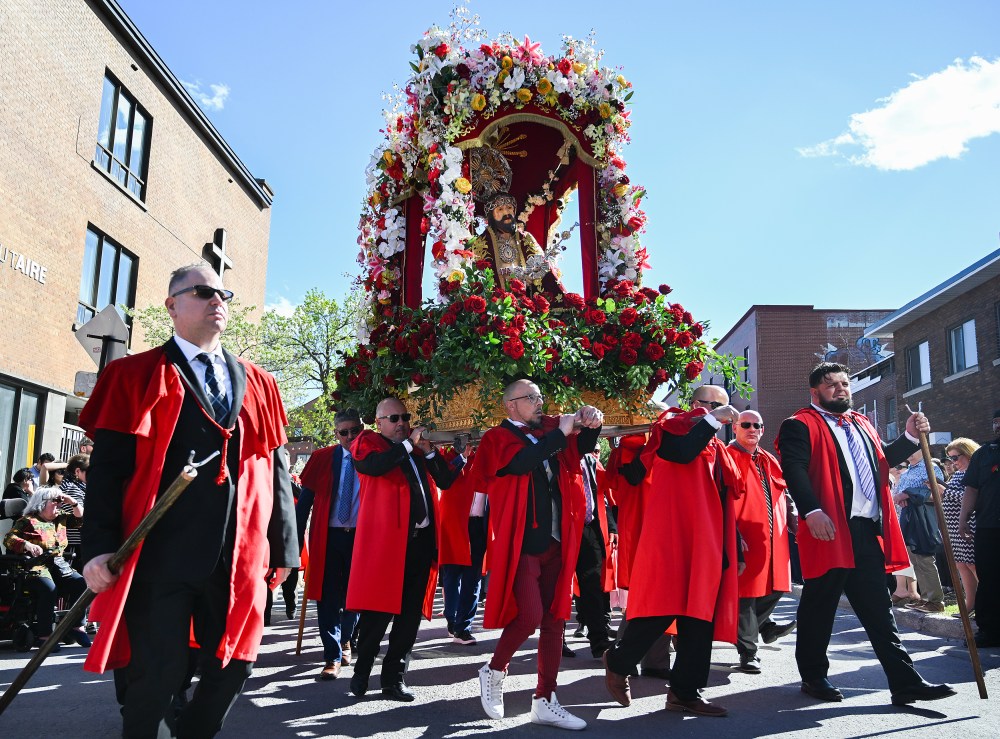
MONTREAL – The annual Portuguese Santo Cristo procession took place Sunday in Montreal’s Plateau-Mont-Royal, drawing relief from the city’s Portuguese community after a permit was refused last week.
Organizing member Emanuel Linhares said the group behind the procession began the permit process on Feb. 12 and only received the refusal 10 days before the event.
The procession is a long-standing religious and cultural tradition in Montreal’s Portuguese community, said Linhares. It is rooted in devotion to “Senhor Santo Cristo dos Milagres”, a Catholic devotion originating in the Azores, part of Portugal, where annual spring processions honour a statue of Christ believed by devotees to be associated with miracles and protection, he said.

Monica Monteiro, 46, said she’s been attending the procession almost every year since she was little.
“I’m very happy it was not cancelled, I couldn’t believe it when I heard (the organizers) were having trouble.”
“Family and friends gather here every year, it’s an occasion to see each other, celebrate our community, and dress up,” said Monteiro, wearing a light blue dress.
“We aren’t doing anything wrong,” said 87-year-old Irene Araujo, standing on the stoop where the procession passed by. She was holding a rosary in her right hand, letting it slip through her fingers.
The march, Linhares said, is a silent street procession accompanied by philharmonic bands; it doesn’t include prayers or religious chants.
“It is a religious march, but it’s also a tradition; it has been happening for the past 60 years in Montreal,” he said.
He said the Plateau-Mont-Royal borough cited Quebec’s new law on public prayer, which prohibits organized public prayer in certain public spaces under the province’s secularism framework introduced in April.
Linhares said the decision caused him concern, given the size of the event. Each year, it draws at least 2,000 people from across Canada and the United States, as well as participants from the Azores, an autonomous Portuguese archipelago in the North Atlantic.
“Of course, I got a little bit nervous for sure,” he said.
Linhares said Montreal police confirmed on May 13 that the procession could go ahead, and that the borough acknowledged the police authorization for the event.
Linhares said organizers plan to use the coming year to push for clearer, citywide rules on cultural and religious processions, arguing that interpretations vary between boroughs and should be made consistent across Montreal.
The procession began around 4 p.m. at Mission Santa Cruz Catholic Church on Rachel Street, followed by a route through Montreal’s Plateau-Mont-Royal, before returning to the church.
This report by The Canadian Press was first published May 17, 2026.