
Manitoba politicians spar as new Statistics Canada figures point to inflation jump
Advertisement
Read this article for free:
or
Already have an account? Log in here »
We need your support!
Local journalism needs your support!
As we navigate through unprecedented times, our journalists are working harder than ever to bring you the latest local updates to keep you safe and informed.
Now, more than ever, we need your support.
Starting at $15.99 plus taxes every four weeks you can access your Brandon Sun online and full access to all content as it appears on our website.
Subscribe Nowor call circulation directly at (204) 727-0527.
Your pledge helps to ensure we provide the news that matters most to your community!
To continue reading, please subscribe:
Add Brandon Sun access to your Free Press subscription for only an additional
$1 for the first 4 weeks*
- Enjoy unlimited reading on brandonsun.com
- Read the Brandon Sun E-Edition, our digital replica newspaper
*Your next Free Press subscription payment will increase by $1.00 and you will be charged $20.95 plus GST for four weeks. After four weeks, your payment will increase to $24.95 plus GST every four weeks.
Read unlimited articles for free today:
or
Already have an account? Log in here »
WINNIPEG – New numbers from Statistics Canada show Manitoba tied for the highest annual inflation rate among the provinces in April, driven in part by jumps in food prices and property taxes.
Manitoba’s inflation rate, compared with April of last year, was 4.3 per cent — tied with Nova Scotia and above the national average of 2.8 per cent.
Property taxes and related charges rose 19 per cent while food costs rose 4.9 per cent — both were steeper increases than in any other province.
The Manitoba government said it is helping the situation through a recent cut to the provincial fuel tax and higher tax credits for renters and homeowners.
The NDP government is also planning to eliminate the provincial sales tax on more food as of July 1, but a bill to enact the change has not yet been passed by the legislature.
The Opposition Progressive Conservatives are calling on the government to cut income taxes as well.
“We have higher provincial income taxes, higher education property taxes (than some other provinces). All the while, utilities, gas and food continue to skyrocket,” Tory finance critic Lauren Stone said Tuesday.
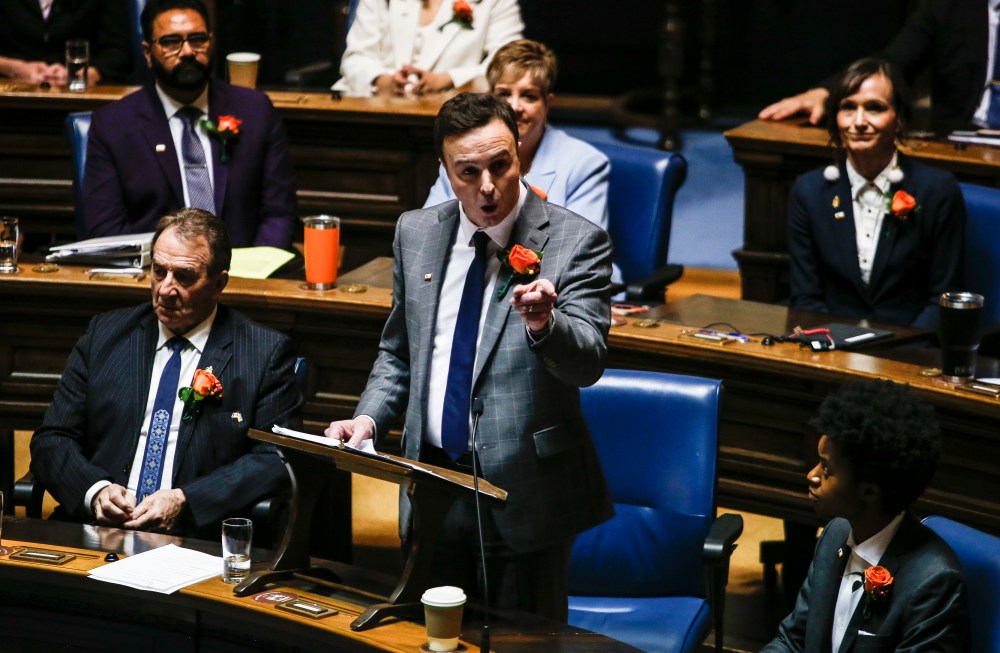
Finance Minister Adrien Sala called on the Tories to allow a budget implementation bill to pass before the summer break in June in order to enact the food-tax cut by Canada Day.
“We ask the members opposite today — will they finally stop with the games and get on board,” Sala said in question period.
Basic groceries such as bread, meat, cereal and produce are already tax-exempt. The budget bill would extend the exemption to snacks, soft drinks and prepared meals such as rotisserie chickens in grocery and convenience stores.
The Tories want the bill changed to include a rise in the amount of income people can earn before being taxed.
Property taxes jumped in Winnipeg and some other areas of Manitoba over the past year, driven largely by higher taxes on properties imposed by school divisions. The NDP government replaced a tax credit and refund system enacted by the former Tory government with a new credit that offers more relief to lower-value homes but has many medium and high-value properties paying more.
Food prices have been increasing as well.
Some of the main factors behind April’s increase were jumps in the cost of beef, processed meat, coffee and tea, and non-alcoholic beverages.
“Manitoba’s supply chain differs somewhat from other provinces,” a statement from Statistics Canada read.
“The province is located farther from agricultural hubs, resulting in higher transportation costs that can be passed on to consumers. This is especially seen in products that are seasonal, such as fresh fruit and vegetables.
“In April, prices for fresh fruit rose 4.3 per cent year over year, while prices declined by 0.5 per cent at the Canada level. In addition, Manitoba has fewer grocery chains, which can limit competition and contribute to higher prices.”
Premier Wab Kinew has hinted at new relief measures to help people with the rising cost of living. He said earlier this year he was considering a temporary additional cut to the provincial fuel tax. He told reporters last month that some sort of direct subsidy for healthy food might be better.
This report by The Canadian Press was first published May 19, 2026.