
Erin Chorney’s killer denied in bid for full parole
Advertisement
Read this article for free:
or
Already have an account? Log in here »
We need your support!
Local journalism needs your support!
As we navigate through unprecedented times, our journalists are working harder than ever to bring you the latest local updates to keep you safe and informed.
Now, more than ever, we need your support.
Starting at $15.99 plus taxes every four weeks you can access your Brandon Sun online and full access to all content as it appears on our website.
Subscribe Nowor call circulation directly at (204) 727-0527.
Your pledge helps to ensure we provide the news that matters most to your community!
To continue reading, please subscribe:
Add Brandon Sun access to your Free Press subscription for only an additional
$1 for the first 4 weeks*
- Enjoy unlimited reading on brandonsun.com
- Read the Brandon Sun E-Edition, our digital replica newspaper
*Your next Free Press subscription payment will increase by $1.00 and you will be charged $20.95 plus GST for four weeks. After four weeks, your payment will increase to $24.95 plus GST every four weeks.
Read unlimited articles for free today:
or
Already have an account? Log in here »
WINNIPEG — Convicted murderer Michael Bridges’ request for full parole has been denied because he failed a drug test and still poses a risk of violence.
Bridges was sentenced in 2005 to life in prison without a chance of parole until 2029 for the killing of 18-year-old Erin Chorney. In a “faint hope” hearing in 2021, a jury found Bridges should be allowed to apply for parole in June 2026.
In 2002, Bridges strangled and drowned Chorney in a bathtub and buried her body in another person’s grave in Brandon. He wasn’t arrested until police set up a “Mr. Big” sting operation in 2004, when he confessed the crime to an undercover police officer.
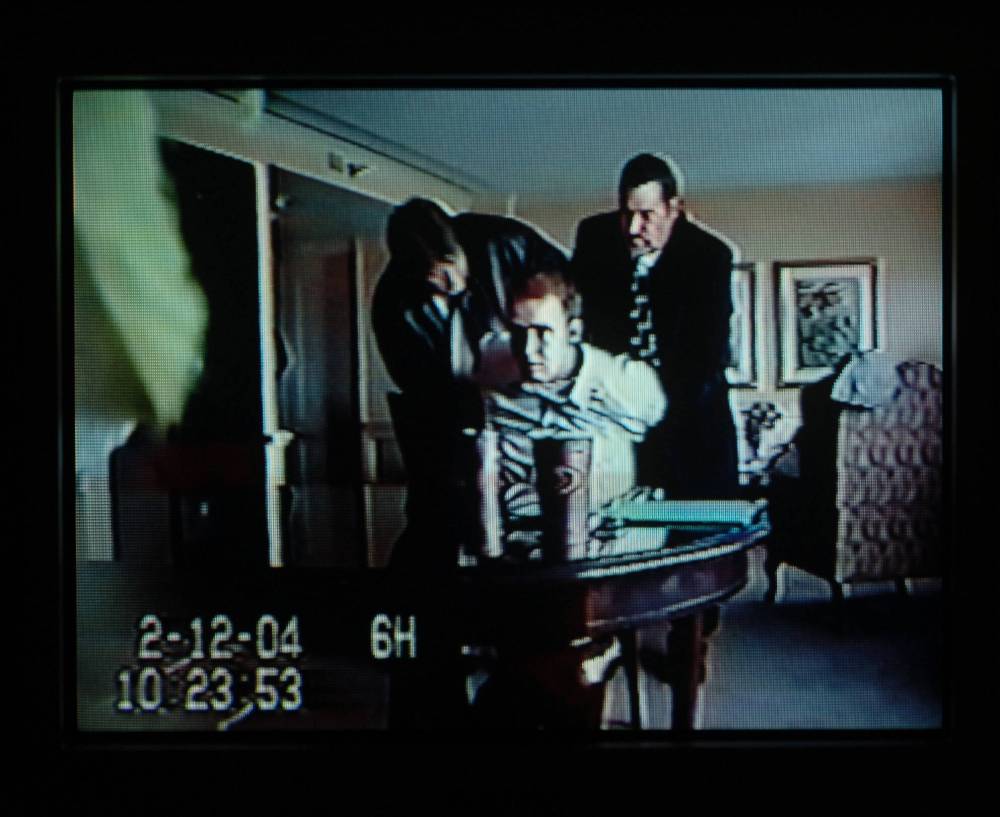
A still image from a video of the police undercover sting that netted Michael Bridges in 2004. (The Brandon Sun files)
In 2024, the Parole Board of Canada granted Bridges day parole for a period of six months, with leave privileges included. His parole has continued in six-month increments since then and he has been working full-time, and has been allowed weekend leave passes to stay in his own apartment.
“There were no reported concerns with your behaviour until December 2025, at which time your urinalysis returned positive for cocaine, which you have denied using,” said the decision, dated May 7.
Bridges was subject to another urine test in January, which came back with a “diluted” result. His curfew was reduced until his next test, which came back negative.
The board’s report says he denied the cocaine use, and the “diluted” result came as a result of drinking too much water before the test.
The report also found that Bridges poses a medium risk to relapse into criminal behaviour if he were released on full parole.
The decision said since being assigned a new parole supervisor, there were two incidents in which Bridges approached another parole officer in frustration regarding his urine tests, and to request an extension of his curfew.
“It is reported that your behaviour changes when dealing with female vs. male parole officers, which may reflect a continued negative attitude towards women,” the report states.
During his hearing, Bridges denied having any negative attitudes toward women.
Bridges was convicted of first-degree murder in Chorney’s death and lost a subsequent appeal. In his appeal, he claimed he was an innocent victim of police entrapment.
Chorney’s family started a petition in December opposing the early release of Bridges, saying it would represent a “profound miscarriage of justice.”
“Early release in cases of extreme violence does not restore what was lost, nor does it serve the interests of public safety. Instead, it forces families to relive their trauma repeatedly while reopening wounds that never truly heal,” the petition states.
Rick Chorney, Chorney’s uncle, was glad to hear the board denied Bridges’ full parole. He says he believes that criminals who are convicted of first-degree murder should actually spend life in prison.
“After all, the family of the victims spend life without their loved ones,” he said in a message to the Winnipeg Free Press.
Bridges will continue his day parole for a period of six months. His conditions include not to consume, purchase or possess alcohol or drugs, report all sexual and non-sexual relationships and friendships with women and not to directly or indirectly contact Chorney’s family.
» Winnipeg Free Press