
Supreme Court rules for Black death row inmate from Mississippi over racial bias in makeup of jury
Advertisement
Read this article for free:
or
Already have an account? Log in here »
We need your support!
Local journalism needs your support!
As we navigate through unprecedented times, our journalists are working harder than ever to bring you the latest local updates to keep you safe and informed.
Now, more than ever, we need your support.
Starting at $15.99 plus taxes every four weeks you can access your Brandon Sun online and full access to all content as it appears on our website.
Subscribe Nowor call circulation directly at (204) 727-0527.
Your pledge helps to ensure we provide the news that matters most to your community!
To continue reading, please subscribe:
Add Brandon Sun access to your Free Press subscription for only an additional
$1 for the first 4 weeks*
- Enjoy unlimited reading on brandonsun.com
- Read the Brandon Sun E-Edition, our digital replica newspaper
*Your next Free Press subscription payment will increase by $1.00 and you will be charged $20.95 plus GST for four weeks. After four weeks, your payment will increase to $24.95 plus GST every four weeks.
Read unlimited articles for free today:
or
Already have an account? Log in here »
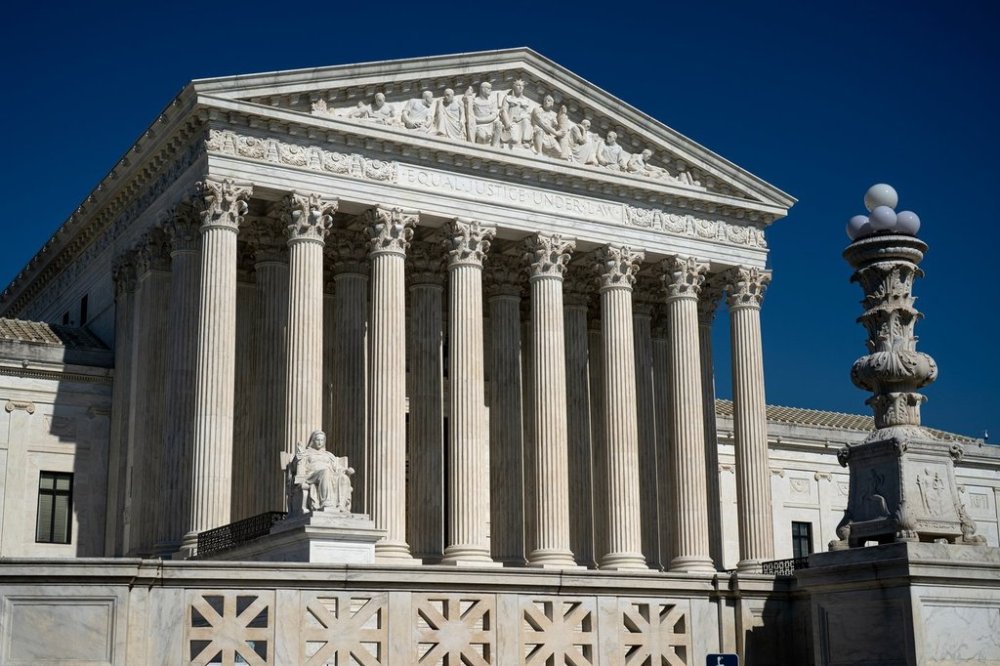
WASHINGTON (AP) — The Supreme Court on Thursday ruled for a Black death row inmate from Mississippi who claims there was racial bias in the makeup of the jury that convicted him.
By a 5-4 vote, the justices sided with Terry Pitchford, who was sentenced to death for his role in the killing of a grocery store owner.
There was one Black juror in a trial with similarities to that of another Black man on Mississippi’s death row, whose conviction the high court overturned seven years ago.
Doug Evans, a now-retired prosecutor with a history of dismissing Black jurors for discriminatory reasons, had excused four other Black people.
The Supreme Court ruled 40 years ago in Batson v. Kentucky that jurors could not be excused from service because of their race and set up a system by which trial judges could evaluate claims of discrimination and the race-neutral explanations by prosecutors.
Pitchford’s case focused on whether his lawyers did enough to object to Judge Joseph Loper’s rulings and whether the state Supreme Court acted reasonably in ruling they had not.
In 2019, the U.S. Supreme Court overturned the death sentence and conviction of Curtis Flowers, because of what Justice Brett Kavanaugh described as a “relentless, determined effort to rid the jury of Black individuals.” Evans was the prosecutor in that case, and Loper presided over the final two of Flowers’ six trials.
Pitchford, now 40, was 18 when he and a friend decided to rob the Crossroads Grocery, just outside Grenada, in northern Mississippi. The friend shot store owner Reuben Britt three times, fatally wounding him, but was ineligible for the death penalty because he was younger than 18. Pitchford was tried for capital murder and was sentenced to death.
The case has been making its way through the court system for 20 years. In 2023, U.S District Judge Michael P. Mills overturned Pitchford’s conviction, holding that the trial judge did not give Pitchford’s lawyers enough of a chance to argue that the prosecution was improperly dismissing Black jurors.
Mills wrote that his ruling was partially motivated by Evans’ actions in prior cases. A unanimous panel of the 5th U.S. Circuit Court of Appeals reversed the ruling.
___
Follow the AP’s coverage of the U.S. Supreme Court at https://apnews.com/hub/us-supreme-court.