
Stay vigilant against foreign interference
Advertisement
Read this article for free:
or
Already have an account? Log in here »
We need your support!
Local journalism needs your support!
As we navigate through unprecedented times, our journalists are working harder than ever to bring you the latest local updates to keep you safe and informed.
Now, more than ever, we need your support.
Starting at $15.99 plus taxes every four weeks you can access your Brandon Sun online and full access to all content as it appears on our website.
Subscribe Nowor call circulation directly at (204) 727-0527.
Your pledge helps to ensure we provide the news that matters most to your community!
To continue reading, please subscribe:
Add Brandon Sun access to your Free Press subscription for only an additional
$1 for the first 4 weeks*
- Enjoy unlimited reading on brandonsun.com
- Read the Brandon Sun E-Edition, our digital replica newspaper
*Your next Free Press subscription payment will increase by $1.00 and you will be charged $20.95 plus GST for four weeks. After four weeks, your payment will increase to $24.95 plus GST every four weeks.
Read unlimited articles for free today:
or
Already have an account? Log in here »
“Foreign interference” is defined by Public Safety Canada as “any covert, deceptive, or coercive activity by a foreign government, or by those acting on their behalf, that is directed at Canada, Canadians, or Canadian interests and is contrary to Canada’s national security.”
Foreign interference in Canadian affairs has increasingly become a concern, especially given new and evolving technologies that embolden malicious actors to meddle in Canadian politics for their own interests.
The art of foreign interference really bloomed during the Cold War; imagine the stereotypical image of a Soviet or American spy, competing to uncover some deeply held secret, an image that is clearly a symptom of Hollywood romanticism but, nonetheless, illustrates that past instances of interference were much more action-oriented or boots-on-the-ground.
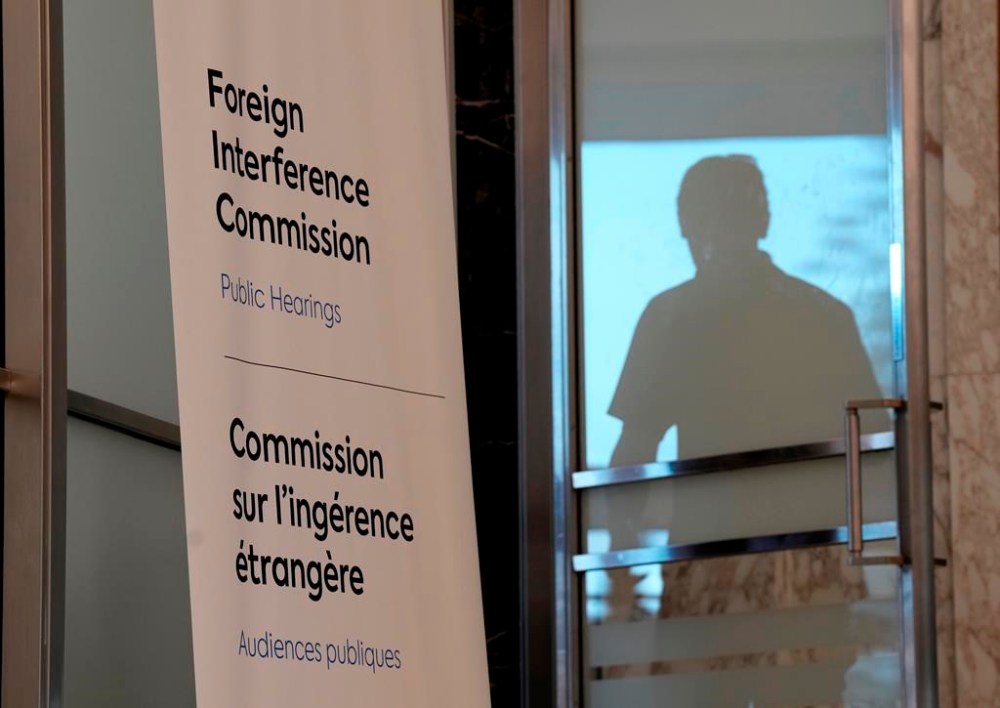
The modern reality is hardly as exciting. Modern foreign interference is characterized by the swaying of public opinion through campaigns that target the information environment, focusing on creating divisions and mistrust, but can extend to threats of violence or physical suppression.
Recently, talk of foreign interference in Canada has run parallel to the current topic of Alberta separatism.
The director of the Canadian Security Intelligence Service, Daniel Rogers, stated in an interview with CBC, “And a referendum like the one in Alberta, which may have a divisive effect on society, is rife for amplification or for the sort of disinformation or foreign interference that we’ve seen from players like Russia in the past.”
But what makes Canada such an enticing target for foreign interference? Actors, whether they’re motivated by financial means or by furthering their own countries’ interests, interfere to manipulate Canadian policy to align with whatever their interests may be, often by influencing public opinion, which eventually turns into policy through the democratic process.
The divisiveness surrounding the topic of separation is not only vulnerable to foreign influence; it is also actively targeted by foreign actors.
According to a report by DisinfoWatch, hostile states like Russia actively fund operations that create websites, YouTube channels and TikTok accounts that intentionally misrepresent data and use prejudicial language to erode trust in the government, divide society, and spread narratives that further Russia’s goals.
Though the federal government describes foreign interference as covert, it can also be overt at times. This raises questions about U.S. influence on Alberta separatism. According to the CBC, an official from the U.S. State Department confirmed meetings with members of the Alberta Prosperity Group, a separatist group.
It’s unclear whether these meetings might be acts of interference and be detrimental to Canadian sovereignty, given the U.S. government’s previous remarks regarding the subject.
At the same time, American influencers at the political extremes are involved in rhetoric that can serve to undermine Canadian social cohesion, and in some cases these influencers may be funded by Russia or their message might be disseminated further by Russian-sponsored media.
Take for example the case of Tenet Media, which, according to the U.S. Department of Justice, received around US$10 million in covert funding from Russia. Influencers who were a part of Tenet Media used social media to spread separatist narratives to millions of people.
While there are many laws in Canada against interference, most focus primarily on threats or intimidation or espionage rather than targeted disinformation campaigns.
This forces communities to work to protect themselves and to be aware of these actors who wish to divide the country. Individuals must be educated on media literacy and sourcing online information, something that is already present in school curricula but needs to be reaffirmed.
In the torrent of social media, I encourage people to take a step back from the infinite flow of content and reflect upon what they are consuming. The effectiveness of foreign interference is aided in part by the rapidity with which information flows on social media; messages can be subtle or subliminal, and it’s easy to absorb all this information without considering what it truly means or where it came from.
The goal is not to halt dialogue about pressing issues like separatism, but to ensure that such dialogue comes from Canada, not from foreign governments who see this time as an opportunity to further their own interests.
COLIN SHAW
Brandon