
Transparency needed with body cameras
Advertisement
Read this article for free:
or
Already have an account? Log in here »
We need your support!
Local journalism needs your support!
As we navigate through unprecedented times, our journalists are working harder than ever to bring you the latest local updates to keep you safe and informed.
Now, more than ever, we need your support.
Starting at $15.99 plus taxes every four weeks you can access your Brandon Sun online and full access to all content as it appears on our website.
Subscribe Nowor call circulation directly at (204) 727-0527.
Your pledge helps to ensure we provide the news that matters most to your community!
To continue reading, please subscribe:
Add Brandon Sun access to your Free Press subscription for only an additional
$1 for the first 4 weeks*
- Enjoy unlimited reading on brandonsun.com
- Read the Brandon Sun E-Edition, our digital replica newspaper
*Your next Free Press subscription payment will increase by $1.00 and you will be charged $20.95 plus GST for four weeks. After four weeks, your payment will increase to $24.95 plus GST every four weeks.
Read unlimited articles for free today:
or
Already have an account? Log in here »
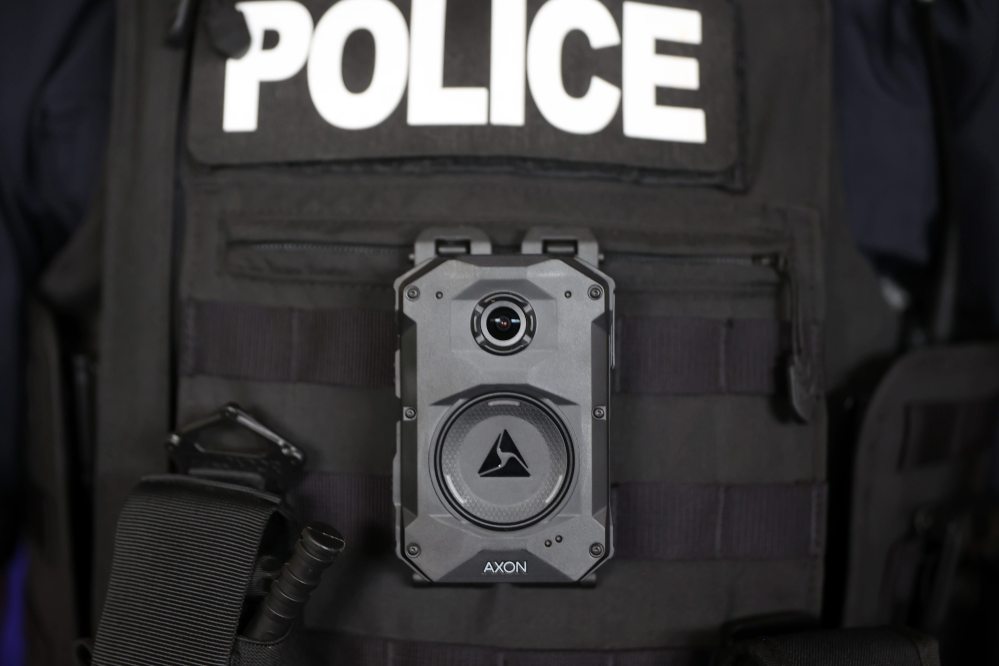
The long wait by the Brandon Police Service for body-worn cameras is now over, with the news that 12 BPS officers have been assigned to their use, with a total of 65 cameras operational before the year is out.
As we reported earlier this week, police say officers with body-worn cameras will be expected to turn them on during “any public encounter,” including calls for service, traffic stops and any interaction “where there could potentially be evidentiary value.”
Insp. Jason Dupuis told the Sun that he believes the use of these cameras is going to be “very positive.”
“Everyone is going to be cognizant of what they’re saying and I think it shows … full transparency on both sides.”
We appreciate the sentiment behind the inspector’s comments, but the public must understand that the reality on the ground will likely be somewhat different. Full transparency has never really been an option.
Body cameras have been sold to the public by police forces and the companies that manufacture them as unbiased digital witnesses to police actions. The body cameras are promoted as a means to improve accountability to the public, with the so-called “observer effect” acting to both deter police misconduct and in turn prompt better public compliance.
Police forces view camera footage as the best method to answer public allegations made against an officer in the course of their duties — it’s no wonder that police forces would push to have them as part of their arsenal.
Body cameras are also seen as a way to speed up trials and reduce legal costs, with perpetrators more likely to plead out if video footage undermines their version of events, and improved quality of evidence in court.
But the question of police transparency when it comes to the footage obtained, and the police policy when it comes to officer discipline remains a problematic one that will likely be the subject of legal tests down the road.
Dupuis told us that if officers do not abide by the BPS policy and don’t turn on their camera when expected, “a discipline process will be done,” adding that there would be a grace period for officers learning to use the new equipment.
The Brandon police have offered the public a general idea of what is in their body camera policy, but we find ourselves forced to agree with Brandon University Prof. Christopher Schneider, who asserts that this kind of policy should be released to the public so ordinary citizens can have a “baseline expectation of how these cameras are going to work.”
It’s worth noting that in 2022, the RCMP published a body-worn camera operational policy “to provide guidance and direction to RCMP officers on the use of body-worn cameras as well as their roles and responsibilities,” according to the RCMP website.
That policy established clear guidelines of how and when RCMP officers would be expected to start recording during the lawful execution of their duties. In reading the guidelines, we note that officers are also subject to the force’s own code of conduct if officers don’t turn on their camera when they’re supposed to.
“In the rare circumstance that an RCMP officer commits a statutory offence, the file could be referred for criminal investigation,” reads the “body-worn cameras” section of the RCMP website.
Brandonites should expect no less of a clear and direct policy from the Brandon Police Service. We hope this will be part of the “additional information” that the City of Brandon mentioned was soon to be “made available” in its press release on May 29.
If the public is being asked to pay for these body cameras through higher taxes and increasing police budget, taxpayers have a right to that level of transparency.