
A cautionary tale on several fronts
Advertisement
Read this article for free:
or
Already have an account? Log in here »
We need your support!
Local journalism needs your support!
As we navigate through unprecedented times, our journalists are working harder than ever to bring you the latest local updates to keep you safe and informed.
Now, more than ever, we need your support.
Starting at $15.99 plus taxes every four weeks you can access your Brandon Sun online and full access to all content as it appears on our website.
Subscribe Nowor call circulation directly at (204) 727-0527.
Your pledge helps to ensure we provide the news that matters most to your community!
To continue reading, please subscribe:
Add Brandon Sun access to your Free Press subscription for only an additional
$1 for the first 4 weeks*
- Enjoy unlimited reading on brandonsun.com
- Read the Brandon Sun E-Edition, our digital replica newspaper
*Your next Free Press subscription payment will increase by $1.00 and you will be charged $20.95 plus GST for four weeks. After four weeks, your payment will increase to $24.95 plus GST every four weeks.
Read unlimited articles for free today:
or
Already have an account? Log in here »
The Manitoba government has made clear that the province’s local governments bear the responsibility of managing their respective finances, but serious questions remain as to the role played by the province in a situation currently facing an RM located near Dauphin.
The provincial government has ordered the Rural Municipality of Lakeshore to borrow almost $2.5 million from the province in order to replenish that RM’s accounts after years of deficits, and to repay that loan back over 10 years at a five per cent interest rate.
Those debt payments will be financed via a three per cent property tax increase that will be charged to Lakeshore taxpayers.
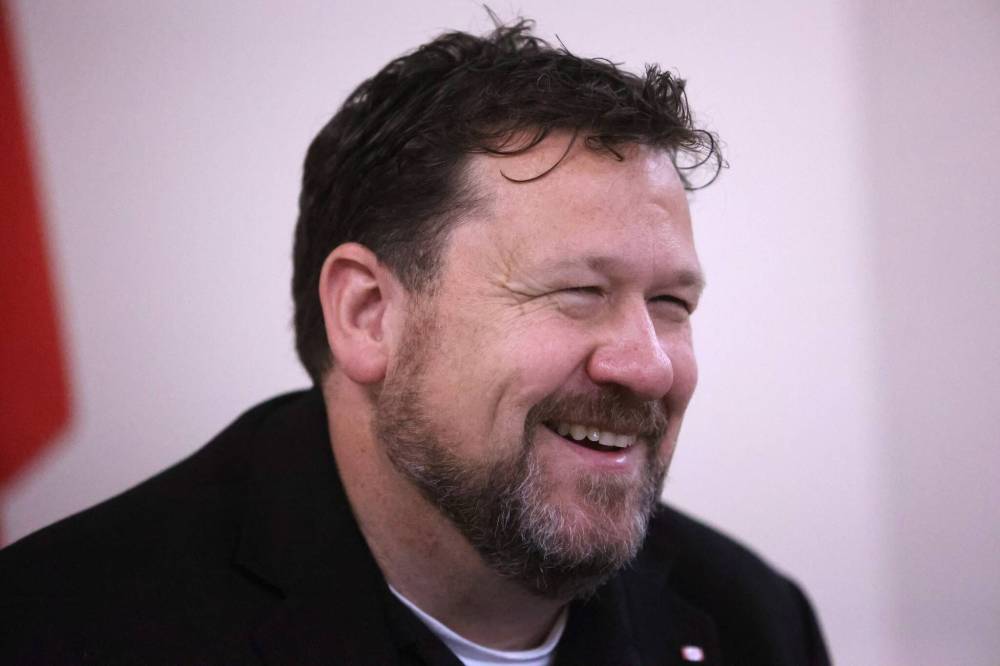
Many of those same taxpayers are both angered and confused by the prospect of paying higher taxes to fix a problem that has not yet been clearly explained to them. In September 2024, the former reeve and two councillors resigned, and the former chief executive officer and his assistant were then placed on leave the following month by the acting reeve, Michael Brunen.
Brunen told reporters at the time that he had uncovered deficiencies with the RM’s spending and financial accounting, and had communicated his concerns to the RCMP. The RCMP has confirmed that an investigation was opened, but now says it was subsequently closed without anybody being charged. That is a surprise to many Lakeshore residents, who have been repeatedly told that the ongoing RCMP investigation prevented officials from providing detailed explanations regarding the fiscal shortfall now facing the RM.
According to a repayment document that was made available at a public meeting in the RM on Monday, Lakeshore had an accumulated deficit of $1.8 million as of 2023, which grew by $672,000 during the following fiscal year. If there is no ongoing police investigation, why would the province and RM officials not explain to Lakeshore residents — the people who will be paying higher taxes in order to pay back the loan from the province — how the shortfall happened in 2023, and why it was allowed to increase the following year? They are the folks who are being stuck with the bill, after all. They deserve to know the reasons why.
They also deserve to know why the provincial government did not move faster in order to address the situation in Lakeshore and prevent it from worsening. Local governments are legally prohibited from running deficits. Given that fact, why didn’t the province step in after the deficit of almost $2 million for the 2023 fiscal year? Why did they wait until 2025, when the fiscal hole was even deeper for the RM?
Even more importantly, how can taxpayers in the dozens of other local governments across the province be confident that the problems that have occurred in Lakeshore could not also happen in their respective communities?
Viewed from that perspective, the Lakeshore situation is a cautionary tale for the province, for local governments and for Manitoba taxpayers generally. For the provincial government, it emphasizes the importance of ensuring that every local government is adhering to applicable accounting standards, and are managing their finances in a fiscally responsible, deficit-free manner. Lenience and lax enforcement does not serve the public interest.
For local governments, the situation is also a reminder of the need for careful spending practices, rigorous accounting practices and diligent audit procedures. Beyond that, however, what has happened in Lakeshore also underscores the importance of transparency regarding community finances, of openness with residents regarding spending and fiscal challenges, and of the wisdom in maintaining a “rainy day fund” to help address unexpected shortfalls.
For individual taxpayers, the Lakeshore situation highlights the importance of electing and hiring qualified individuals to manage our local governments, and of ensuring that they consistently perform their duties in a competent, transparent and accountable manner. That is necessary because, as we have seen in Lakeshore, when things go wrong, it is local taxpayers who must bear the cost and consequences of fixing the problem.