
Quebec town of Terrasse-Vaudreuil recognizes trees as living beings with rights
Advertisement
Read this article for free:
or
Already have an account? Log in here »
We need your support!
Local journalism needs your support!
As we navigate through unprecedented times, our journalists are working harder than ever to bring you the latest local updates to keep you safe and informed.
Now, more than ever, we need your support.
Starting at $15.99 plus taxes every four weeks you can access your Brandon Sun online and full access to all content as it appears on our website.
Subscribe Nowor call circulation directly at (204) 727-0527.
Your pledge helps to ensure we provide the news that matters most to your community!
To continue reading, please subscribe:
Add Brandon Sun access to your Free Press subscription for only an additional
$1 for the first 4 weeks*
- Enjoy unlimited reading on brandonsun.com
- Read the Brandon Sun E-Edition, our digital replica newspaper
*Your next Free Press subscription payment will increase by $1.00 and you will be charged $20.95 plus GST for four weeks. After four weeks, your payment will increase to $24.95 plus GST every four weeks.
Read unlimited articles for free today:
or
Already have an account? Log in here »
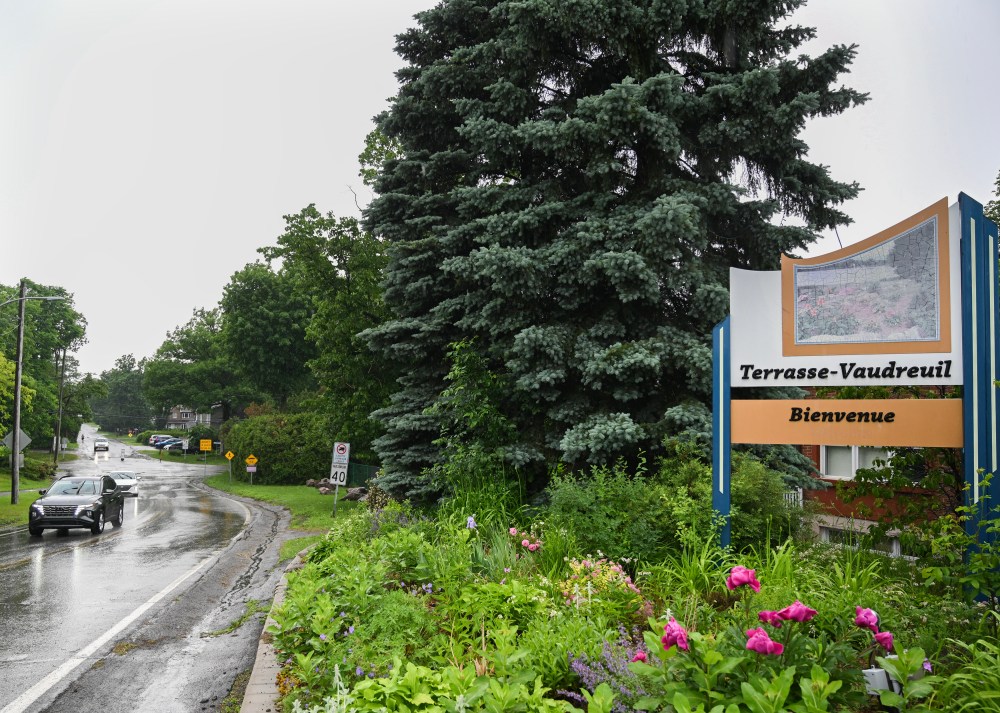
MONTREAL – A small town west of Montreal has decided to officially recognize trees as living beings with rights of their own, in what an environmental organization describes as a first in Quebec and Canada.
A resolution adopted by Terrasse-Vaudreuil city council on June 9 declares that trees are worthy of protection, “including the right to life, to natural growth, to integrity and to regeneration.”
Mayor Michel Bourdeau says Quebec filmmaker André Desrochers inspired the community to take action.
He said Desrochers’ film, called “Des arbes et des arts” convinced citizens that trees are living entities that live, breathe and communicate with each other through their root systems.
“A tree is like a human being,” Bourdeau said. “It breathes, it lives, it takes in water. It protects us from all sorts of things.”
The International Observatory of Nature Rights says the town of about 2,000 also became the first municipality in Quebec and Canada to sign on to the Universal Declaration of the Rights of the Tree, which is an international initiative spearheaded by environment groups.
Its three main core articles state that trees are living beings and a common human good, that life on Earth depends on their existence, and that humans must act in “fraternity and solidarity” with them.
Bourdeau says the new resolution means the town will review its existing rules and bylaws to ensure that trees are protected or replaced, if they must be cut down. He also plans to implement measures to further increase the canopy, including offering trees for residents to plant.
“Trees are a true green infrastructure,” he said. “They help reduce urban heat islands, improve air quality, manage precious water resources and protect biodiversity.”
Bourdeau said the move was adopted unanimously by councillors, and appears popular with citizens as well. He also doesn’t anticipate it causing any problems, such as interfering with development, although that’s partly because the town has no more vacant land on which to build.
He says his town is a natural fit to become a tree ambassador. It’s built in the woods, and its citizens value a rural lifestyle. Its residents are also intimately aware of the damage caused by extreme weather and climate change, after being flooded three times in recent years.
When it comes to fighting climate change, “our biggest ally is the trees,” he said.
Yenny Vega Cardenas, the president of the International Observatory of Nature Rights, says the declaration on tree rights is part of the same push that has seen jurisdictions around the world, from New Zealand to Colombia, grant legal personhood to rivers and other natural areas.
It has also happened in Canada, where Quebec’s Magpie river was granted legal rights by a regional government and the Innu Council of Ekuanitshit in 2021.
But Vega Cardenas says the tree declaration is special because it acknowledges that a single tree is an ecosystem of its own, which can provide shade, food and habitat for other species.
“We need to understand that (trees) have dignity and they have senses,” she said. “Not sentiments, but senses … They can feel and they communicate with each other in a very specific way.”
Karine Péloffy, a lawyer with Ecojustice, described Terrasse-Vaudreuil’s decision as a “very hopeful gesture in the broader movement for the rights of nature,” and said the idea isn’t as strange as it might initially seem.
“We know corporations have legal personhood and rights and they are definitely not living,” she said in a phone interview. “So if some nonliving things can have legal personhood, what’s stopping living beings from equally getting legal personhood?”
In her mind, there’s no reason why trees shouldn’t be granted legal status.
“What do trees do if not standing?” she said. “If anything has standing, it’s a tree.”
This report by The Canadian Press was first published June 21, 2026.