
Supreme Court nominee Joyal cites access to justice, outreach as key contributions
Advertisement
Read this article for free:
or
Already have an account? Log in here »
We need your support!
Local journalism needs your support!
As we navigate through unprecedented times, our journalists are working harder than ever to bring you the latest local updates to keep you safe and informed.
Now, more than ever, we need your support.
Starting at $15.99 plus taxes every four weeks you can access your Brandon Sun online and full access to all content as it appears on our website.
Subscribe Nowor call circulation directly at (204) 727-0527.
Your pledge helps to ensure we provide the news that matters most to your community!
To continue reading, please subscribe:
Add Brandon Sun access to your Free Press subscription for only an additional
$1 for the first 4 weeks*
- Enjoy unlimited reading on brandonsun.com
- Read the Brandon Sun E-Edition, our digital replica newspaper
*Your next Free Press subscription payment will increase by $1.00 and you will be charged $20.95 plus GST for four weeks. After four weeks, your payment will increase to $24.95 plus GST every four weeks.
Read unlimited articles for free today:
or
Already have an account? Log in here »
OTTAWA – Supreme Court of Canada nominee Glenn Joyal describes himself as a “candid and constructive spokesperson” for Manitoba’s highest trial court and the judiciary.
Prime Minister Mark Carney on Monday tapped Joyal, chief justice of the Court of King’s Bench of Manitoba since 2011, to fill the vacancy on the country’s top court left by the retiring Sheilah Martin.
Before becoming a judge, Joyal practised criminal law, constitutional law and civil litigation in Manitoba.
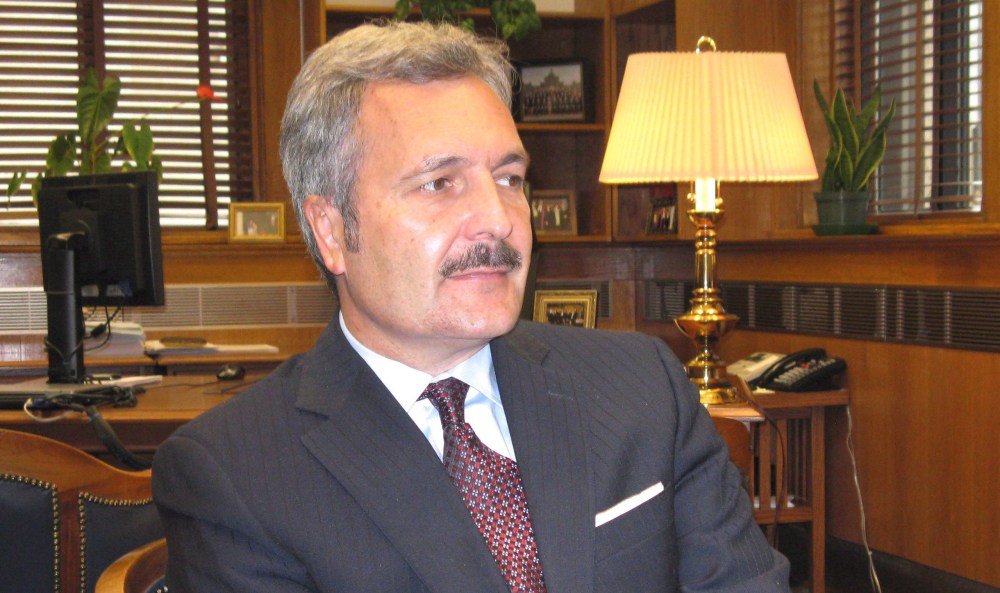
The Prime Minister’s Office praised his work on improving access to justice, modernizing court operations and advancing reconciliation with Indigenous Peoples.
Joyal, 66, grew up in St. Boniface, Man. He has deep Franco-Manitoban roots on his father’s side, and his mother’s parents were Saskatchewan homesteaders from Poland.
In his Supreme Court candidacy submission, Joyal said this bicultural experience provided early exposure to the rewards and challenges that accompany the promotion and protection of a minority official language as well as the celebration of ethnic and cultural differences.
Joyal said his most significant contributions to the legal system have been his efforts to make justice more accessible and to engage with the public on the role of the courts.
“We are living in a new more complex legal era where the judiciary plays an increasingly important but sometimes misunderstood public role,” Joyal wrote in his submission, which was made public Monday.
He said this engagement is taking place in a social and political climate of increasing polarization, misinformation and disinformation among growing populations of seemingly disenfranchised, marginalized and vulnerable groups.
Joyal said during a 2023 panel discussion in Ottawa that protection of the rule of law is dependent upon maintaining public trust and confidence.
“We have an interest in ensuring we do all we can to achieve that goal,” he said.
Joyal added that as a chief justice, he had a responsibility to make sure members of the media have what they need to report information, educate the public and play a constructive role in scrutinizing the work of the courts.
Joyal still sees himself as a “sitting judge” who leads by example, he said in his candidacy submission.
“In so doing, I author many judgments each year,” he wrote. “I am proud of the rigour of my many years of written jurisprudence generally and of certain judgments in particular in which my analysis on specific legal questions or issues has contributed to the growth or clarification of the law.”
Joyal has presided over a wide variety of cases dealing with subjects including public health orders, physician-assisted dying, timely justice, the provision of municipal services in English and French and the killings of four Indigenous women.
In July 2021, Joyal noticed he was being followed by a black sport utility vehicle and confronted the driver.
Police investigated and later charged two lawyers who had hired a private investigator to follow three public officials, including Joyal.
The two lawyers represented several churches that launched a court challenge against Manitoba’s temporary ban on in-person religious services during the COVID-19 pandemic. Joyal was the presiding judge.
Joyal would go on to uphold the validity of public health orders on both constitutional and administrative law grounds.
Canadian Bar Association president Bianca Kratt welcomed Joyal’s nomination, saying his bilingualism, Manitoba roots and long-standing engagement with the province’s legal, francophone, Indigenous and access-to-justice communities would bring an important perspective to the top court.
Conservative MP Larry Brock, the party’s justice critic, expressed hope Joyal would recognize that Liberal soft-on-crime laws violate the Charter rights of Canadians to live in safety and security.
“We also hope he will rule in favour of property rights protections for British Columbia home owners,” he wrote on social media.
The selection process for a new Supreme Court member began in March. An independent advisory board reviewed applications and submitted a short list of qualified candidates to Carney for consideration.
Members of the House of Commons justice committee will take part in a special hearing to learn more about the selection process.
A question-and-answer session will then be held with Joyal and members of the House justice committee and the Senate committee on legal and constitutional affairs.
A date for those events has not yet been set.
This report by The Canadian Press was first published June 22, 2026.