
Science’s wonders never cease
Advertisement
Read this article for free:
or
Already have an account? Log in here »
We need your support!
Local journalism needs your support!
As we navigate through unprecedented times, our journalists are working harder than ever to bring you the latest local updates to keep you safe and informed.
Now, more than ever, we need your support.
Starting at $15.99 plus taxes every four weeks you can access your Brandon Sun online and full access to all content as it appears on our website.
Subscribe Nowor call circulation directly at (204) 727-0527.
Your pledge helps to ensure we provide the news that matters most to your community!
To continue reading, please subscribe:
Add Brandon Sun access to your Free Press subscription for only an additional
$1 for the first 4 weeks*
- Enjoy unlimited reading on brandonsun.com
- Read the Brandon Sun E-Edition, our digital replica newspaper
*Your next Free Press subscription payment will increase by $1.00 and you will be charged $20.95 plus GST for four weeks. After four weeks, your payment will increase to $24.95 plus GST every four weeks.
Read unlimited articles for free today:
or
Already have an account? Log in here »
This is your regular reminder that science is a many-splendoured thing.
As well, a reminder that scientific study, however specialized, can bring a huge variety of benefits — sometimes, from something as simple (and occasionally irritating) as a ground squirrel.
It turns out that a combination of ground squirrels, their feces, DNA science and the remarkable refrigeration unit know as permafrost is giving scientists a window on a world that has long since disappeared.
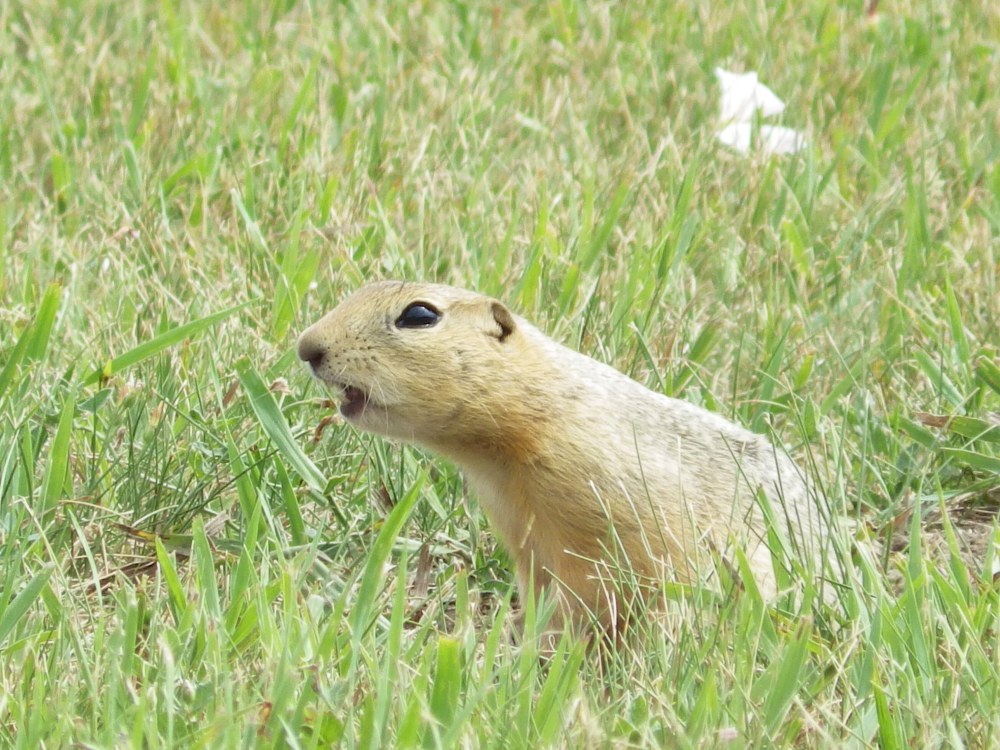
Ancient ground squirrel feces in the Klondike River Valley in the Yukon are being collected from burrows deep in the permafrost, and are being analyzed for DNA by a team of scientists.
And what they have found is a treasure trove of information about when and where all sorts of animals lived.
As they described in a recent article in Nature Communications (titled “Ground squirrel coprolites preserve complex archives of ancient environmental DNA over 700,000 years”), “In unglaciated regions of eastern Beringia — Yukon and Alaska — ground squirrels construct burrows that can remain frozen and sealed for tens to hundreds of thousands of years. These burrows commonly contain abundant fecal pellets and food caches, providing an opportunity to recover both host genetic material and multi-taxon time capsules of Quaternary ecosystems.”
“Coprolite” by the way, is another word for preserved feces.
You might expect that the droppings would contain things like plant residue, undigested seeds and the like — in fact, though, the diet of ancient ground squirrels is far more eclectic.
Turns out, they were dining on snowshoe hare, steppe bison, thin-horned sheep, wolf/coyote, caribou, and even mammoths.
The large animal DNA found in the samples was most likely because the omnivorous ground squirrels were eating anything and everything they could — including snacking on the carcasses of large dead carnivores. (They also engaged in a fair bit of ground squirrel cannibalism, but we’ll leave that aside for now.)
Scores of insects and plants also made an appearance in the DNA track, including the lowly buttercup.
Why all the eating? As the study points out, “Arctic ground squirrels likely adopted such opportunistic feeding strategies due to the considerable physiological demands of hibernation that requires sufficient fat stores to enter into a state of torpor.”
In other words, they need a full belly to build up enough fat to make it through the winter.
All of this has worked out well for science.
Why?
Because the coprolites can be well dated over a broad range of time, and the squirrels’ broad diet means that a detailed snapshot of species can be collected and analyzed. As well, specific volcanic ash layers above and below individual burrows help to date the ground squirrel burrows into relatively narrow time periods.
All of that gives a huge amount of information for scientists to work on: “these data contain a wealth of ecological and evolutionary information,” the study says, data that will be even more broad as DNA extraction methods improve.
It’s just another facet of the great wide world of science — scores upon scores of smart, well-trained, curious people devoting huge amounts of time and energy to discover how and why our world works, how it has changed and how it is likely to keep changing.
And, yes, in case you’re asking, the ground squirrels in question are a distant relative of the Richardson’s ground squirrels that have been disrupting everything from Saskatchewan farming to the parks and sports fields of urban Winnipeg.
So as you stumble through the latest minefield of burrow mounds and tunnel-openings, keep in mind that, down under your feet, they could be (sort of) writing history.
In a digestive kind of way.
» Winnipeg Free Press