
UK formally apologizes for state’s role in forcing unwed mothers to give up babies for adoption
Advertisement
Read this article for free:
or
Already have an account? Log in here »
We need your support!
Local journalism needs your support!
As we navigate through unprecedented times, our journalists are working harder than ever to bring you the latest local updates to keep you safe and informed.
Now, more than ever, we need your support.
Starting at $15.99 plus taxes every four weeks you can access your Brandon Sun online and full access to all content as it appears on our website.
Subscribe Nowor call circulation directly at (204) 727-0527.
Your pledge helps to ensure we provide the news that matters most to your community!
To continue reading, please subscribe:
Add Brandon Sun access to your Free Press subscription for only an additional
$1 for the first 4 weeks*
- Enjoy unlimited reading on brandonsun.com
- Read the Brandon Sun E-Edition, our digital replica newspaper
*Your next Free Press subscription payment will increase by $1.00 and you will be charged $20.95 plus GST for four weeks. After four weeks, your payment will increase to $24.95 plus GST every four weeks.
Read unlimited articles for free today:
or
Already have an account? Log in here »
LONDON (AP) — Prime Minister Keir Starmer formally apologized Thursday for the British state’s role in separating tens of thousands of unmarried mothers from their babies, a practice that lasted for decades until the 1970s.
He said in Parliament that “we are deeply and profoundly sorry” for what he called a “stain on our history.”
An estimated 185,000 babies of unmarried mothers were adopted in England and Wales between 1949 and 1976. Campaigners have fought for years for acknowledgment that women were pressured, deceived and threatened into giving up their babies.
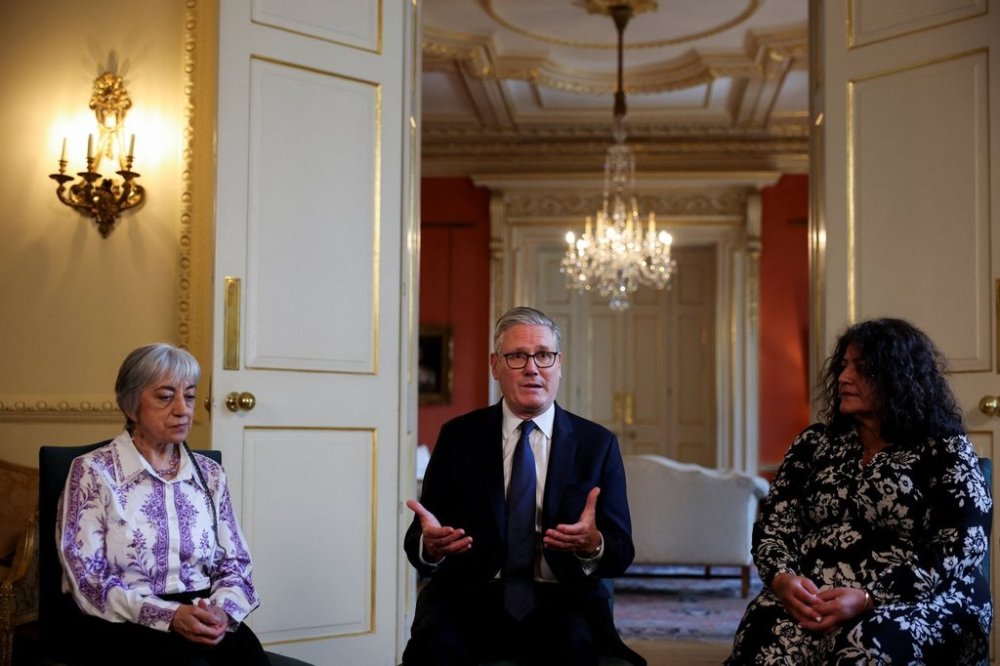
Starmer met Thursday with a group of campaigners, who watched from the public gallery of the House of Commons as he delivered the apology.
He said that women were “coerced, bullied or misled into feeling that they had no choice but to have their children taken away from them.
“Children grew up believing they were unwanted” and mothers were told “their babies would be better off without them,” he said.
“To each and every one of those affected, we say a deep and heartfelt sorry,” said Starmer, who is his final weeks as Britain’s leader.
Alongside the apology, he announced support for affected mothers and children, including better access to adoption records and mental health support.
Apology follows others from Scotland, Wales and Church of England
Britain is one of several countries reckoning with the legacy of social norms, religious practices and government policies that heaped shame on unwed mothers, hid them away in institutions while pregnant and took their children to be adopted by married couples.
After Starmer spoke, several lawmakers in the House of Commons made emotional speeches about their own experiences.
Sarah Pochin of opposition party Reform UK choked back tears as she said that her mother “was pressurized into giving up a baby for adoption” in a process handled by the church.
“I only found out after her death — she carried her secret to her grave,” added Pochin, who said she managed to find and contact her brother after considerable effort.
Ann Keen, a former health minister whose baby was taken for adoption in 1966 when she was 17, said the apology was part of “being released from my shame.”
“We need this apology, because we have always been accused of giving up our babies, and we didn’t give them up,” she told the BBC. “We’ve now got the opportunity to really put this wrong right.”
In 2022, Parliament’s Joint Committee on Human Rights said the British state should apologize for “the pain and suffering caused by public institutions and state employees that railroaded mothers into unwanted adoptions.”
The semiautonomous governments in Scotland and Wales issued apologies the following year, but the Conservative U.K. government at the time declined to follow suit, saying that “the state did not actively support these practices.”
But Starmer said forced adoptions were the result of “practices embedded within systems” across local government, religious institutions and the health and social care systems.
“The state bears responsibility for the systems it funded and legitimized which enabled these practices to occur,” he said.
The apology from Starmer’s Labour Party government comes two weeks after the Church of England said sorry for its role in forced adoptions.
Archbishop of Canterbury Sarah Mullally said that “we are profoundly sorry for the pain, trauma and stigma experienced — and still carried — by many people because of historical adoption practices in homes affiliated to the Church of England.”
Other countries have also apologized for forced adoptions
The three decades after World War II have been labeled the “Baby Scoop Era” in the U.S., where more than 1.5 million infants were surrendered for adoption between 1945 and 1973. An untold number of their mothers were sent away to maternity homes before giving birth.
In 2013, Australia’s then-Prime Minister, Julia Gillard, delivered a landmark national apology for the country’s history of forced adoptions and the “lifelong legacy of pain and suffering” it had caused.
Ireland has been reckoning with the legacy of mother-and-baby homes run by the Catholic Church, in which tens of thousands of women were housed in often degrading conditions. An inquiry found in 2021 that 9,000 children had died in 18 mother-and-baby homes during the 20th century.
Prime Minister Micheál Martin apologized for the “profound and generational wrong” visited upon mothers and their babies who ended up in the institutions.