
‘Death is everywhere:’ Alberta art exhibit on mortality is actually full of life
Advertisement
Read this article for free:
or
Already have an account? Log in here »
We need your support!
Local journalism needs your support!
As we navigate through unprecedented times, our journalists are working harder than ever to bring you the latest local updates to keep you safe and informed.
Now, more than ever, we need your support.
Starting at $15.99 plus taxes every four weeks you can access your Brandon Sun online and full access to all content as it appears on our website.
Subscribe Nowor call circulation directly at (204) 727-0527.
Your pledge helps to ensure we provide the news that matters most to your community!
To continue reading, please subscribe:
Add Brandon Sun access to your Free Press subscription for only an additional
$1 for the first 4 weeks*
- Enjoy unlimited reading on brandonsun.com
- Read the Brandon Sun E-Edition, our digital replica newspaper
*Your next Free Press subscription payment will increase by $1.00 and you will be charged $20.95 plus GST for four weeks. After four weeks, your payment will increase to $24.95 plus GST every four weeks.
Read unlimited articles for free today:
or
Already have an account? Log in here »
EDMONTON – In a corner of the Royal Alberta Museum, two chalkboards hang on the wall to capture random thoughts on death.
One scribbler wants to come back as a grilled cheese sandwich.
Several, before they breathe their last, want the hometown Edmonton Oilers to again win hockey’s Stanley Cup.
Some want to reunite with beloved dead dogs and cats.
Other want to come back to haunt their loved ones.
The board is the coda to an art exhibit at the museum that tells tales of death from around the world. It’s called, “Death: Life’s Greatest Mystery.”
Meaghan Patterson, the museum’s executive director, said the chalkboard responses show that death isn’t as much of a taboo as humans think.
“There’s been lots of intergenerational conversations that we happen upon when we come (into the exhibit room),” Patterson said in an interview.
“Kids are asking questions of their parents or grandparents. Friends or family members are reflecting, asking each other those questions and getting a deeper understanding of each other.”
At first the exhibit seems morbid. It’s in a room at the museum with black walls and sombre instrumental background music. Ravens hang from the ceiling.
“Death is everywhere” is written in Gothic font on a large banner.
One of the first displays describes how the Wataita tribe in Kenya once put goat skulls in shrines for relatives who were taken away from their homes to be enslaved. Another focuses on how the Inca people sacrificed children to bring balance to the universe.
As visitors zigzag further, the colour of the black ravens above turns white, the black-coloured wall lightens and bulbs become brighter.
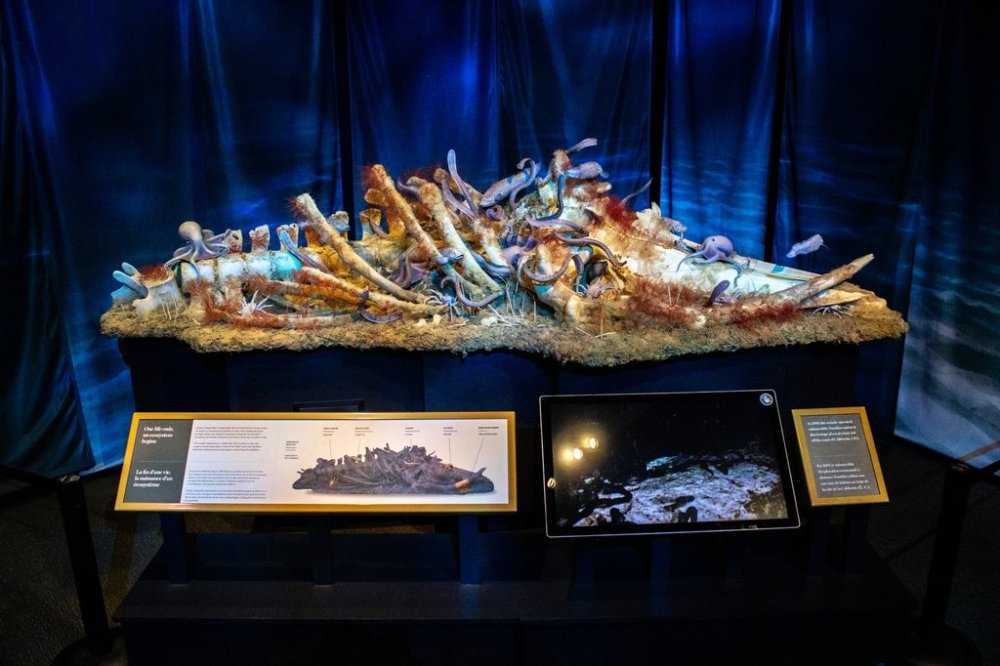
A display talks about how the death of a whale gives life to an entire ecosystem because other species feed on the mammal’s carcass for years.
Several displays also highlight how different cultures commemorate someone who has died.
One shares that Muslims prepare feasts for the loved ones of those who have passed. In Judaism, burial societies are described as highly respected groups serving people who have died and can’t return society’s kindness.
In Ghana, coffins are decorated to reflect peoples’ identities. Mexicans display intricate shrines for their loved ones in their homes. “Death has nothing to do with going away,” says a nearby banner. “The sun sets and the moon sets, but they’re not gone.”
One display explains how immortal Roman gods and goddesses believed their inability to die was actually a curse.
Displays describe how even animals display heartwarming reactions to death. Elephants are known to place tree branches and plants on elephant carcasses they come across, says one display. Gorillas become visibly upset and irritated after they lose a fellow primate.
The head of exhibits at Chicago’s Field Museum, where the death exhibit in Edmonton originated, said it’s the job of museums to be a community hub and encourage people to engage in conversations, even difficult ones.
Jaap Hoogstraten said he got the idea to develop the exhibit a decade ago.
“It started with witnessing my father’s passing, being in the room, thinking, ‘What is death?'” Hoogstraten said. “Then I had to think what to do with his remains because he was an atheist and did not want ceremony.”
Hoogstraten said a major challenge was figuring out how to make an exhibit about death OK for children to experience and believe they struck a balance.
“I just want people to have that conversation earlier than I did in life with their kids about a very difficult subject,” he said.
“This is an exhibit about death that is full of life.”
The exhibit runs until Sept. 7.
This report by The Canadian Press was first published July 4, 2026.