
Canadian military team in Parkland region to assist flood-ravaged communities
Advertisement
Read this article for free:
or
Already have an account? Log in here »
We need your support!
Local journalism needs your support!
As we navigate through unprecedented times, our journalists are working harder than ever to bring you the latest local updates to keep you safe and informed.
Now, more than ever, we need your support.
Starting at $15.99 plus taxes every four weeks you can access your Brandon Sun online and full access to all content as it appears on our website.
Subscribe Nowor call circulation directly at (204) 727-0527.
Your pledge helps to ensure we provide the news that matters most to your community!
To continue reading, please subscribe:
Add Brandon Sun access to your Free Press subscription for only an additional
$1 for the first 4 weeks*
- Enjoy unlimited reading on brandonsun.com
- Read the Brandon Sun E-Edition, our digital replica newspaper
*Your next Free Press subscription payment will increase by $1.00 and you will be charged $20.95 plus GST for four weeks. After four weeks, your payment will increase to $24.95 plus GST every four weeks.
Read unlimited articles for free today:
or
Already have an account? Log in here »
WINNIPEG — A Canadian Armed Forces reconnaissance team is in western Manitoba’s Parkland region to begin plotting out how the military will help flood-hit communities.
Department of National Defence spokesperson Andrée-Anne Poulin said the team, including engineering specialists, arrived in Dauphin on Saturday.
“The team is conducting on-the-ground assessments, liaising with local authorities, and helping identify priority community needs to inform ongoing response efforts,” Poulin wrote in an email to the Free Press Monday.
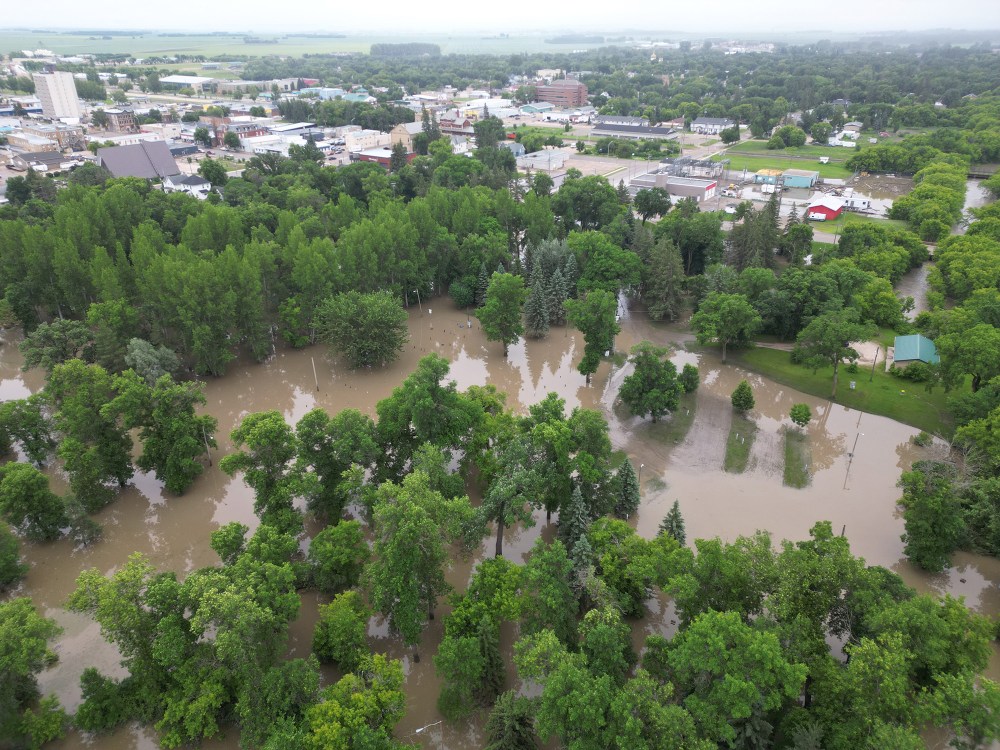
Swan River, Minitonas and Dauphin are among the Parkland communities that suffered significant overland flooding last week, when rain-swollen rivers burst their banks. Hundreds of homes had flooded basements — some for the second time in less than a month.
Dozens of highways and rural roads had washed-out sections, and bridges and rail lines were damaged. Communities throughout western Manitoba declared states of local emergency.
Federal Emergency Management Minister Eleanor Olszewski said Friday a small team of CAF members would be sent to Parkland to provide logistical assistance, resource co-ordination and the assessment of ongoing response needs in the “immediate” term, following a request from the Manitoba government.
Volunteers from Team Rubicon Canada, a veteran-led disaster response organization, were also deployed to the region. A liaison officer was in the region Saturday. The organization’s volunteers will help with recovery work, about three months after they helped protect homes from floodwater in Peguis First Nation.
The federal and provincial governments are also providing disaster financial assistance to help communities recover from the effects of summer’s soggy start.
Swan River lifted a mandatory evacuation order for flooded neighbourhoods Saturday, after floodwaters receded by 0.7 metres (2.3 feet) from their peak. The town estimated 140 to 200 homes flooded.
While Parkland residents moved into the cleanup and recovery phase, flood preparations continued in some southwestern communities, including Brandon, Minnedosa and Sioux Valley Dakota Nation, which previously declared states of local emergency.
In Minnedosa, the Little Saskatchewan River is expected to peak Monday through Wednesday, with the level expected to rise 0.6 metres (almost two feet) from Sunday’s level. Lake Minnedosa, a man-made reservoir, was about 2.5 centimetres (one inch) from full supply.
Town staff, emergency personnel and volunteers worked over the weekend to set up or build flood barriers, including sandbag dikes, to protect homes, businesses and other buildings or sites low-lying areas. The town received 60,000 sandbags Saturday night.
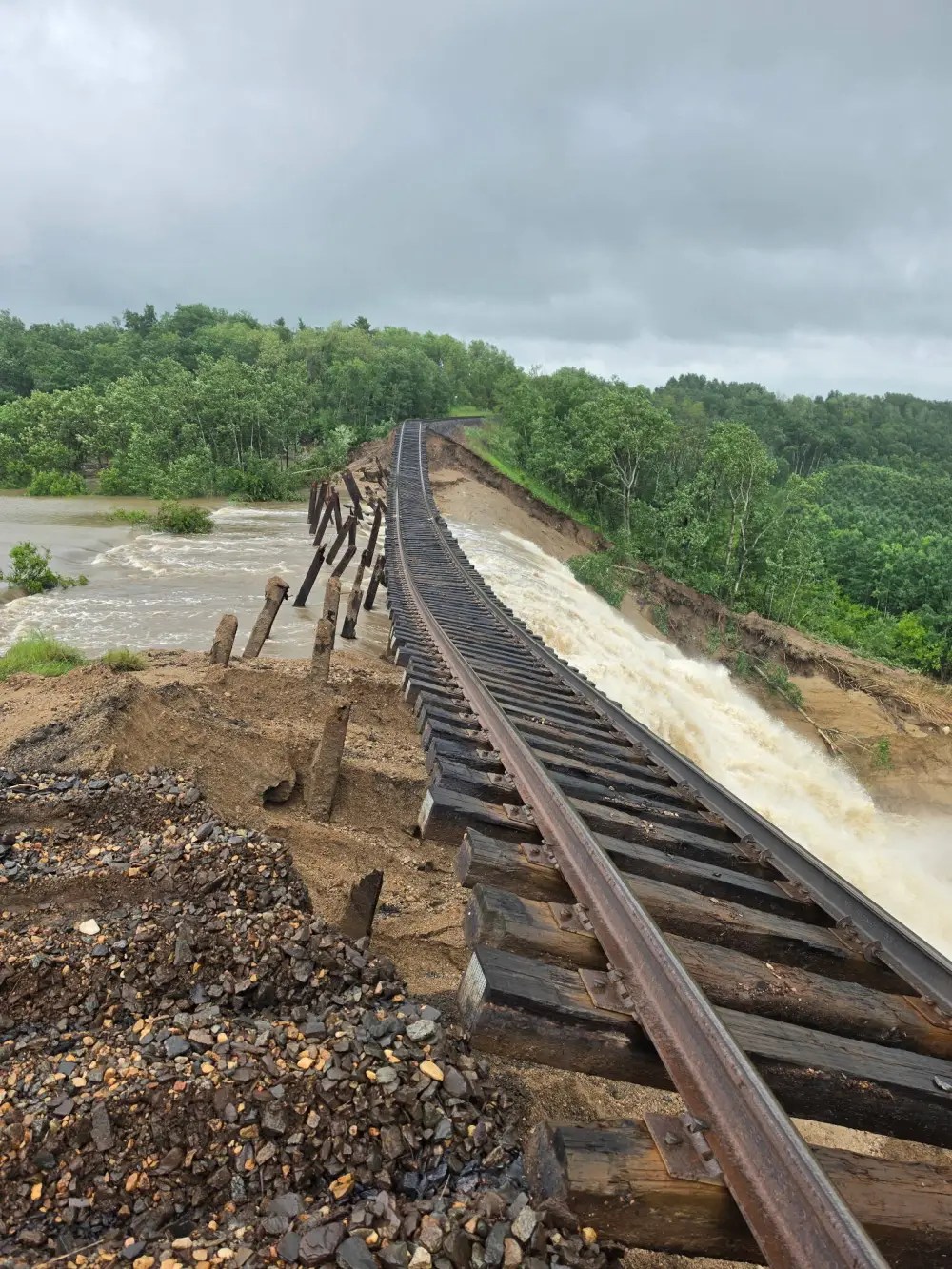
Sandbags surrounded the Minnedosa District Museum and Heritage Village. The pioneer village has 11 restored heritage buildings containing period artifacts.
“We’re expecting a couple feet of water to come, which will probably put the river over its banks,” Mayor Ken Cameron said. “We’re preparing. We got lots of warning.”
Brandon is expecting the Assiniboine River to peak on or about July 12. Manitoba’s second-largest city completed a temporary dike on the west side of Grand Valley Road and 18th Street on Friday.
Some Interlake communities continue to deal with overland flooding. The Rural Municipality of West Interlake announced the closure of Ashern’s airport through July 31. Flood barriers were set up to protect at-risk homes in Ashern.
» chris.kitching@freepress.mb.ca