
Here’s a look at ridings where voters can expect federal byelections to be called
Advertisement
Read this article for free:
or
Already have an account? Log in here »
We need your support!
Local journalism needs your support!
As we navigate through unprecedented times, our journalists are working harder than ever to bring you the latest local updates to keep you safe and informed.
Now, more than ever, we need your support.
Starting at $15.99 plus taxes every four weeks you can access your Brandon Sun online and full access to all content as it appears on our website.
Subscribe Nowor call circulation directly at (204) 727-0527.
Your pledge helps to ensure we provide the news that matters most to your community!
To continue reading, please subscribe:
Add Brandon Sun access to your Free Press subscription for only an additional
$1 for the first 4 weeks*
- Enjoy unlimited reading on brandonsun.com
- Read the Brandon Sun E-Edition, our digital replica newspaper
*Your next Free Press subscription payment will increase by $1.00 and you will be charged $20.95 plus GST for four weeks. After four weeks, your payment will increase to $24.95 plus GST every four weeks.
Read unlimited articles for free today:
or
Already have an account? Log in here »
OTTAWA – Richard Martel and Nate Erskine-Smith resigned their seats in the House of Commons on Tuesday, setting a clock ticking ahead of a pair of byelections in Quebec and Ontario — and they are not the only ones.
Voters in a number of ridings across the country will be asked to choose new federal representatives in the coming months as members of Parliament from four major parties plan to head off to diplomatic appointments, retirements and provincial races.
When a seat in the House of Commons becomes vacant, the prime minister must call an election between 11 and 180 days after the member’s resignation. A byelection can be as short as 36 days or as long as 50 days, putting the date of voting somewhere between 47 days and seven months after the seat opens up.
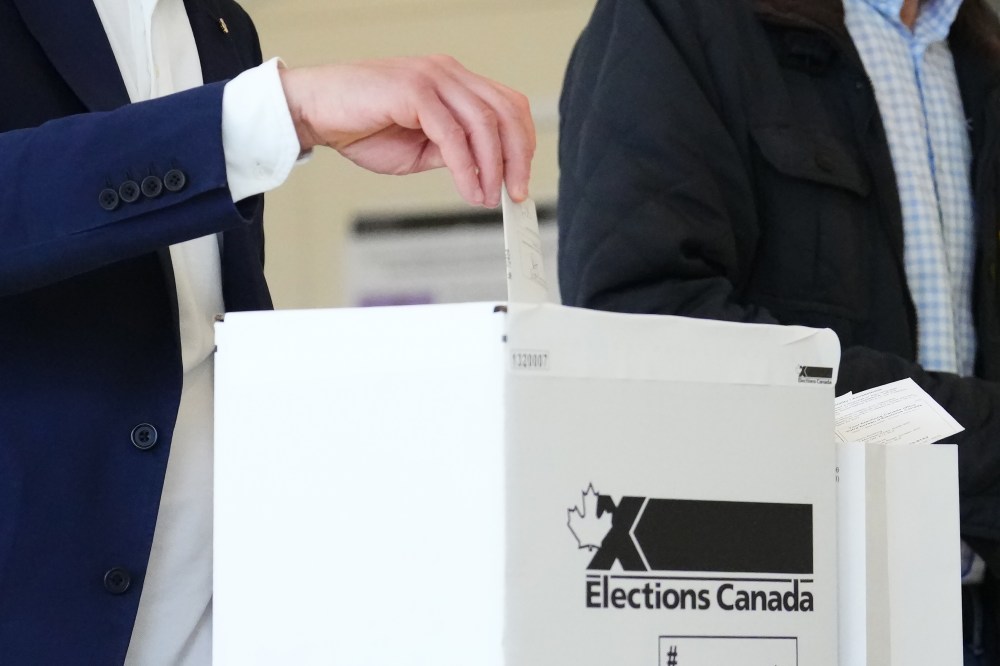
Here are the ridings where a byelection is expected soon:
Chicoutimi-Le Fjord
Martel resigned from the House of Commons this week after accepting an appointment to the Senate from Prime Minister Mark Carney. He was first elected as a Conservative MP in a byelection in 2018.
Martel won a tight race in April 2025, beating the Bloc Québécois and Liberal candidates by around 1,500 votes.
Beaches-East York
Erskine-Smith had planned to run for the Ontario Liberal party leadership, signalling for months that he would leave his federal post as a backbench Liberal MP and try to take on Premier Doug Ford in the next provincial race. But after he wasn’t able to lock up the party nomination to run in a byelection in Scarborough, those plans seem to have fallen through.
Erskine-Smith won the 2025 election handily, taking 67 per cent of the vote.
North Vancouver-Capilano
Former Trudeau-era cabinet minister Jonathan Wilkinson resigned as a member of Parliament on June 19, after the close of the spring sitting. He’ was appointed Canada’s ambassador to the European Union, and will be headed overseas to take up that post shortly.
Wilkinson won his seat for a fourth time in 2025 with just shy of 60 per cent of the vote, his best result.
Yorkton-Melville
Cathay Wagantall, who was elected as a Conservative MP in the east Saskatchewan riding in 2015, announced in late June that she would leave her seat at the end of the summer. She’s set her resignation date for Aug. 31, and said the Conservatives have already chosen a candidate to stand in the byelection.
Wagantall won handily in the 2025 election with more than 77 per cent of the vote.
Rosemont-La Petite-Patrie
Alexandre Boulerice, who was the only NDP MP in Quebec, announced his plans to make the move to provincial politics in late April. Boulerice quit the NDP caucus to sit as an Independent but has not yet resigned his seat. He said he will do that before the start of the fall election, which has to be called by October, and will run for Québec Solidaire.
Boulerice, who was first elected back in 2011, won the most recent election with 41 per cent of the vote, 10 points ahead of the Liberal candidate.
Saint-Hyacinthe-Bagot-Acton
Simon-Pierre Savard-Tremblay also quit his party’s caucus in the spring after announcing plans to stand in the Quebec provincial election. Savard-Tremblay left the Bloc Québécois benches on May 28, saying he would run under the Parti Québécois banner in the fall. Similar to NBA star Kyle Lowry, who this week signed a one-day contract with the Toronto Raptors in order to retire from a team where he was beloved, Savard-Tremblay rejoined the Bloc caucus on June 19 and resigned from Parliament the same day.
Savard-Tremblay won the Bloc stronghold in April 2025 by a 10-point margin.
Laurier-Sainte-Marie
Steven Guilbeault soured on the environmental policies of Prime Minister Mark Carney’s government last fall, quitting his role as minister of Canadian identity and culture in late November. He’s still a member of Parliament for now, but on May 27 he said he planned to quit his seat over the summer, again citing his dissatisfaction with what he called a backsliding on climate action under the new Liberal leader.
Guilbeault took more than 52 per cent of the vote in the 2025 election.
This report by The Canadian Press was first published July 8, 2026.