
Iran’s attacks on Gulf ships ‘unacceptable’ and ‘unjustified’: Foreign Minister Anand
Advertisement
Read this article for free:
or
Already have an account? Log in here »
We need your support!
Local journalism needs your support!
As we navigate through unprecedented times, our journalists are working harder than ever to bring you the latest local updates to keep you safe and informed.
Now, more than ever, we need your support.
Starting at $15.99 plus taxes every four weeks you can access your Brandon Sun online and full access to all content as it appears on our website.
Subscribe Nowor call circulation directly at (204) 727-0527.
Your pledge helps to ensure we provide the news that matters most to your community!
To continue reading, please subscribe:
Add Brandon Sun access to your Free Press subscription for only an additional
$1 for the first 4 weeks*
- Enjoy unlimited reading on brandonsun.com
- Read the Brandon Sun E-Edition, our digital replica newspaper
*Your next Free Press subscription payment will increase by $1.00 and you will be charged $20.95 plus GST for four weeks. After four weeks, your payment will increase to $24.95 plus GST every four weeks.
Read unlimited articles for free today:
or
Already have an account? Log in here »
JEDDAH – Iranian attacks on commercial ships in the Strait of Hormuz in recent days are “unacceptable,” Canadian Foreign Affairs Minister Anita Anand said Thursday.
Speaking with reporters in Jeddah, Saudi Arabia, after meeting with the country’s foreign minister, Anand said Canada stands alongside Gulf countries as Iran lashes out against them.
She said ceasefires are always fragile but there was no justification for Iran to attack civilian targets, such as Saudi tankers, under the 60-day ceasefire agreement reached between Iran and the United States in June.
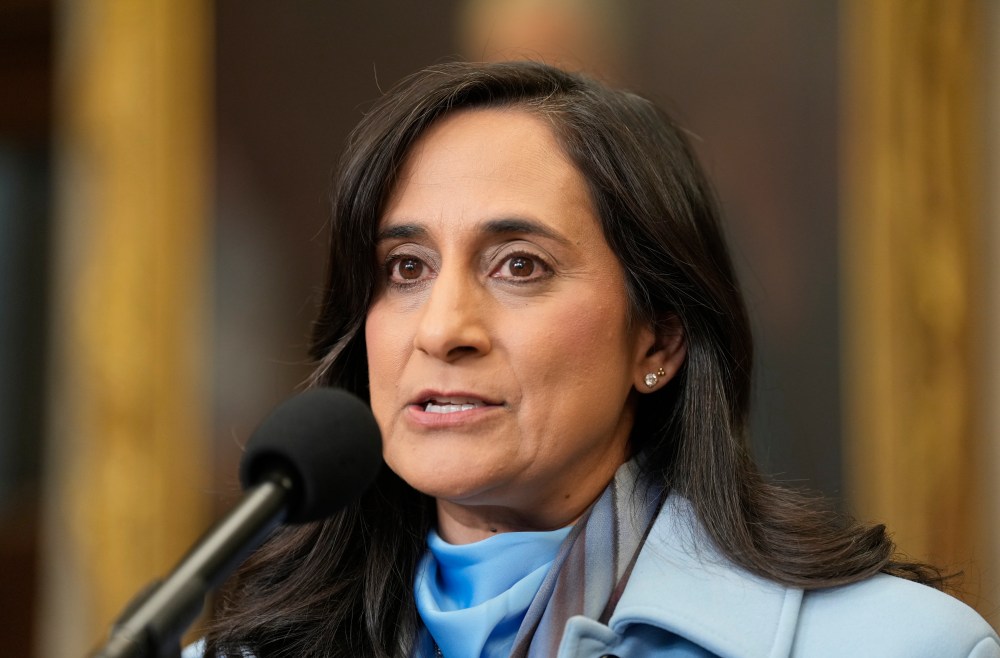
“Iran’s attacks on civilian vessels are completely unjustified, they violate the MOU and they should not be allowed to stand without reprehension from the global community,” she said.
United States officials reported that Iran had fired missiles at three ships in the strait on Monday and Tuesday, including a Qatari liquefied natural gas carrier and a Saudi oil tanker.
The U.S. responded with new airstrikes against Iran, and Tehran in turn fired at U.S. targets in Kuwait and Qatar.
The escalating hostilities have upended a June ceasefire agreement aimed at ending the war the United States launched against Iran in February.
Prime Minister Mark Carney told reporters at the NATO summit in Turkey on Wednesday that Iran has been acting “irresponsibly” and described the U.S. response as “appropriate.”
At a press conference Thursday in Jeddah, Carney was asked how much longer the war must proceed before it costs lasting damage to the global economy. The prime minister responded that Canada is focused on building out the domestic economy and trade access.
“Economies that focus on what they can control are going to do better, regardless of what happens — not that it’s unimportant — but what happens miles away,” the prime minister said.
Carney noted the memorandum signed by Iran and Washington has “ambiguities” but a prolonged cessation of hostilities is “certainly one of the scenarios that we can see.”
U.S. President Donald Trump said Wednesday that the recent Iranian attacks targeting ships transiting the strait, a major global trade choke point, effectively restarted hostilities.
Trump said the ceasefire is now “over,” and he personally doesn’t want to talk to the Iranians about ending the conflict.
“I don’t want to deal with them,” Trump said at the NATO summit on Wednesday. “There’s something wrong with them. We said, ‘Go and do your funeral stuff,’ and instead of that, they start shooting rockets at ships.”
Funeral processions this week drew mass crowds for the Ayatollah Ali Khamenei, who was killed in February in a strike when the war began.
Government-backed protests included massive banners claiming “we will kill Trump” in English, photographed in the city of Mashhad.
NATO Secretary-General Mark Rutte told Trump that the U.S. retaliation against Iran was “absolutely necessary” and a “very strong response.”
An Iranian official accused the U.S. of launching an airstrike Thursday targeting the area around Iran’s sole nuclear power plant. Explosions were also reported elsewhere in the country during the afternoon.
Attacks on ships in the strait this year have sent oil prices into dramatic swings and slashed the availability of key goods like fertilizer.
Anand, who is visiting Saudi Arabia at the same as the prime minister, said Canada will be “better positioned to offer support” in securing the strait when a permanent ceasefire is in place, such as providing expertise in demining.
“A concrete measure is being here in the Kingdom of Saudi Arabia today in the middle of attacks that are occurring in the Strait of Hormuz,” she said.
“The feeling on the ground here in Saudi Arabia is very much one about seeing Canada as being a supportive partner in these very difficult times.”
This report by The Canadian Press was first published July 9, 2026.
— With files from Dylan Robertson in Ottawa, and The Associated Press