
Manitoba expands flood assistance programs as cleanup continues
Advertisement
Read this article for free:
or
Already have an account? Log in here »
We need your support!
Local journalism needs your support!
As we navigate through unprecedented times, our journalists are working harder than ever to bring you the latest local updates to keep you safe and informed.
Now, more than ever, we need your support.
Starting at $15.99 plus taxes every four weeks you can access your Brandon Sun online and full access to all content as it appears on our website.
Subscribe Nowor call circulation directly at (204) 727-0527.
Your pledge helps to ensure we provide the news that matters most to your community!
To continue reading, please subscribe:
Add Brandon Sun access to your Free Press subscription for only an additional
$1 for the first 4 weeks*
- Enjoy unlimited reading on brandonsun.com
- Read the Brandon Sun E-Edition, our digital replica newspaper
*Your next Free Press subscription payment will increase by $1.00 and you will be charged $20.95 plus GST for four weeks. After four weeks, your payment will increase to $24.95 plus GST every four weeks.
Read unlimited articles for free today:
or
Already have an account? Log in here »
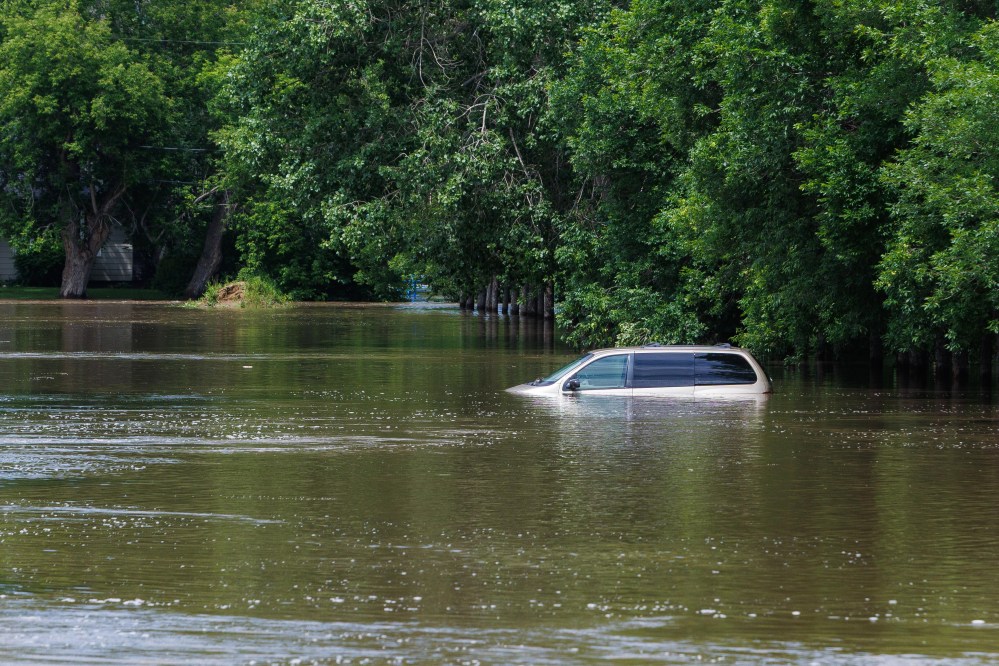
WINNIPEG – The Manitoba government is sending out $500 cheques as part of its expanded measures to help people hit by flooding in recent weeks.
Premier Wab Kinew said at a news conference Friday the money will be going out in the coming days to the roughly 1,800 people who have applied for disaster financial assistance.
“What we’re doing this year is rushing to ensure that help gets to you as soon as possible so that you can get back on your feet.”
The province has also partnered with the Canadian Red Cross to match private donations, with an initial $15 million set aside.
It also allocated $15 million to a one-time grant to help those who don’t qualify for the existing disaster programs.
Established programs generally only provide compensation for damage that would not have been covered by insurance, but Kinew said the new reality of climate change means programs need to adapt.
“Having a change in climate means that we have to change the way that we think about responding to natural disasters,” he said, while still strongly encouraging people to take out insurance.
“One of the reasons we’re rolling out this additional layer of response is in some of these communities, they had a one-in-10,000 year flood event, a one-in-25,000 year flood event,” he said.
Along with financial assistance, Kinew said volunteers from Team Rubicon, a disaster assistance group, are also on the ground helping out in the Parkland region.
There will be close to 40 members on the ground at a time to help as groups do rotations through to mid-August, he said.
The Canadian Armed Forces had sent personnel to do an on-the-ground assessment, but said Friday it determined the province’s needs can be met with existing resources.
Kinew said the province’s total cost for the storms in early and late June is still being worked out, but could approach the $300 million it saw from flooding in 2022.
This report by The Canadian Press was first published July 10, 2026.