
No cyclospora outbreaks reported or tainted lettuce sold in Canada, officials say
Advertisement
Read this article for free:
or
Already have an account? Log in here »
We need your support!
Local journalism needs your support!
As we navigate through unprecedented times, our journalists are working harder than ever to bring you the latest local updates to keep you safe and informed.
Now, more than ever, we need your support.
Starting at $15.99 plus taxes every four weeks you can access your Brandon Sun online and full access to all content as it appears on our website.
Subscribe Nowor call circulation directly at (204) 727-0527.
Your pledge helps to ensure we provide the news that matters most to your community!
To continue reading, please subscribe:
Add Brandon Sun access to your Free Press subscription for only an additional
$1 for the first 4 weeks*
- Enjoy unlimited reading on brandonsun.com
- Read the Brandon Sun E-Edition, our digital replica newspaper
*Your next Free Press subscription payment will increase by $1.00 and you will be charged $20.95 plus GST for four weeks. After four weeks, your payment will increase to $24.95 plus GST every four weeks.
Read unlimited articles for free today:
or
Already have an account? Log in here »
OTTAWA – Federal officials say there have been no outbreaks of the diarrhea-causing parasite cyclospora in Canada and that no lettuce implicated in an ongoing U.S. outbreak has been distributed in the country.
Iceberg lettuce from Mexico served at Taco Bell restaurants in five American states has been identified as a source of the outbreak.
The U.S. Centers for Disease Control and Prevention is warning people not to eat shredded iceberg lettuce from Taco Bells in Indiana, Kentucky, Michigan, Ohio and West Virginia.
The Canadian Food Inspection Agency said Friday that it’s in contact with the U.S. Food and Drug Administration and reviewing information provided by American authorities.
“The CFIA continues to monitor the situation closely in collaboration with U.S., federal and provincial partners and will take appropriate action to protect Canadians if a food safety risk is identified,” it said in a statement.
The agency has said it is not considering restrictions on fresh produce imports from the United States. It has said it routinely tests for cyclospora as part of its surveillance program, which targets imported fresh whole and cut leafy vegetables and fresh leafy herbs, along with raspberries and blackberries.
The Public Health Agency of Canada said it’s not investigating any cyclospora outbreaks but there is typically an increase in infections in the spring and summer linked to imported fruits and vegetables.
An investigation by the FDA has so far identified a single supplier of the lettuce.
California-based Taylor Fresh Foods said FDA testing indicated it was a “specific independent farm” affiliated with the company. It said Friday that it was voluntarily removing all iceberg lettuce sourced from central Mexico from the U.S. market.
Taco Bell has said it will use a different supplier.
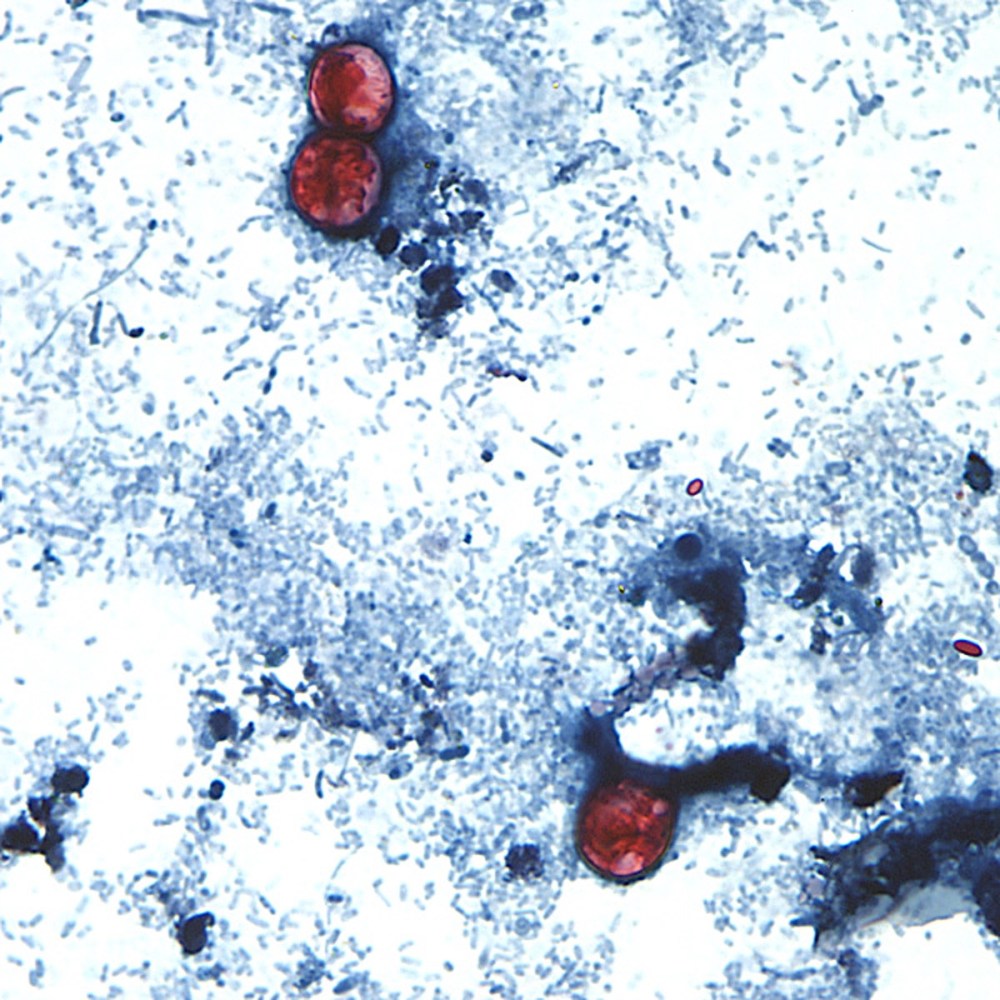
Data from the CDC released this week suggests that since May, nearly 7,000 people in multiple states may have been sickened with cyclosporiasis, a gastrointestinal illness caused by the parasite that can lead to watery diarrhea for six to seven weeks.
Cyclospora is not spread from person to person because the parasite can only infect someone once it leaves the body through feces. To spread, the parasite needs to be outside the body for about a week to 15 days.
Food can get contaminated when the feces of an infected person gets into the water supply used for crops or in food processing or packaging.
Symptoms can take a couple of weeks to appear and commonly include watery diarrhea, bloating and gas, nausea, tiredness, stomach cramps, loss of appetite, weight loss and a mild fever.
The Public Health Agency of Canada said eating local produce, especially during the spring and summer months, is a way for Canadians to reduce their risk of getting sick.
This report by The Canadian Press was first published July 17, 2026.
— with files from The Associated Press