
Brandon to showcase wastewater facility
Measures that have extended lifespan of equipment are saving dollars, drawing interest in other cities
Advertisement
Read this article for free:
or
Already have an account? Log in here »
We need your support!
Local journalism needs your support!
As we navigate through unprecedented times, our journalists are working harder than ever to bring you the latest local updates to keep you safe and informed.
Now, more than ever, we need your support.
Starting at $15.99 plus taxes every four weeks you can access your Brandon Sun online and full access to all content as it appears on our website.
Subscribe Nowor call circulation directly at (204) 727-0527.
Your pledge helps to ensure we provide the news that matters most to your community!
To continue reading, please subscribe:
Add Brandon Sun access to your Free Press subscription for only an additional
$1 for the first 4 weeks*
- Enjoy unlimited reading on brandonsun.com
- Read the Brandon Sun E-Edition, our digital replica newspaper
*Your next Free Press subscription payment will increase by $1.00 and you will be charged $20.95 plus GST for four weeks. After four weeks, your payment will increase to $24.95 plus GST every four weeks.
Read unlimited articles for free today:
or
Already have an account? Log in here »
Proactive maintenance on the city’s wastewater filtration system has turned heads in other cities in Canada and the United States, and has saved millions of dollars over time, the facility’s manager said.
The water reclamation facility’s manager is preparing to go to New Orleans in the fall to speak at a conference about proactive maintenance and how the city’s equipment is performing.
“The original membranes, which are coming up 17 years now, are running as good as the ones that (were) installed (five years ago),” Wes Knight said last month as the Sun toured the facility.
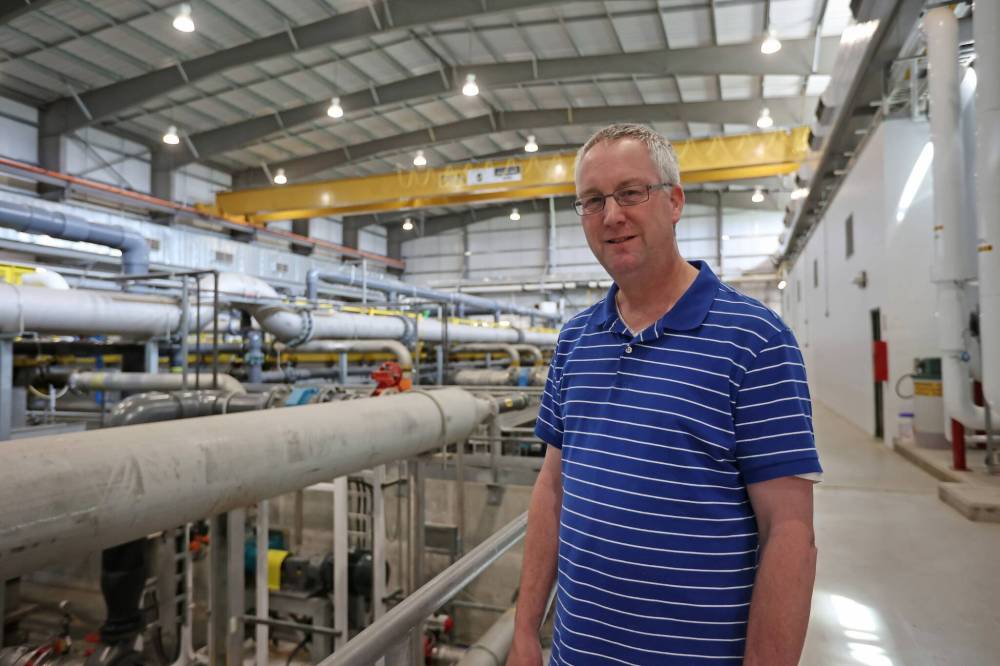
Wes Knight, manager of the City of Brandon water reclamation facility, said there is one other plant in North America that has had a membrane system last for 17 years, but that city is set to replace its equipment this year. (Alex Lambert/The Brandon Sun)
The city was originally told the membranes would last seven to nine years, he said.
“We’re doubling it, and it’s because we’ve really cared for them,” added chargehand Scott Middleton.
The city’s water reclamation facility, located at 800 65th St. E, takes wastewater, cleans it and puts it back into the Assiniboine River at the far eastern edge of the city.
“The water we’re putting back in the river is cleaner than the water that was taken out,” Knight said.
He said the cleaned water is safe to drink — though he has never tried it — and is tested regularly.
One of the tests is that 10 rainbow trout have to survive in 20 litres of the cleaned water for a week.
The city has never failed the rainbow trout test, he said. In comparison, those same trout would die if they were immersed in the regular water from the river.
Knight said he and other staff at the plant are proud of the work done at the facility.
“It’s pretty neat to be able to present on a national stage for a treatment plant in Brandon,” he said.
“Our facility here is kind of unique in the industry,” he said.
He said there is one other plant in North America that has had a membrane system last for 17 years, but that city is set to replace its equipment this year.
Brandon, he said, will run its 2009-installed membranes for as long as it can, which will help give the city a timeline on how long the newer 2013 and 2021 membranes will last.
Those later membranes were added as expansions, and replaced some of the aged 2009 membranes.
“It’d be nice to push them to 20 years,” Knight said.
Staff at the facility have maintained the membranes in a different way than the manufacturer recommended, he said, including reducing clean cycles, which saves on the amount of chemicals the city goes through.
Knight said that based on the thousands of dollars saved annually on chemicals and not having to upgrade to new equipment, the city is “easily looking at half a million dollars a year” in savings, “and that’s conservative.”
Each train, which has six membrane filters each, costs about $1 million. The one remaining train from 2009 and five from 2013 are all past their initial projected lifespans and are essentially saving the city money for when a replacement is eventually needed, Knight said.
“It’s massive savings, and that’s what’s got the industry’s attention,” he said.
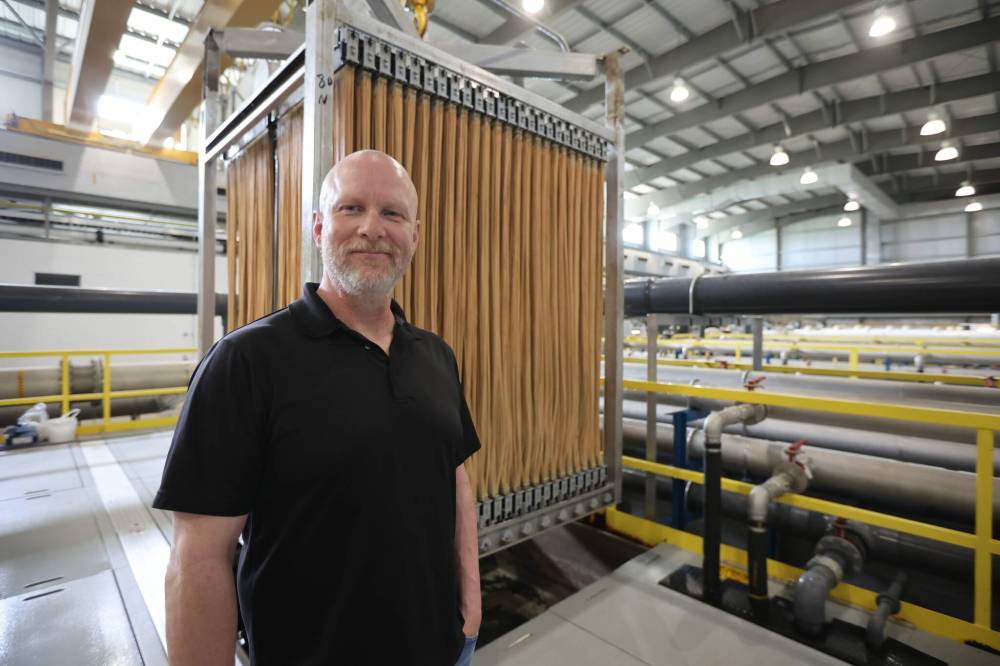
Scott Middleton, chargehand of wastewater treatment operations at the City of Brandon water reclamation facility, during a tour of the facility. (Alex Lambert/The Brandon Sun)
Knight’s presentation will be about 20 minutes long, with an additional hour of conversation afterward. He is going down to Louisiana’s biggest city with the original supplier and consultant.
Alexia Stangherlin, the city’s utilities director, said the city is often contacted by other municipalities that are considering the technology for their own communities.
“The presentation that is planned for New Orleans is really to highlight the impact of an efficient operating scheme that we’ve kind of made our own in Brandon,” Stangherlin said.
The lifespan of Brandon’s membranes is “a testament” to what the city’s staff are doing.
“Highlighting that on an international stage is a feather in our cap,” she said.
Last month, Knight gave an overview of the importance of treating the wastewater.
“If you don’t treat it, now you’ve got algae blooms, you’ve got fecal coliforms in the river, right? So all that stuff — your fish are going to die, people are going to get sick, rivers are going to become stagnant,” Knight said.
People downstream who use the water, like in Portage la Prairie, would also then have contaminated water.
The city’s wastewater flows into the station, and giant filters that look like giant spaghetti strands shake vigorously. The water passes through with the excess water coming out clean on the other side.
The Sun was shown samples of the wastewater that comes into the plant — a dark brown mixture — and the crystal clear water that is left after being filtered.
Knight said the solid waste that is left after separating the clean water is sent to a lagoon and later on used by farmers, which they “love.”
“It’s a win-win for them, and it gives us a place where we can put our biomass,” he said.
The station typically treats between 25 and 26 million litres of wastewater per day, but it can handle just over 36 million litres.
» alambert@brandonsun.com