
North Korea launches another missile toward sea ahead of US-South Korean military drills
Advertisement
Read this article for free:
or
Already have an account? Log in here »
We need your support!
Local journalism needs your support!
As we navigate through unprecedented times, our journalists are working harder than ever to bring you the latest local updates to keep you safe and informed.
Now, more than ever, we need your support.
Starting at $15.99 plus taxes every four weeks you can access your Brandon Sun online and full access to all content as it appears on our website.
Subscribe Nowor call circulation directly at (204) 727-0527.
Your pledge helps to ensure we provide the news that matters most to your community!
To continue reading, please subscribe:
Add Brandon Sun access to your Free Press subscription for only an additional
$1 for the first 4 weeks*
- Enjoy unlimited reading on brandonsun.com
- Read the Brandon Sun E-Edition, our digital replica newspaper
*Your next Free Press subscription payment will increase by $1.00 and you will be charged $20.95 plus GST for four weeks. After four weeks, your payment will increase to $24.95 plus GST every four weeks.
Read unlimited articles for free today:
or
Already have an account? Log in here »
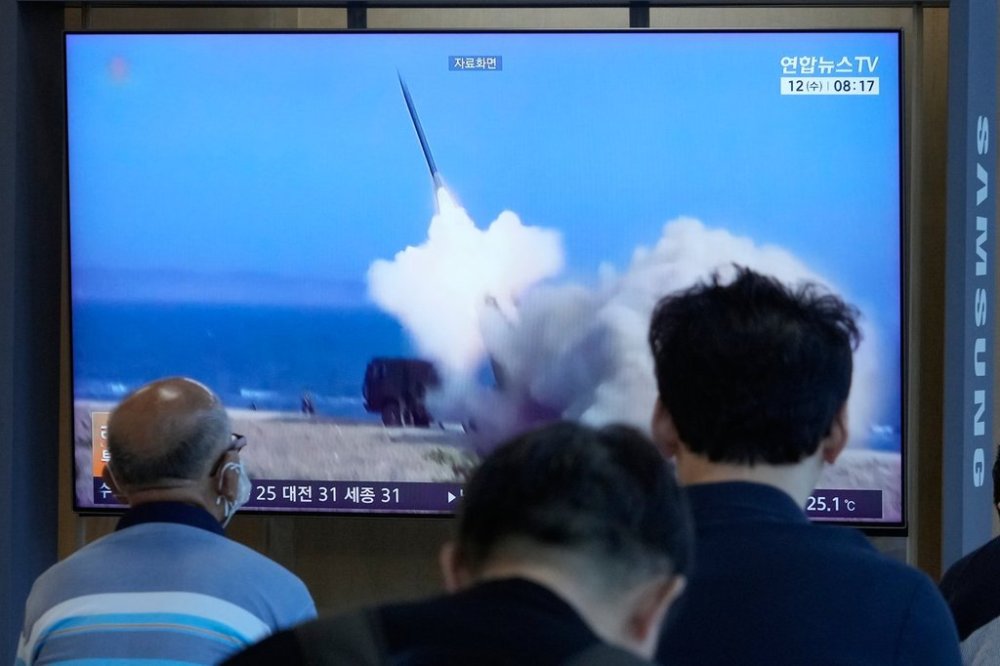
SEOUL, South Korea (AP) — North Korea on Wednesday performed its second ballistic missile test in less than a week, its neighbors said, a likely protest of the upcoming South Korea-U.S. military drills that North Korea views as an invasion rehearsal.
South Korea’s Joint Chiefs of Staff said a ballistic missile fired from the North’s eastern coastal Wonsan area around 6 a.m. flew more than 700 kilometers (435 miles). The Japanese Defense Ministry also detected the launch, saying the weapon landed in waters outside its exclusive economic zone, between the Korean Peninsula and Japan.
The launches, within days of each other, were seen as part of North Korea’s extended run of weapons tests as the country has refused to return to talks with the U.S. and South Korea for years. Experts say North Korea often uses its rivals’ military training as a pretext to boost its own testing activities.
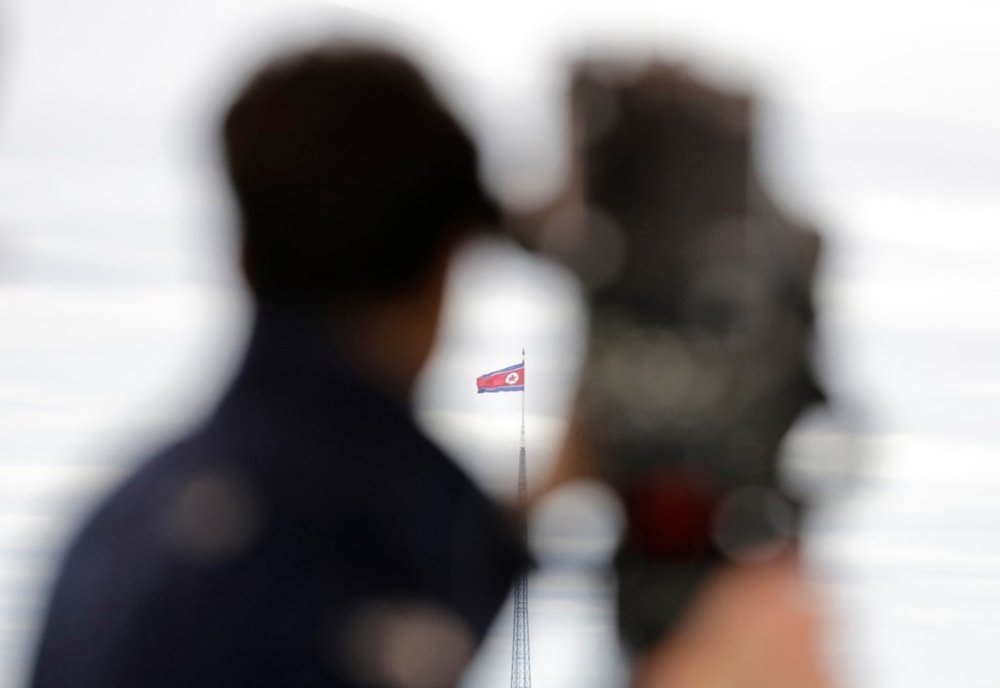
South Korea’s military said it remains ready to repel any provocation by Pyongyang in cooperation with the United States. South Korea’s national security council called North Korean ballistic missile launches “acts of provocation” and urged the North to halt them immediately.
Japanese Defense Minister Shinjiro Koizumi told reporters that Japan strongly protested the North Korean launch through their embassies in Beijing. “It’s a serious problem that affects the safety of the Japanese people,” he said.
The latest launch came two days after South Korea and the United States announced they will kick off their annual large-scale military drills on Aug. 17 to beef up readiness against North Korean threats.
North Korea has previously responded to the Ulchi Freedom Shield training and other major South Korea-U.S. military exercises with provocative weapons tests and harsh rhetoric. The U.S. and South Korea have repeatedly said their training is defensive in nature.
After last year’s Ulchi Freedom Shield training exercises began, North Korean leader Kim Jong Un said the drills showed the U.S. and South Korea’s “will to ignite a war” and claimed they have grown more provocative than before, which has prompted North Korea to respond with “proactive and overwhelming” countermeasures.
On Aug. 6, South Korea, the U.S. and Japan detected the launch of a short-range ballistic missile from North Korea in what was the North’s first ballistic weapons testing activity since late June. North Korea didn’t confirm the reported launch, though it usually releases details of weapons tests a day later.
Multiple U.N. Security Council resolutions ban North Korea from launching ballistic missiles. But North Korea has ramped up ballistic and other weapons testing activities to expand its nuclear and missile arsenals since Kim’s high-stakes diplomacy with U.S. President Donald Trump fell apart in 2019. Experts say Kim likely hopes to use his enlarged arsenals to wrest concessions from the U.S., such as relaxing international economic sanctions on the North.
In recent years, Kim has boosted his diplomatic footprint by strengthening cooperation with Russia by supplying troops and ammunition to support its war against Ukraine. He’s also recently taken steps to bolster ties with China, the country’s traditional ally and economic pipeline. Chinese President Xi Jinping visited the North Korean capital Pyongyang in June for the first time in seven years.
___
Associated Press writer Mari Yamaguchi in Tokyo contributed to this report.