
No easy fix for power problems
Advertisement
Read this article for free:
or
Already have an account? Log in here »
We need your support!
Local journalism needs your support!
As we navigate through unprecedented times, our journalists are working harder than ever to bring you the latest local updates to keep you safe and informed.
Now, more than ever, we need your support.
Starting at $15.99 plus taxes every four weeks you can access your Brandon Sun online and full access to all content as it appears on our website.
Subscribe Nowor call circulation directly at (204) 727-0527.
Your pledge helps to ensure we provide the news that matters most to your community!
To continue reading, please subscribe:
Add Brandon Sun access to your Free Press subscription for only an additional
$1 for the first 4 weeks*
- Enjoy unlimited reading on brandonsun.com
- Read the Brandon Sun E-Edition, our digital replica newspaper
*Your next Free Press subscription payment will increase by $1.00 and you will be charged $20.95 plus GST for four weeks. After four weeks, your payment will increase to $24.95 plus GST every four weeks.
Read unlimited articles for free today:
or
Already have an account? Log in here »
“With Brandon flooded once again this year, and with the wildfires and the smoke in the air, that question just becomes more and more pressing — can we wait? How long can we wait for another (plan) that will give us alternatives?”
— Quentin Robinson with Sustainable Brandon
Manitoba Hydro has not been entirely forthright in its portrayal of gas power as the answer to this province’s looming power shortage at the end of the decade.
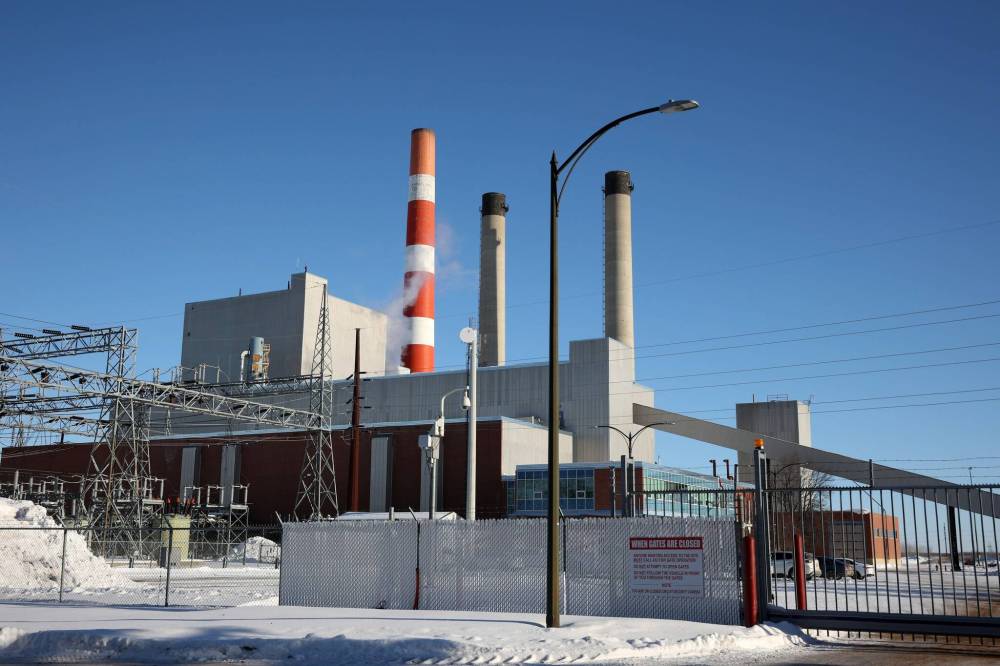
The Manitoba Hydro Brandon Generating Station off Victoria Avenue East. The provincial government is proposing a $3-billion combustion turbine facility at the site to meet the increasing demand for power. (Tim Smith/The Brandon Sun files)
During an ongoing Public Utilities Board hearing this week, Manitoba Hydro admitted that its Brandon-based gas turbines have had outages during three of the 10 highest usage times over the past five winters. The outages occurred during high load periods when demands for energy in Manitoba were especially high, forcing the utility to reduce output of its two gas turbines in Brandon on Jan. 7 and Dec. 20 in 2022 and Jan. 22-23 of this year.
Hydro vice-president of operations Dave Bowen said those reductions were caused by aging infrastructure and a historical lack of maintenance investments as it was believed that in the 2010s, the Brandon gas turbines would soon be retired.
“There definitely are times here where it couldn’t run, but there are reasons for that, which (are) part of the maintenance and the sustainment (monies) that (were) not spent on that facility,” Bowen said in a transcript of the PUB hearing held in Winnipeg.
However, in a previous hearing date, Bowen had defended Manitoba Hydro’s purchase of the three Brandon turbines, saying that gas was “the one resource that has a reliable energy and capacity to supply Manitoba during a multi-day or week cold snap.”
In fact, a column penned by Manitoba Hydro CEO Hal Turner, which appeared in The Brandon Sun and Winnipeg Free Press this week, attacked critics of the gas-powered turbines, saying that “when demand spikes on a frigid January evening, operators can turn on a combustion turbine when it is needed. They cannot make the wind blow or the sun shine.”
He also defended Hydro’s existing combustion engines, saying that they achieve an average startup reliability of 91 per cent, “despite being more than two decades old,” and said the new gas-powered turbines in Brandon would build on that success.
“Continued investments will further strengthen performance, and the new turbines we are proposing are expected to deliver significantly higher reliability, ensuring a dependable source of power during periods of peak demand and system stress,” Turner wrote.
Yet in spite of the full-throated defence of gas power electrical generation by Manitoba Hydro executives — and their assertion that future turbines will be more reliable — it’s difficult to understand why it has taken this long for the utility’s brain trust to come up with such an imperfect solution. Is it political interference? Foot dragging? Or merely a deep-seated bias against solar and wind technology?
We ask this because Manitoba Hydro has known internally for a long time that it was going to run out of electrical capacity, even as demand for power has continued to soar. The utility has been singling its shrinking surplus for several years. It was finally made very public when Manitoba published its report entitled “Manitoba’s Energy Roadmap,” which showed the province had 6,600 MW of capacity but faced a massive 4,400 MW in pending requests from 18 energy-intensive industrial projects, which signalled a fast-approaching wall.
More recently, Manitoba Hydro has projected a shortfall of up to 600 megawatts in firm electricity capacity by the end of 2030. Its 10-year plan calls for about 1,760 megawatts, largely from the new turbines planned for construction here in Brandon as well as Indigenous-led wind farm projects, by 2035. This is to be coupled with about 860 megawatts of energy-saving measures that have yet to be fully outlined.
The three power generation outages mentioned earlier have exposed vulnerabilities in the province’s power grid during an extreme weather crunch.
Manitoba is not alone in this experience. A winter storm in Texas in 2021 caused the state’s natural gas system to suffer a catastrophic breakdown. A winter storm in the eastern U.S. forced 88,000 megawatts of generation overseen by grid operator PJM to suddenly go offline during freezing temperatures in 2022, with natural gas plants accounting for 70 per cent of those forced outages. And recall that Alberta was forced to issue emergency rolling blackout alerts in 2024 because multiple natural gas generators failed to start or suffered mechanical breakdowns during severe winter weather.
Thankfully, the provincial grid is tied into regional energy markets, meaning we were able to purchase power from power generators in the United States, allowing Manitoba to manage the shortfall without triggering any rolling blackouts — what Manitoba Hydro would call “firm load shedding.”
But this, too, will not be a fix for Manitoba’s power problems, as every other jurisdiction around North America appears to be having similar grid problems and increasing power demands.
Critics of Manitoba Hydro’s gas-powered turbine construction here in Brandon are right to point out that relying on fossil-fuel infrastructure during freezing emergencies carries unexpected risks — ones that our utility did not bother to voluntarily disclose earlier in the process.
Manitobans are now caught between a rock and a hard place, one that could have significant consequences on some cold winter night down the road.