
Seed firms await possible fallout from U.S. tariffs
Advertisement
Read this article for free:
or
Already have an account? Log in here »
We need your support!
Local journalism needs your support!
As we navigate through unprecedented times, our journalists are working harder than ever to bring you the latest local updates to keep you safe and informed.
Now, more than ever, we need your support.
Starting at $15.99 plus taxes every four weeks you can access your Brandon Sun online and full access to all content as it appears on our website.
Subscribe Nowor call circulation directly at (204) 727-0527.
Your pledge helps to ensure we provide the news that matters most to your community!
To continue reading, please subscribe:
Add Brandon Sun access to your Free Press subscription for only an additional
$1 for the first 4 weeks*
- Enjoy unlimited reading on brandonsun.com
- Read the Brandon Sun E-Edition, our digital replica newspaper
*Your next Free Press subscription payment will increase by $1.00 and you will be charged $20.95 plus GST for four weeks. After four weeks, your payment will increase to $24.95 plus GST every four weeks.
Read unlimited articles for free today:
or
Already have an account? Log in here »
Westman seed companies are taking a cautious approach to a new round of U.S. tariffs set to take effect Aug. 19.
While some producers expect little impact, others are still waiting to learn whether their products will be covered.
Seeds are among the Canadian products identified as potentially subject to the new measures, but the precise impact depends on how individual products are classified under the U.S. tariff schedule and whether they fall under one of the listed exemptions.
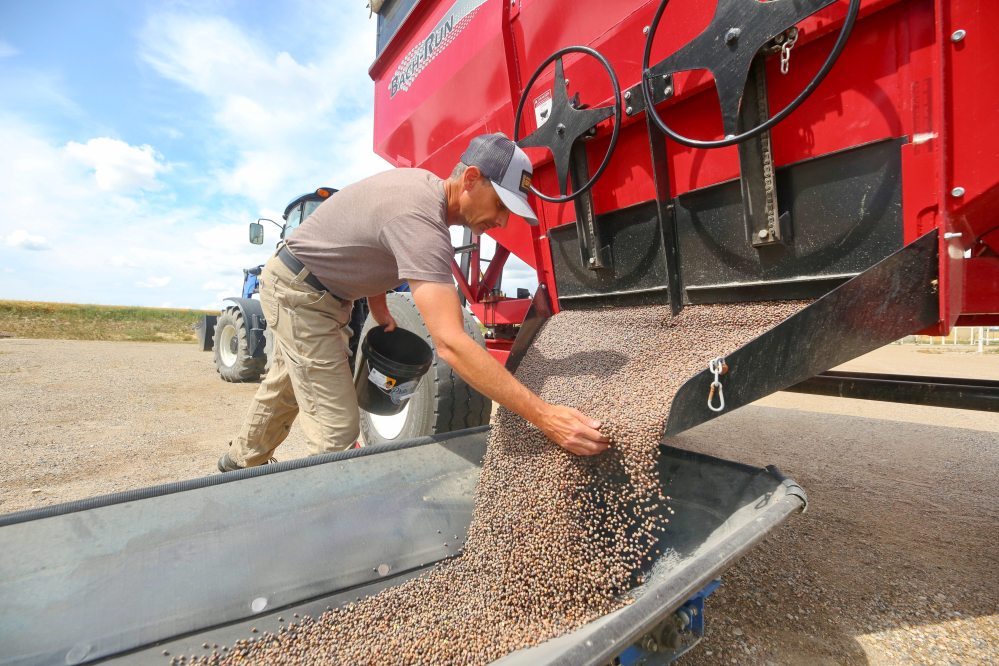
For Westman companies that ship seed south of the border, that distinction has created uncertainty more than an immediate disruption to business.
Wheat City Seeds partner Al Martin said the company is waiting for more clarity before determining whether next week’s tariffs will affect its U.S. sales.
The Brandon-area company, located just east of Kemnay, has been in business for 15 years and retails and wholesales seed locally, elsewhere in Canada and to customers in several U.S. states.
“The company has not experienced a significant tariff impact during the past two years because our products have generally qualified for the Canada-United States-Mexico Agreement (CUSMA),” he told the Sun.
The company sells locally grown pedigreed and certified seeds, including cereals, pulses, oilseeds and forage peas.
U.S. President Donald Trump announced July 20 that the United States would impose additional tariffs of up to 50 per cent on certain Canadian imports, ranging from wine to hockey sticks, regardless of whether they are covered under the U.S.-Mexico-Canada Agreement (USMCA), under Section 338 of the Tariff Act of 1930.
With the Aug. 19 deadline approaching, however, “It still needs to be determined whether planting seed will be one that will be affected or not.”
Rather than relying on broad announcements, Martin said, Wheat City Seeds is waiting for its customs broker to determine whether its specific products are subject to the new duties.
“So until we’re told that, I guess I’m not really going to worry about it much,” he said.
Martin described the previous tariff discussions as having generated considerable uncertainty without substantially changing the company’s operations.
DSV Northstar Ltd. general manager Rob Wolfe said the Neepawa company expects the latest tariffs to have minimal impact because most of its products are not covered.
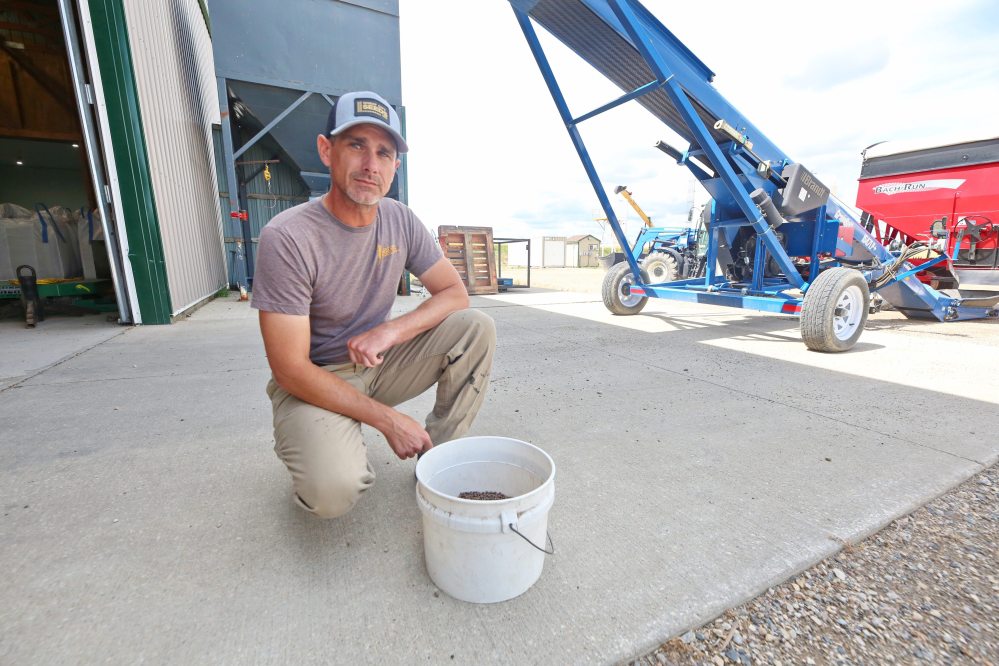
“The tariffs coming into effect will have minimal effect on us, as most of the products we ship are not covered by this latest tranche of tariffs,” Wolfe told the Sun on Monday.
He said the company’s understanding is that most forage and turf seeds will continue to be exempt under CUSMA, based on its export experience, its review of U.S. White House fact sheets and discussions with International Trade Solutions.
“So far, we have not had changes to orders at the moment,” Wolfe said.
DSV Northstar, which deals primarily in perennial seed products, has nevertheless been affected by the broader uncertainty surrounding the continuing Canada-U.S. trade dispute.
“The big effect (of) this round, and previous, are the uncertainties that are brought to the industry,” Wolfe said.
Because many of the company’s products are sold through multi-year contracts, he said the changing trade environment has affected the language and terms used in newer production contracts.
The company has also been putting greater emphasis on Canadian and European markets, although Wolfe said the U.S. remains an important part of its business.
“Our preference would be to go back to more predictable, stable international trade,” he said.
At Southern Seeds Ltd. in Minto, partner Jake Ayre also expects his business to be largely insulated from the new tariffs.
“Based on everything that I’m looking at and reading, my business would be exempt from the tariffs,” Ayre said.
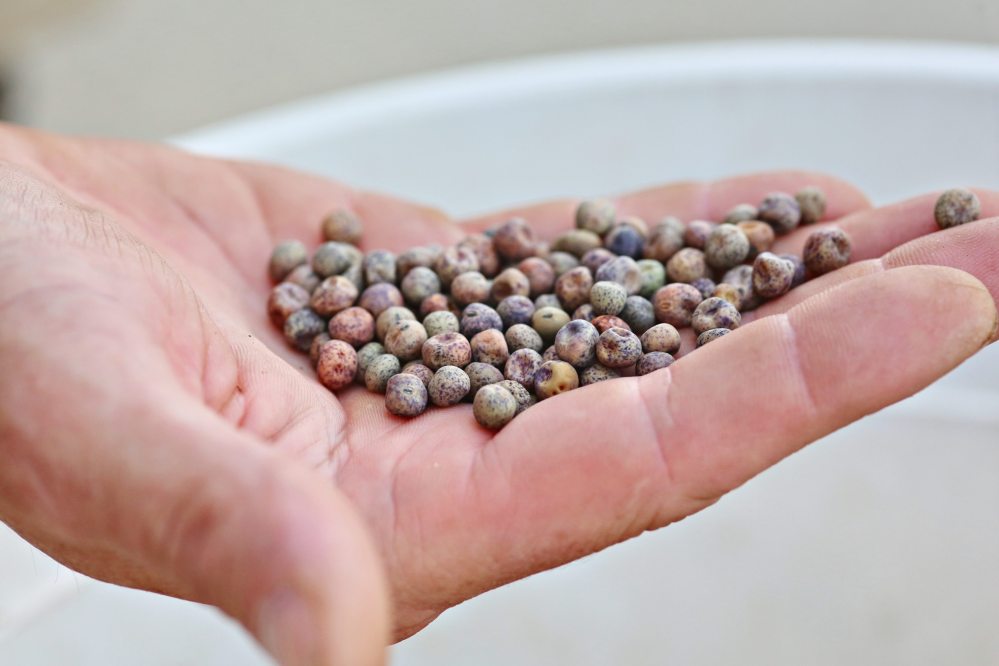
Ayre said his understanding is that the tariffs are primarily focused on vegetable seeds and would not apply to bulk pedigree seed.
Southern Seeds has occasionally shipped oats or wheat to the United States, but Ayre said it has been several years since the company has done much business there. When it does ship products south, they are more likely to be feed grains destined for the feed market rather than seed.
“If I was to do something to the U.S. customers, I’d be exempted,” he said.
The company currently has no U.S. orders on its books, meaning there is no immediate shipment at risk from the Aug. 19 deadline.
Ayre said about 20 to 25 per cent of his company’s business can be tied to the U.S., although the proportion varies depending on the crop and where a customer’s contract ultimately sends the product.
» aodutola@brandonsun.com
» X: @AbiolaOdutola