
Many premiers open to restocking U.S. booze but still have concerns about trade deal
Advertisement
Read this article for free:
or
Already have an account? Log in here »
We need your support!
Local journalism needs your support!
As we navigate through unprecedented times, our journalists are working harder than ever to bring you the latest local updates to keep you safe and informed.
Now, more than ever, we need your support.
Starting at $15.99 plus taxes every four weeks you can access your Brandon Sun online and full access to all content as it appears on our website.
Subscribe Nowor call circulation directly at (204) 727-0527.
Your pledge helps to ensure we provide the news that matters most to your community!
To continue reading, please subscribe:
Add Brandon Sun access to your Free Press subscription for only an additional
$1 for the first 4 weeks*
- Enjoy unlimited reading on brandonsun.com
- Read the Brandon Sun E-Edition, our digital replica newspaper
*Your next Free Press subscription payment will increase by $1.00 and you will be charged $20.95 plus GST for four weeks. After four weeks, your payment will increase to $24.95 plus GST every four weeks.
Read unlimited articles for free today:
or
Already have an account? Log in here »
OTTAWA – Several premiers seem open to returning American liquor to provincial shelves, but there is little enthusiasm about the idea as questions still linger on what a deal to avoid 50 per cent tariffs on $28 billion worth of goods looks like.
Most premiers — but not Ontario’s Doug Ford — have now commented publicly since being briefed Wednesday by Prime Minister Mark Carney about the agreement with the U.S. to stop punishing new tariffs and address long-standing trade irritants on both sides of the border.
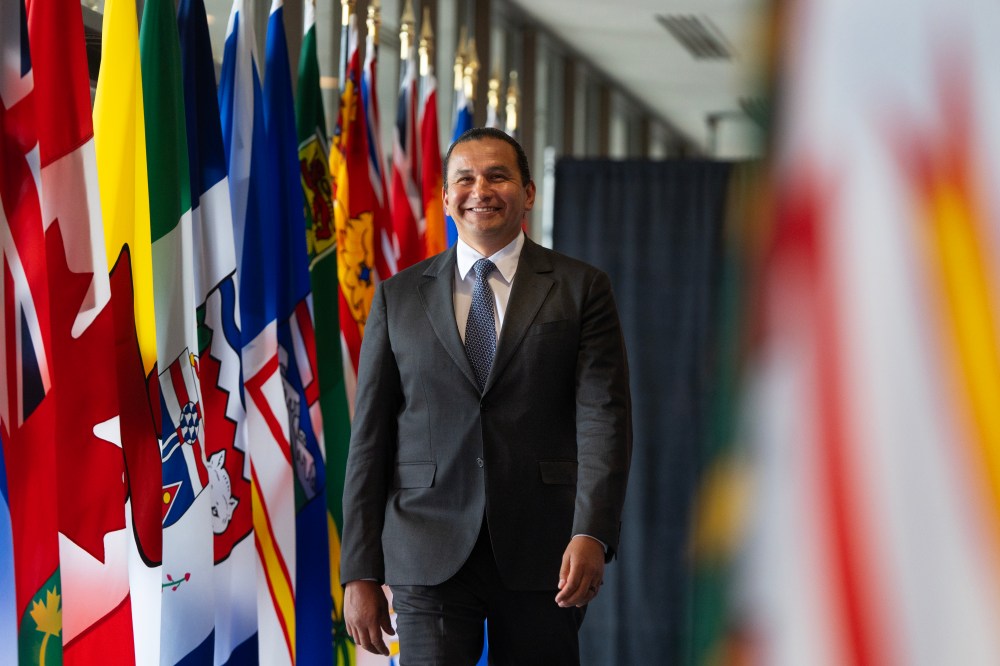
Manitoba Premier Wab Kinew said he is on Team Canada and will support the united approach even as he thinks Canada should keep fighting back against U.S. President Donald Trump, who he called “erratic” and untrustworthy.
Kinew said he’s still waiting for some details, including the exact nature of what tariffs will be on steel and aluminum, but said he doesn’t think Canada should concede much because Canada has “the upper hand.”
“I think we should fight,” he said. “I think Donald Trump is very weak. I think America is weaker around the world today than it was a year ago. He’s about to get slaughtered in the midterms.”
Trump announced Tuesday he was pausing planned new 50 per cent tariffs on a wide range of Canadian goods, while the two sides worked out the details of a new trade deal.
Canada-U.S. Trade Minister Dominic LeBlanc was back in Washington meeting with U.S. Trade Representative Jamieson Greer to work on those details Wednesday. The two, along with Canada’s chief negotiator Janice Charette, hammered out most of the deal over the course of several meetings between Aug. 10 and Aug. 18.
“Canadians expect us to get a deal that’s in the economic interest of Canada and Canadian workers,” LeBlanc said as he left Greer’s office Thursday.
“We’re very close, we continue to make progress. We’re going to stay here and do the work that’s necessary until we get to that point.”
Even without having all the details yet, Carney asked premiers to accept the deal, which would require them to lift their prohibitions on U.S. booze. They have been in place since the winter of 2025, when Trump first began imposing new tariffs on Canada.
Kinew said Carney “effectively” told them there would be no deal without a pledge to put U.S. alcohol back on the shelves.
“I wouldn’t say that he was begging us, but what is a step before begging? So I get it from his perspective,” Kinew said during a press conference in Winnipeg Thursday.
He said he’s considering Carney’s request on U.S. booze but said that doesn’t mean he thinks people should buy it.
“When we put the American booze back on the Liquor Mart shelves, Canadians, leave it there. Spend your money on Canadian products that are going to employ people in our country and that have an administration that respects Canada,” Kinew said.
The sentiment was echoed Wednesday by Nova Scotia Premier Tim Houston and on Thursday by New Brunswick Premier Susan Holt.
Holt told CBC News that she “has a hunch” her constituents wouldn’t buy American spirits even if they were on the shelves.
“It’s not coming back onto the shelves until the U.S. does something to take us back to the free and fair trade we used to have,” Holt told CBC.
Newfoundland and Labrador Premier Tony Wakeham, the current vice-chair of the premiers’ group known as the Council of the Federation, said in the call with Carney all premiers agreed to return U.S. booze to their shelves.
Not all premiers have confirmed that though — notably Ford, whose province both used to be the biggest customer for U.S. booze and has the most to lose if steel and auto tariffs aren’t lowered enough.
Ford has not yet said anything publicly about the trade deal.
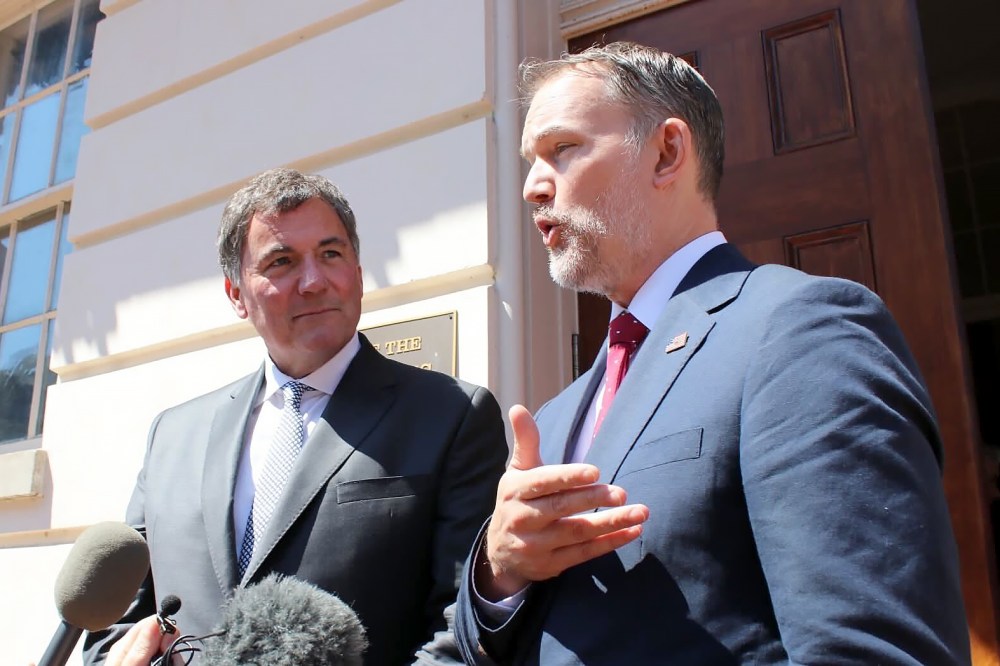
Yukon Premier Currie Dixon said when the U.S. deal is done his territory will lift its ban on American alcohol, and Northwest Territories Premier R.J. Simson said he’d consider it.
Simpson, who recently took over as chair of the Council of the Federation, said while some provinces stand to be hit harder than others, he isn’t worried about cracks in the “Team Canada” approach.
“Ontario, with steel, that’s a big issue for them. And so it’s going to come down to that and how they feel they’re being treated in this, Simpson told The Canadian Press in an interview. “But if it’s good enough for Doug Ford, it’s good enough for me.”
Quebec Premier Christine Frechette said in French she had a “long call” with Carney Thursday.
“‘I had several answers to questions I had asked. Now, we need to analyze those answers and evaluate the impact it represents on Quebec’s economy. Once that analysis will be done, I will come back to you with my position,” Frechette said in French during a press conference in Roberval, Que.
Mark Wiseman, Canada’s ambassador to the U.S., and Marc-Andre Blanchard, Carney’s chief of staff, joined LeBlanc and Charette in the meeting with Greer Thursday.
Details of the deal are scant but it is expected to address U.S. tariffs on steel, aluminum, lumber, and autos, some U.S. concerns about limited access to Canada’s dairy market, as well as Canada’s retaliatory tariffs on autos and provincial bans on U.S. alcohol imports.
Carney also spoke with Mexican President Claudia Sheinbaum Thursday and the two talked about evolving North American trade, according to a readout issued by his office. Both leaders stressed the importance of renewing the Canada -United States-Mexico Agreement, or CUSMA, as soon as possible.
Bloc Québécois Leader Yves-Francois Blanchet sent a letter to Carney Thursday morning demanding federal opposition leaders be consulted on a potential deal with the U.S.
Conservative Leader Pierre Poilievre said Wednesday he has not received a briefing on the potential deal nor the negotiations.
Carney has yet to speak publicly about the deal, but in a statement released Wednesday he said the new deal reinforces and builds on Canada’s existing trade advantages with the U.S.
This report by The Canadian Press was first published Aug. 20, 2026.
— With files from Catherine Morrison and Nick Murray in Ottawa, Ian Bickis in Winnipeg and Kelly Malone in Washington.