
Plane crashed on second attempt to land in heavy fog in Alaska, killing all 8 aboard, officials say
Advertisement
Read this article for free:
or
Already have an account? Log in here »
We need your support!
Local journalism needs your support!
As we navigate through unprecedented times, our journalists are working harder than ever to bring you the latest local updates to keep you safe and informed.
Now, more than ever, we need your support.
Starting at $15.99 plus taxes every four weeks you can access your Brandon Sun online and full access to all content as it appears on our website.
Subscribe Nowor call circulation directly at (204) 727-0527.
Your pledge helps to ensure we provide the news that matters most to your community!
To continue reading, please subscribe:
Add Brandon Sun access to your Free Press subscription for only an additional
$1 for the first 4 weeks*
- Enjoy unlimited reading on brandonsun.com
- Read the Brandon Sun E-Edition, our digital replica newspaper
*Your next Free Press subscription payment will increase by $1.00 and you will be charged $20.95 plus GST for four weeks. After four weeks, your payment will increase to $24.95 plus GST every four weeks.
Read unlimited articles for free today:
or
Already have an account? Log in here »
JUNEAU, Alaska (AP) — A plane that crashed at a remote military site in western Alaska, killing all eight people on board, was making its second runway approach in heavy fog when it lost contact, authorities said Friday.
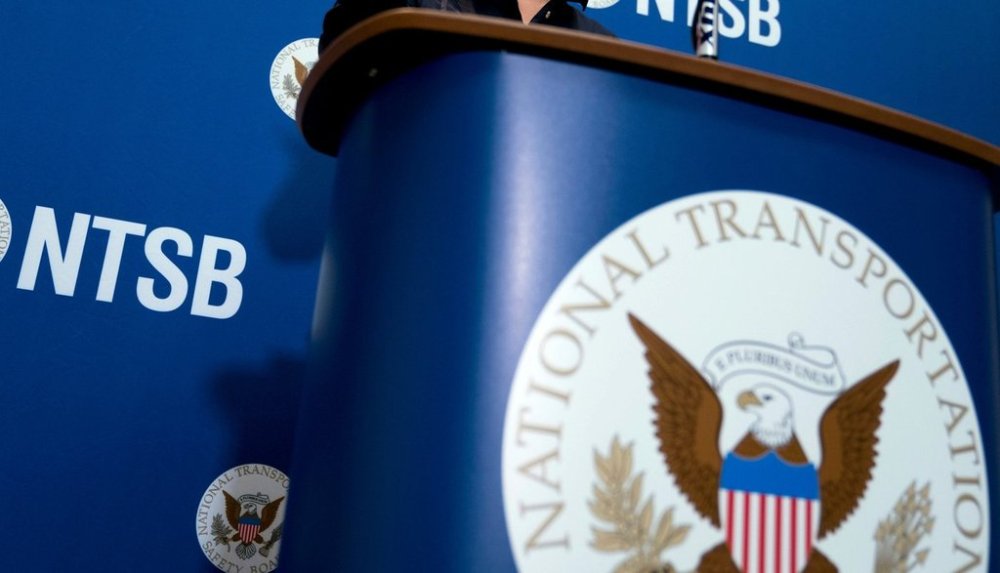
The Cessna’s two pilots could not see the gravel airstrip and were flying solely by instruments when the plane crashed about midday Thursday, Clint Johnson, the National Transportation Safety Board’s Alaska region chief, told a virtual news conference.
Regulations required that they abort their first landing attempt because of the lack of visibility, he said, and the plane crashed on its second attempt, about one-third of a mile (0.5 kilometers) from the runway. The runway is surrounded by mountainous terrain on three sides, and the Federal Aviation Administration recommends pilots use GPS and other instruments when they land there.
On board were the pilots, two employees of the U.S. Army Corps of Engineers and four contractors. Two of the contractors were employees of Calista Brice, a collection of companies that perform construction, engineering, logistics and other work in remote areas. Calista Brice is a subsidiary of Calista Corp., an Alaska Native regional corporation.
The military has not said what work they were performing at the Cape Newenham Long Range Radar Site, about 450 miles (725 kilometers) west of Anchorage on Alaska’s southwest coast.
NTSB investigators were traveling to the scene Friday.
The radar site was built in the 1950s as part of a network designed to provide early warning of a missile attack by the Soviet Union. Today, it monitors the skies off the coast in the direction of Russia, North Korea and China.
Those on board were “dedicated professionals carrying out a vital mission in a demanding environment,” U.S. Air Force Lt. Gen. Robert Davis, commander of Alaskan Command, the Alaskan North American Aerospace Defense Command Region and Eleventh Air Force, said in a statement Thursday.
“This is a devastating loss for our military family and the communities we serve,” Davis said.
Johnson said search teams found the fragmented wreckage after the twin-engine Cessna 441, also known as a Cessna Conquest, lost contact. Its final flight path was captured by radar at the site, he said.
Weather conditions were changing Thursday as heavy fog rolled through the area. An automated observation system not far from the airport reported a low cloud ceiling, fog and visibility of about 10 miles (16 kilometers) in the minutes before the crash, but the next update about 15 minutes after it showed visibility of less than one-quarter mile (0.40 kilometers), according to Carrie Haisley, the meteorologist in charge of the National Weather Service’s Alaska sector operations center.
Mike O’Donnell, who oversaw airport safety programs and accident investigations for much of his 17 years at FAA, said it sounded as if weather conditions were bad enough that the pilots should have diverted and landed somewhere else.
The airstrip is at a private military site managed by the Pacific Air Forces Regional Support Center. It’s part of a network of remote radar sites that tracks aircraft operating in Alaska’s airspace and along its borders, a statement from Alaskan Command said.
The outpost at Cape Newenham closed in 1983 after a new radar was installed, and now the site is visited only occasionally by civilian contractors who perform maintenance on the system.
The U.S. Army Corps of Engineers said the two employees who died were part of a “project delivery team en route to a project site in support of the U.S. Air Force.” The statement did not provide additional details about the work.
Johnson said the flight was operated by Security Aviation based in Anchorage. The charter company did not immediately respond to emails seeking comment.
___
Associated Press writer Kathy McCormack in Concord, New Hampshire, contributed to this report. Funk reported from Omaha, Nebraska.