
Percentage of Ontario youth struggling with mental health back to pre-COVID level, survey suggests
Advertisement
Read this article for free:
or
Already have an account? Log in here »
We need your support!
Local journalism needs your support!
As we navigate through unprecedented times, our journalists are working harder than ever to bring you the latest local updates to keep you safe and informed.
Now, more than ever, we need your support.
Starting at $15.99 plus taxes every four weeks you can access your Brandon Sun online and full access to all content as it appears on our website.
Subscribe Nowor call circulation directly at (204) 727-0527.
Your pledge helps to ensure we provide the news that matters most to your community!
To continue reading, please subscribe:
Add Brandon Sun access to your Free Press subscription for only an additional
$1 for the first 4 weeks*
- Enjoy unlimited reading on brandonsun.com
- Read the Brandon Sun E-Edition, our digital replica newspaper
*Your next Free Press subscription payment will increase by $1.00 and you will be charged $20.95 plus GST for four weeks. After four weeks, your payment will increase to $24.95 plus GST every four weeks.
Read unlimited articles for free today:
or
Already have an account? Log in here »
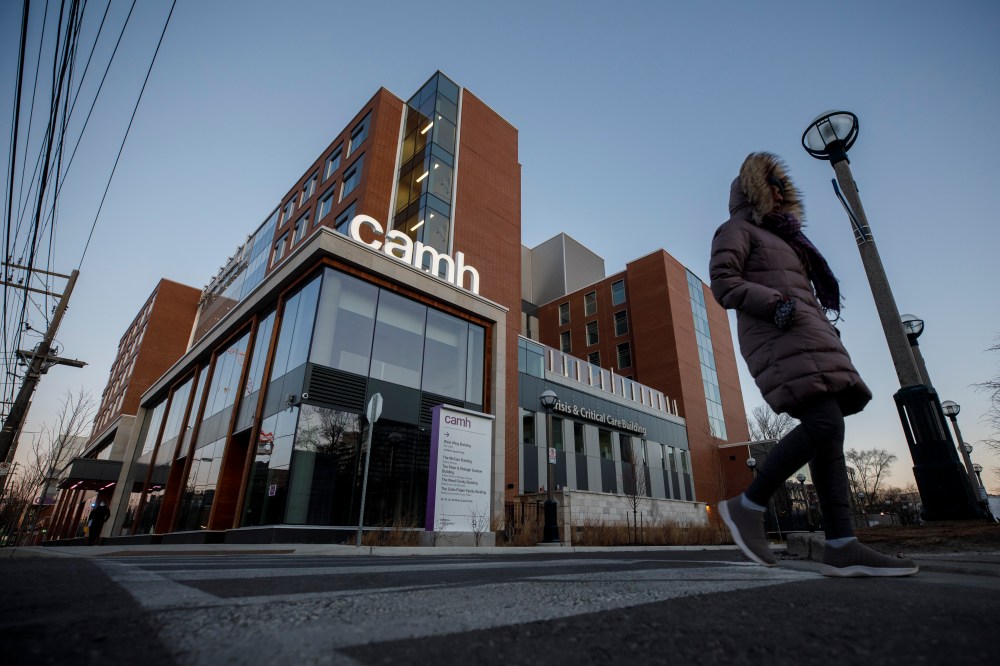
TORONTO – The Centre for Addiction and Mental Health says psychological distress among Ontario youth appears to have decreased since the pandemic, but still remains high.
At the same time, a rising number of students are taking part in online gambling, CAMH’s latest Ontario Student Drug Use and Health Survey, released Monday, said.
The survey found 46 per cent of youth in grades 7 to 12 reported a “moderate to serious level” of psychological distress in 2025.
That’s down from 51 per cent of students when the last survey was conducted in 2023.
Lead investigator Hayley Hamilton said the decrease is “encouraging” but the percentage of students struggling with their mental health is still significantly higher than it was more than a decade ago.
Surveys conducted between 2013 and 2019 showed a rise in reported mental health issues, said Hamilton, who is co-director of CAMH’s Institute for Mental Health Policy Research.
Mental distress increased even more during the pandemic and now seems to have returned to 2019 levels, with about 30 per cent of students rating their mental health as “fair” or “poor.”
About one in five students said they experienced symptoms of depression in the two weeks prior to completing the survey and one in three said they had anxiety symptoms.
“I think the message is that we have seen some improvements in student mental health, which is encouraging,” said Hamilton.
“But it only takes us back to 2019, when, you know, we had high numbers of students reporting symptoms of distress. And those 2019 numbers were so much higher, almost double what they were in 2013. So we’re still in a place where we really need to continue to invest in youth mental health.”
Hamilton said the increase in reported mental health problems could be partly related to societal changes that happened between 2013 and 2019 — such as the rise in social media use — but could also reflect a decrease in stigma and more willingness to talk about psychological distress.
About one in eight students reported “often or always” feeling lonely in the latest survey, a percentage that has remained stable since 2021 when the survey started asking about loneliness.
Dr. Nicole Kozloff, a child and youth psychiatrist and scientist at CAMH, said one factor that may be contributing to loneliness is the shift from spending time together in physical spaces to more online interactions.
“When young people are connecting in online spaces, it might not provide that same emotional fulfilment and sense of connection that we get from, you know, being physical with each other, hugging each other, being able to see each other’s face when we have a conversation,” she said.
One-quarter of students spend five hours or more a day on social media, the survey said.
Some students feel excluded from online conversations, Kozloff said, and many are victims of cyberbullying.
More than a quarter of students who completed the survey said they had been bullied online in the past year, and one in seven students said they had bullied others online.
Bullying is also happening in person at school, the survey said, with a similar percentage of students reporting being the targets of mostly verbal abuse.
About 17 per cent of students said they are worried about being threatened or harmed at school — a number “significantly higher today than a few years ago,” the survey said.
Hamilton said it’s hard to say what’s behind that trend — but the effects of pandemic disruptions may play a role.
“What we have learned during COVID and since COVID is that there was evidence within schools of just greater aggression and violence,” she said.
But on the flip side, more than 80 per cent of students said they feel close to people at school and like they are part of the school community — a significant increase since the 2023 survey, when it was about 77 per cent.
The 2025 survey also showed that fewer students are using alcohol and drugs than in the past and that they’re waiting longer before trying them for the first time.
But it also revealed a dramatic rise in online gambling, with one in 10 students laying sports bets in 2025 compared to one in 100 in 2017.
Almost one-quarter of students reported seeing or hearing advertising for online gambling sites every day.
Hamilton said the increase in online gambling came as Ontario regulations changed to allow non-government, private betting sites.
Despite age restrictions on those sites, “the students are finding a way to gamble,” she said.
Whatever the mental health or addiction issues youth are struggling with, CAMH experts say school-based mental health supports are critical for providing help “where young people are at.”
The survey showed the percentage of students who said they know how to access school-based mental health support services increased from 57 per cent in 2023 to 63 per cent in 2025.
But only 14 per cent of students said they used those services.
Samarah Maqbool, now 23, said she had a lot of anxiety in her senior years of high school as the pressures of getting good grades and doing extracurricular activities to include on her university applications — plus staying socially involved — weighed heavily on her.
“It was a recipe for getting overwhelmed basically,” said Maqbool, who graduated in 2021 and is from Mississauga, Ont.
One of the main factors that helped her psychologically was a mental health awareness club — run by youth mental health advocacy and peer support group Jack.org — right in her school.
“They were the ones who helped me find out about my school’s child and youth worker,” she said.
That worker helped her navigate the pressures she was feeling, said Maqbool, who is now in medical school but continues to volunteer as a Jack.org ambassador.
She said some students may not be using school-based supports due to “self stigma,” where they feel they’re not “eligible” for those services.
“They might feel like their problems are not big enough, despite that very much not being true,” Maqbool said.
The Ontario Student Drug Use and Health Survey has been conducted every two years since 1977 in school boards across the province.
The 2025 survey included 11,108 students in grades 7 to 12 in 1,147 classes in 246 schools in 42 school boards. The students completed anonymous online questionnaires between December 2024 and June 2025.
The polling industry’s professional body, the Canadian Research Insights Council, says online surveys cannot be assigned a margin of error because they do not randomly sample the population.
This report by The Canadian Press was first published Aug. 24, 2026.
Canadian Press health coverage receives support through a partnership with the Canadian Medical Association. CP is solely responsible for this content.