
Let cooler heads prevail on retaliatory measures
Advertisement
Read this article for free:
or
Already have an account? Log in here »
We need your support!
Local journalism needs your support!
As we navigate through unprecedented times, our journalists are working harder than ever to bring you the latest local updates to keep you safe and informed.
Now, more than ever, we need your support.
Starting at $15.99 plus taxes every four weeks you can access your Brandon Sun online and full access to all content as it appears on our website.
Subscribe Nowor call circulation directly at (204) 727-0527.
Your pledge helps to ensure we provide the news that matters most to your community!
To continue reading, please subscribe:
Add Brandon Sun access to your Free Press subscription for only an additional
$1 for the first 4 weeks*
- Enjoy unlimited reading on brandonsun.com
- Read the Brandon Sun E-Edition, our digital replica newspaper
*Your next Free Press subscription payment will increase by $1.00 and you will be charged $20.95 plus GST for four weeks. After four weeks, your payment will increase to $24.95 plus GST every four weeks.
Read unlimited articles for free today:
or
Already have an account? Log in here »
“Despite the addition of both the Wuskwatim and Keeyask generating stations to our system over the past 14 years, which added almost 900 megawatts of generating capacity, we are simply not the energy superpower many think we are.”
— Manitoba Hydro CEO Allan Danroth
Ever since Prime Minister Mark Carney announced that he ordered his team to walk away from the negotiating table after the Trump administration offered up a poison pill of untenable demands, Canadians of all partisan stripes have come together from across the country in support of that decision.
While this is certainly encouraging in the face of an attack on our sovereignty and economic autonomy from the United States, there has been an understandable — but somewhat misguided — view among Canadians that we need to hit the Americans back, and hit them hard. No matter the cost.
All things considered, it’s little wonder that Canadians are spoiling for a fight. But there is a danger in saying “damn the consequences” even as we collectively bring our elbows up.
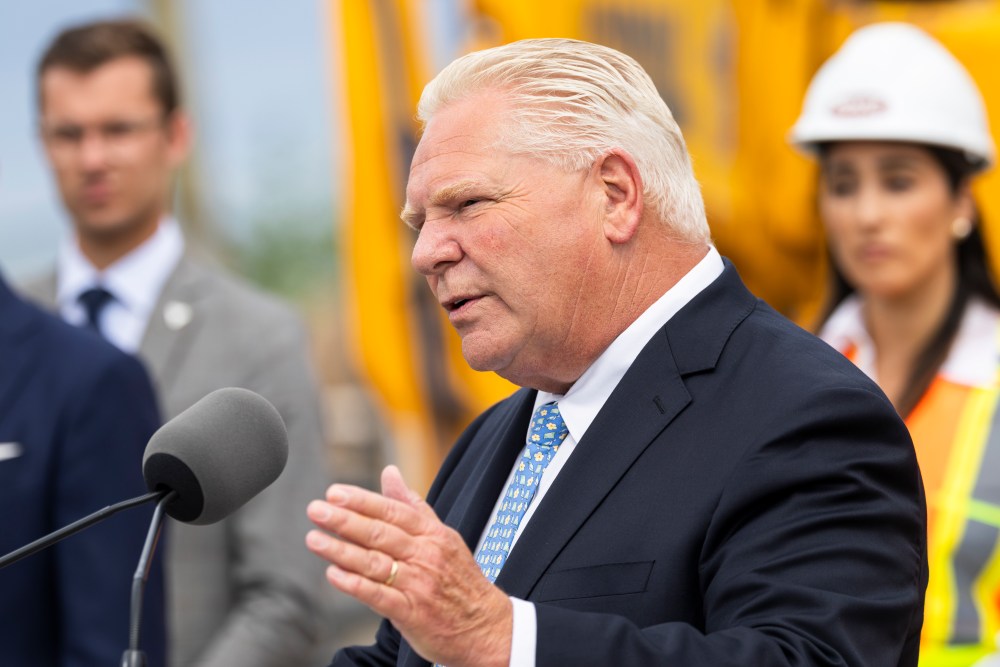
Case in point: Ontario Premier Doug Ford on Monday offered up a smorgasbord of hot-headed rhetoric that did more to appeal to angry hearts than thoughtful minds. In his comments to the Globe and Mail yesterday, Ford said that “everything is on the table” if the trade dispute between Canada and the United States worsens, including cutting off electricity and critical minerals from Ontario. He also suggested Canada should consider using our reserves of oil and potash as leverage.
He further suggested that Ontario could raise electricity prices on exports to the United States, or stop sending power south entirely.
“We power 1.5 million homes and businesses,” Ford said. “Everything’s on the table. I’ll do whatever it takes.” He also added that Trump “better have a pack of batteries” if he continues trying to dismantle Canadian manufacturing.
This is not an idle threat. Last year at the start of the trade imbroglio with the Trump administration, the Ford government imposed a 25 per cent surcharge on electricity bound for Michigan, Minnesota and New York. That power flow serves about 1.5 million customers in those three states.
The tax lasted for only a day even as Trump threatened to double the tariffs on Canadian steel and aluminum to 50 per cent.
But let’s say that the Ford government cuts off or penalizes electricity exports to the United States. What would the unintended consequences be for province like Manitoba?
We have to remember just how deeply interconnected the North American power grid has become. Manitoba Hydro regularly relies on importing electricity from the U.S. — mostly from states like Minnesota — to maintain grid stability when local electrical demand in winter outstrips our ability to generate it.
Just such a situation took place last January in the dead of winter, according to Manitoba Hydro CEO Allan Danroth, who recently defended the Crown corporation’s plan to build three new natural gas turbines in Brandon.
He told the Public Utilities Board in July that Manitoba Hydro imported the equivalent of the output of Keeyask generating station “every hour, every day, for 30 days.” That is a tremendous amount of power use.
And according to CBC news, the proposed 750-megawatt gas plant expansion in Brandon — even if it was up and running — would not be enough to replace the peak power imports needed during those extreme winter conditions.
In fact, these natural gas-powered turbines are only slated to be online producing power by summer 2030. And the first phase of the Indigenous-led wind farms that are supposed to work in tandem to help meet our growing electrical needs is only slated to begin development in 2027, with the full rollout expected by 2035.
Assuming we face another tough winter ahead, we would have to import that power from the U.S., much like we did this year. If Doug Ford made good on his promised use of electricity as a trade-war bludgeon, we would face the severe risk of retaliatory U.S. power cuts or perhaps exorbitant price surges during the peak winter months.
Manitoba Hydro has begun rolling out energy-saving programs with the overarching goal of reducing peak electricity demand by 860 megawatts by 2035. Those incentive programs will hopefully prove effective, but they’ll hardly make a dent in our energy consumption this coming winter.
Canada has other ways of pressuring the United States economy at our disposal, without shutting down the power grid. We can target politically sensitive states by introducing strategic levies on goods produced in states critical to the Trump administration or in play during the upcoming midterm elections. That’s just one option.
Whatever we do, let’s hope our cool-headed banker-in-chief takes the lead on retaliatory measures, and dampens any further speculative political flare-ups.
Our actions need to be grounded, not hot-wired.
History
Updated on Tuesday, August 25, 2026 9:05 AM CDT: A part of a paragraph was deleted during the editing process in the original version of this editorial. It has been restored.