
Fact File: News story using Jim Balsillie to promote AI crypto platform is fake
Advertisement
Read this article for free:
or
Already have an account? Log in here »
We need your support!
Local journalism needs your support!
As we navigate through unprecedented times, our journalists are working harder than ever to bring you the latest local updates to keep you safe and informed.
Now, more than ever, we need your support.
Starting at $15.99 plus taxes every four weeks you can access your Brandon Sun online and full access to all content as it appears on our website.
Subscribe Nowor call circulation directly at (204) 727-0527.
Your pledge helps to ensure we provide the news that matters most to your community!
To continue reading, please subscribe:
Add Brandon Sun access to your Free Press subscription for only an additional
$1 for the first 4 weeks*
- Enjoy unlimited reading on brandonsun.com
- Read the Brandon Sun E-Edition, our digital replica newspaper
*Your next Free Press subscription payment will increase by $1.00 and you will be charged $20.95 plus GST for four weeks. After four weeks, your payment will increase to $24.95 plus GST every four weeks.
Read unlimited articles for free today:
or
Already have an account? Log in here »
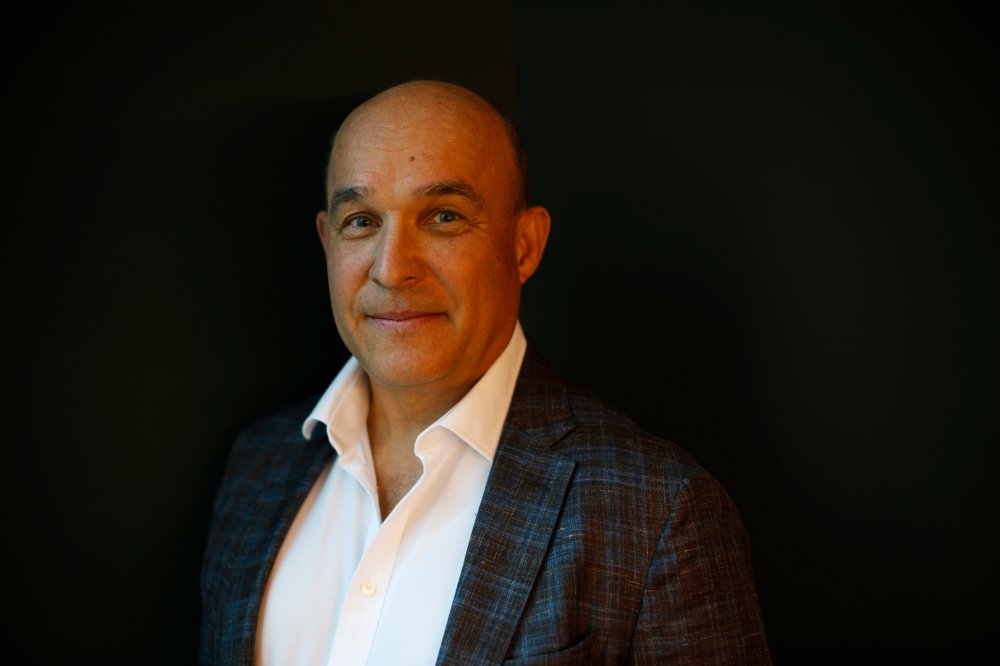
An article made to look like it came from CBC News was shared on LinkedIn this month claiming that former BlackBerry chief executive Jim Balsillie was encouraging investment in an artificial intelligence-powered cryptocurrency platform. Balsillie says he has nothing to do with the investment scheme. The CBC says the article is an example of a growing number of fakes on social media that risk undermining public trust in established media outlets.
THE CLAIM
A LinkedIn post on Aug. 17 from an organization calling itself Field Hollow included a brief teaser with a photo of a man being detained and a link to an article that mimics the appearance of the CBC News site and carries the byline of an actual CBC reporter.
“A recent development in Canada is raising questions,” the post says. “Take a closer look at the details.”
The linked story opens with a claim that CBC received a cease-and-desist order from Canadian banks demanding that the broadcaster pull an investigative report. It adds that CBC refused, and Balsillie agreed to go on camera with journalist Mark Kelley. It claims that more than 40,000 Canadians had signed up to a new investment platform delivering monthly returns of $4,200 on a $350 deposit.
Further down in the article, Kelley purportedly interviews Balsillie, who is quoted lauding the “real income” his clients have earned through the “AI-powered investment platform.”
The story is illustrated with images of someone resembling Balsillie and another man who readers are led to believe is CBC reporter Kelley.
THE FACTS
Balsillie, who is chairman of the Centre for International Governance Innovation, said he first learned about the article and his supposed CBC interview when The Canadian Press contacted him. He said he is not involved in any cryptocurrency platform.
A reverse image search shows that the person pictured who is supposed to be investigative reporter Mark Kelley is actually U.S. Senator Mark Kelly. The story has what appear to be links to other reporting but none of them work. The only live link is one that goes to the investment bot.
In an emailed statement, CBC said the article is just one example of the “alarming rise” in fake stories and ads online, which pose a risk to public trust in established media outlets.
The broadcaster said it remains committed to fighting disinformation. “This is an increasingly difficult task however, hindered by the rise in AI-generated disinformation and the prevalence of fake ads found on social media platforms,” it said.
An organization called the Field Hollow, with 93 followers and claiming to have between two and 10 employees, shared the link in a LinkedIn post on Aug. 17. It describes itself as a “self-owned” organization that publishes blog posts.
After The Canadian Press asked LinkedIn for comment about the Field Hollow account and the post, the account disappeared. LinkedIn has not responded to the request for comment.
In an interview last week, Balsillie denounced what he called a violation of his rights and those of unsuspecting online users.
“This new digital realm has found novel ways to violate those rights,” he said. People who are being defrauded “don’t know if they’re dealing with something that’s real or not, and they can’t tell,” he added. “My right to my identity is also being violated.”
While this particular claim appears only in the LinkedIn post, it is another example of how the brands of established news media, including the CBC, are used in fabricated stories aimed at tricking unsuspecting online users into giving up their personal information and money.
Jeff Horncastle, the outreach officer with the Canadian Anti-Fraud Centre, said scammers frequently use recognizable news organizations or a credible media figure as covers to extract money from unsuspecting online users.
They know Canadians are more likely to engage with content that comes from what looks like a reputable media source, he said. “By combining these names with a professional looking article or video, they will remove some of the skepticism that people normally have towards an unsolicited investment opportunity.”
Horncastle said that between 2021, when cryptocurrency began to gain traction, and June 2026 there have been about $1.6 billion in reported investment fraud losses in Canada, and annual losses keep growing — to $351 million in 2025 from $164 million in 2021.
He advises anybody who comes across a potentially fraudulent news story to verify whether the story exists on the news outlet’s actual website. He adds that online users should be suspicious of any endorsements from recognizable media figures and of statements promising high returns on investments.
For Balsillie, who is funding research on AI’s impact and is pushing for greater regulation, there needs to be a broader approach to protecting rights. He said governments should embrace concepts such as freedom from control over one’s likeness, freedom from incursions of the private sphere and freedom from systemic corruption of knowledge.
“These are human rights, and they’ve got to be codified,” he said, adding: “When you don’t pay attention to this stuff, you cause a lot of harm.”
This report by The Canadian Press was first published Aug. 26, 2026.