
B.C. boaters warned to avoid mysterious floating island
Advertisement
Read this article for free:
or
Already have an account? Log in here »
We need your support!
Local journalism needs your support!
As we navigate through unprecedented times, our journalists are working harder than ever to bring you the latest local updates to keep you safe and informed.
Now, more than ever, we need your support.
Starting at $15.99 plus taxes every four weeks you can access your Brandon Sun online and full access to all content as it appears on our website.
Subscribe Nowor call circulation directly at (204) 727-0527.
Your pledge helps to ensure we provide the news that matters most to your community!
To continue reading, please subscribe:
Add Brandon Sun access to your Free Press subscription for only an additional
$1 for the first 4 weeks*
- Enjoy unlimited reading on brandonsun.com
- Read the Brandon Sun E-Edition, our digital replica newspaper
*Your next Free Press subscription payment will increase by $1.00 and you will be charged $20.95 plus GST for four weeks. After four weeks, your payment will increase to $24.95 plus GST every four weeks.
Read unlimited articles for free today:
or
Already have an account? Log in here »
Boaters in northern British Columbia are being warned to stay away from a mysterious floating island that has reappeared on a lake after drifting about 30 kilometres in two weeks.
BC Hydro spokesperson Bob Gammer says he initially thought reports of the island covered in trees and foliage on Williston Lake, the reservoir for the W.A.C. Bennett Dam in the northern Interior, were a hoax, but satellite images confirmed its existence in mid-August.
The island measuring about one hectare then disappeared, but Gammer says it was spotted again on Monday, having travelled about 30 kilometres.
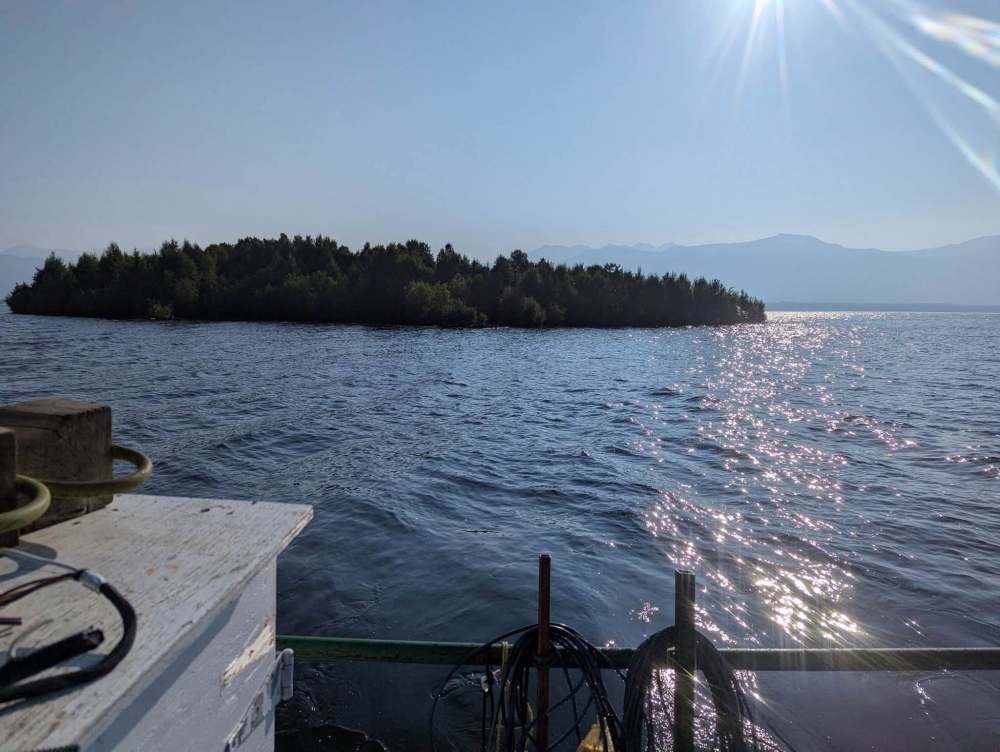
He says boaters should resist the urge to visit the island, theorizing that it’s based on an unstable mass of logs and decaying debris that may have broken free from the shore when the lake recently filled for the first time since 2012.
Rocky Avery shared images of the island that drew worldwide attention after it was spotted by a friend at the lake north of Avery’s hometown of Mackenzie.
He says the water under the island at the time was about 60 metres deep.
“When I saw the video, it was just kind of in awe because you can see from his boat — he was making the ripples, and you could see along the island it was all just going up and down, and it was actually real,” said Avery. “It was crazy.”
Avery said he had lived in the area for more than 48 years and never heard of anything like the island before.
He said he wanted the island to be named Rocky Island “even though it’s not that rocky.”
Avery shared the discovery with BC Hydro and members of the Tsay Keh Dene First Nation.
Gammer said when he first heard about the island on Aug. 13, he questioned the report.
“I checked internally and nobody that I have with contacts in the company had heard of this either. So, at the time, we basically thought it was maybe a hoax, and we didn’t give it much more attention,” said Gammer, manager of northern community relations with BC Hydro.
But a few days later, engineers with the Crown utility spotted it on satellite imagery in Finley Bay, near the centre of the lake.
“This is a rare occurrence, and certainly the first that we’ve heard of for Williston Reservoir,” said Gammer.
He said they tried to track the island but it seemed to vanish, before it was spotted again against the shoreline where the Ospika River flows into the lake.
“It’s moved about 30 kilometres northwest on the reservoir into a more remote location,” said Gammer. “It looks like the island appears to be intact.”
Gammer said he also received a photo from a boater, providing double confirmation. Based on satellite imagery, the island is about 140 meters long and about 70 meters wide, he added.
Avery cheered news the island hadn’t sunk, after being told by members of the Tsay Keh Dene First Nation that they too had spotted it again.
“We’re just waiting for the water to calm down so we can take a jet boat and take a better look at it,” said Avery, adding a former chief from the nation would join the trip to inspect the island.
Gammer said the island’s origin was not certain but it’s normal for trees that fall into the reservoir to clump together in a sheltered bay.
“You can imagine, like a tree falling down in the forest, and the trunk is laying flat, and over a long period of time, it starts to break down, and other plants, moss, and even trees start growing on top,” said Gammer.
The rising waters of the reservoir then could have lifted the mass free, calling it the “best theory” of how the island came to be.
Gammer said waves in the reservoir can become violent during a windstorm and he feared they could tear apart the mass of logs and woody debris.
“It’s just naturally unstable, and so it’s unsafe to climb onto the island or land a boat on it. It would be dangerous to do that,” he said.
BC Hydro will continue to monitor the island to see if it starts moving again.
“I mean, there will be people who will probably want to study it and get close to it. So, there may be more information to come about the island as the weeks go by,” said Gammer.
This report by The Canadian Press was first published Sept. 1, 2026.