
Ode to the remote control, that tiny box that lets you channel your desires without ever getting up
Advertisement
Read this article for free:
or
Already have an account? Log in here »
We need your support!
Local journalism needs your support!
As we navigate through unprecedented times, our journalists are working harder than ever to bring you the latest local updates to keep you safe and informed.
Now, more than ever, we need your support.
Starting at $15.99 plus taxes every four weeks you can access your Brandon Sun online and full access to all content as it appears on our website.
Subscribe Nowor call circulation directly at (204) 727-0527.
Your pledge helps to ensure we provide the news that matters most to your community!
To continue reading, please subscribe:
Add Brandon Sun access to your Free Press subscription for only an additional
$1 for the first 4 weeks*
- Enjoy unlimited reading on brandonsun.com
- Read the Brandon Sun E-Edition, our digital replica newspaper
*Your next Free Press subscription payment will increase by $1.00 and you will be charged $20.95 plus GST for four weeks. After four weeks, your payment will increase to $24.95 plus GST every four weeks.
Read unlimited articles for free today:
or
Already have an account? Log in here »
CROTON-ON-HUDSON, N.Y. (AP) — If the TV remote hadn’t been invented, channel surfers and couch potatoes would have to argue about something else. Come to think of it, those surfers and potatoes might not even exist.
It may be difficult for anyone under 40 to understand, but there was a time when changing a channel meant getting up, walking over to the “television set” and turning a “dial.”
Scientists at Zenith Electronics recognized a problem that needed to be solved fairly quickly. The first TV remote, called “Lazy Bone,” was put on the market in 1950. It wasn’t wireless. People tripped.
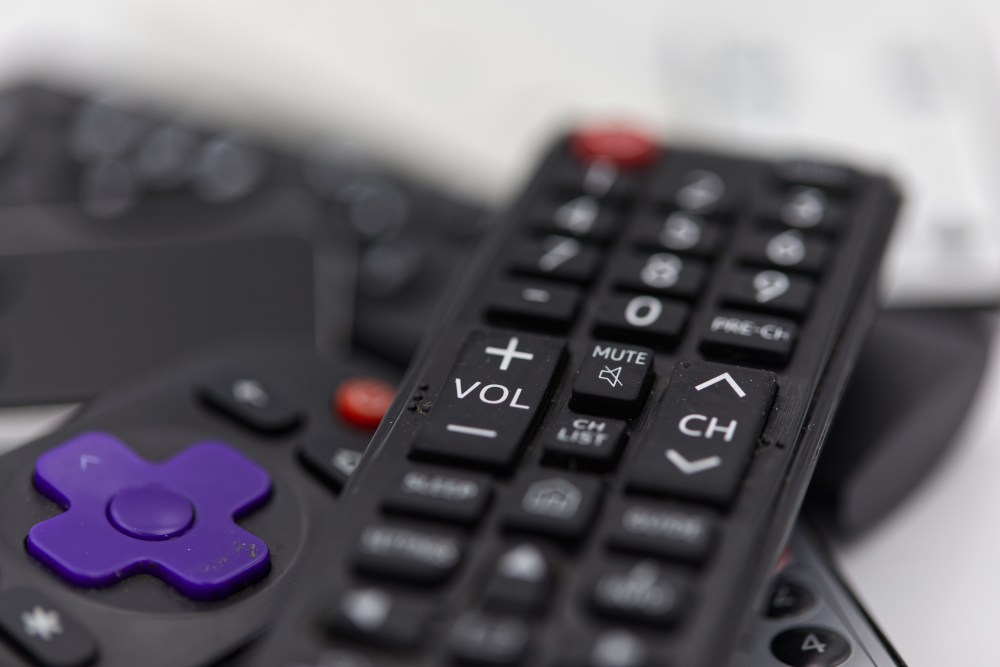
The first wireless remote, the “Flash-Matic,” five years later, looked disturbingly like a gun and used light signals. The TV wasn’t discriminating, and on sunny days false signals could cause spontaneous channel changes. The next year, Zenith’s “Space Command” was introduced using sound waves. On those early models, the press of a button produced a clicking noise – hence the term “clicker.”
Remotes using infrared signals emerged in the 1980s when, with the dawn of cable’s multichannel universe, the device became indispensable.
“Losing the remote in the couch cushions became as frantic an event as losing a phone is today,” says David Bianculli, TV critic for NPR’s “Fresh Air” and a professor at Rowan University in New Jersey.
Remotes influenced how TV was programmed and consumed. The flow of a network’s schedule was essential: How do you prevent a viewer from changing channels? CBS’ Saturday night schedule in the 1970s, from “All in the Family” through to “The Carol Burnett Show,” was a masterpiece in program flow. NBC once considered Thursday nights “must-see TV.”
The early days of cable produced the surfer, who aimlessly pressed the remote to scan channels. That put a premium on flashy; you had to catch the eye.
Remotes have downsides. They amplify selfishness. They reproduce uncontrollably until you don’t know which to use. Batteries die at inopportune moments.
Now that appliances can listen, maybe remotes fade away. Until then, it’s back to searching for wherever you left the clicker. In the refrigerator while you were getting a snack? In the bathroom?
We’ll pause, as it were, until you find it. In the meantime, we’ll leave you with this:
“The flush toilet may have been the most civilized invention ever devised, but the remote control is the next most important. It’s almost as important as sex.”
That’s from the late Zenith scientist Eugene Polley, who together with colleague Robert Adler was considered the pioneer of wireless remote technology.
Polley may have been feeling pride of ownership. Then again, there’s no firmer upper hand in a relationship than who has control of the clicker.
___
David Bauder wrote about television for The Associated Press for 30 years before retiring this year. Part of a recurring series, “American Objects,” marking the 250th anniversary of the United States. For more American objects, click here. For more stories on the anniversary, click here.