
Distilleries to bear brunt of U.S. ban on Canadian booze: experts
Advertisement
Read this article for free:
or
Already have an account? Log in here »
We need your support!
Local journalism needs your support!
As we navigate through unprecedented times, our journalists are working harder than ever to bring you the latest local updates to keep you safe and informed.
Now, more than ever, we need your support.
Starting at $15.99 plus taxes every four weeks you can access your Brandon Sun online and full access to all content as it appears on our website.
Subscribe Nowor call circulation directly at (204) 727-0527.
Your pledge helps to ensure we provide the news that matters most to your community!
To continue reading, please subscribe:
Add Brandon Sun access to your Free Press subscription for only an additional
$1 for the first 4 weeks*
- Enjoy unlimited reading on brandonsun.com
- Read the Brandon Sun E-Edition, our digital replica newspaper
*Your next Free Press subscription payment will increase by $1.00 and you will be charged $20.95 plus GST for four weeks. After four weeks, your payment will increase to $24.95 plus GST every four weeks.
Read unlimited articles for free today:
or
Already have an account? Log in here »
Distilleries and spirit makers are likely to be the hardest hit among Canadian alcohol producers as the United States proposes a broad ban on Canadian booze starting later this month.
Craig Johnston, chief economist at Farm Credit Canada, says distilleries ship more than half of their overall product to the U.S.
Johnston says it will be challenging for many distilleries that sell in the U.S. market to find alternative homes for their products domestically, in Europe or elsewhere.
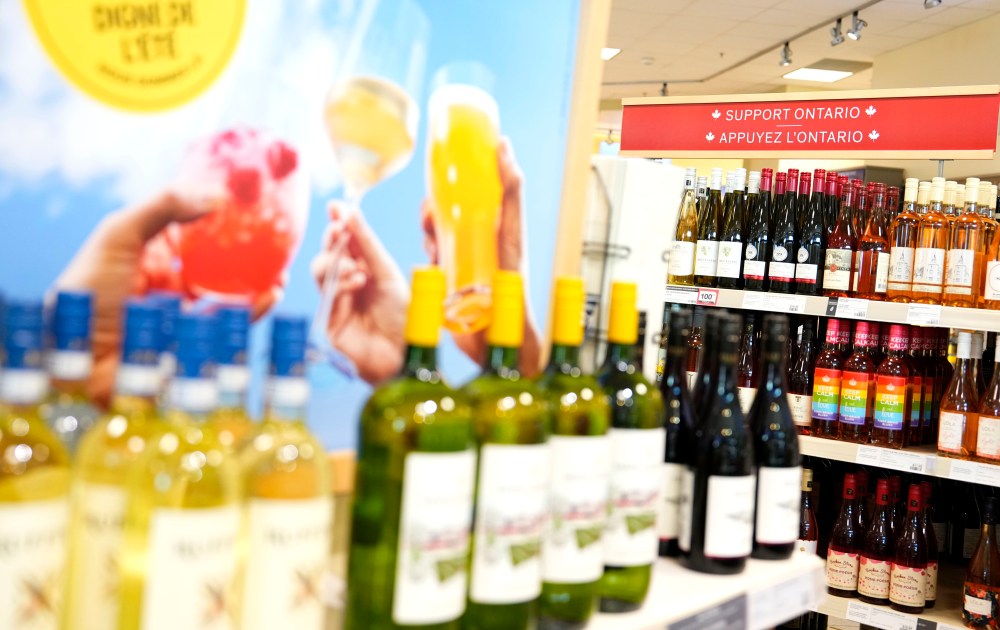
Canadian whiskey and liqueur in bottles larger than four litres will be exempt from the ban; however, Cal Bricker of trade association Spirits Canada says there are not many four-litre bottles that get sold anyway.
And the solution is not going to be as easy as moving production to south of the border because legal agreements restrict distilleries from making Canadian whisky in the U.S., for instance, Bricker says.
Canada’s retaliatory duties earlier this week prompted U.S. President Donald Trump to ban most imports of Canadian alcohol, among a long list of other items, starting Sept. 29.
Andrew Oland, chief executive of Moosehead Breweries, said he wasn’t surprised but still “very disappointed” to see alcohol further dragged into the latest trade escalation.
Oland, who heads the Saint John, N.B.-based brewery, said 15 per cent of its beverages get shipped to the U.S., which are already facing steep duties after trade negotiations between the two countries fell apart last month.
The brewery is currently absorbing the cost of 50 per cent tariffs and focusing on shipping as much beer as possible over the next three weeks to preserve its shelf space and relationship with U.S. retailers.
The wine industry isn’t bracing for as grim a future as its alcohol peers, says Norman Beal, board chair of Ontario Craft Wineries, which represents more than 110 wineries in the province.
He says only about one per cent of all wine sales come from the U.S.
“Canadian wine producers, we’re relatively small,” Beal said. “Most of our products are sold right here in Canada.”
This report by The Canadian Press was first published Sept. 10, 2026.