
Staying away to keep the heat on
Advertisement
Read this article for free:
or
Already have an account? Log in here »
We need your support!
Local journalism needs your support!
As we navigate through unprecedented times, our journalists are working harder than ever to bring you the latest local updates to keep you safe and informed.
Now, more than ever, we need your support.
Starting at $15.99 plus taxes every four weeks you can access your Brandon Sun online and full access to all content as it appears on our website.
Subscribe Nowor call circulation directly at (204) 727-0527.
Your pledge helps to ensure we provide the news that matters most to your community!
To continue reading, please subscribe:
Add Brandon Sun access to your Free Press subscription for only an additional
$1 for the first 4 weeks*
- Enjoy unlimited reading on brandonsun.com
- Read the Brandon Sun E-Edition, our digital replica newspaper
*Your next Free Press subscription payment will increase by $1.00 and you will be charged $20.95 plus GST for four weeks. After four weeks, your payment will increase to $24.95 plus GST every four weeks.
Read unlimited articles for free today:
or
Already have an account? Log in here »
It’s a tough sell these days for U.S. tourism groups seeking to attract Canadian visitors as tensions, tariffs and traded verbal barbs continue to rise between the two countries.
Or, as one Canadian marketing executive put it, “It’s just a wasted effort.”
Indeed, it does seem as if — for a sizable percentage of the Canadian population, anyway — there’s nothing U.S. tourism officials can say that will rekindle interest in vacation visits to American destinations, as long as President Donald Trump remains in office and continues to actively antagonize what was once his country’s closest trading partner and most steadfast ally.
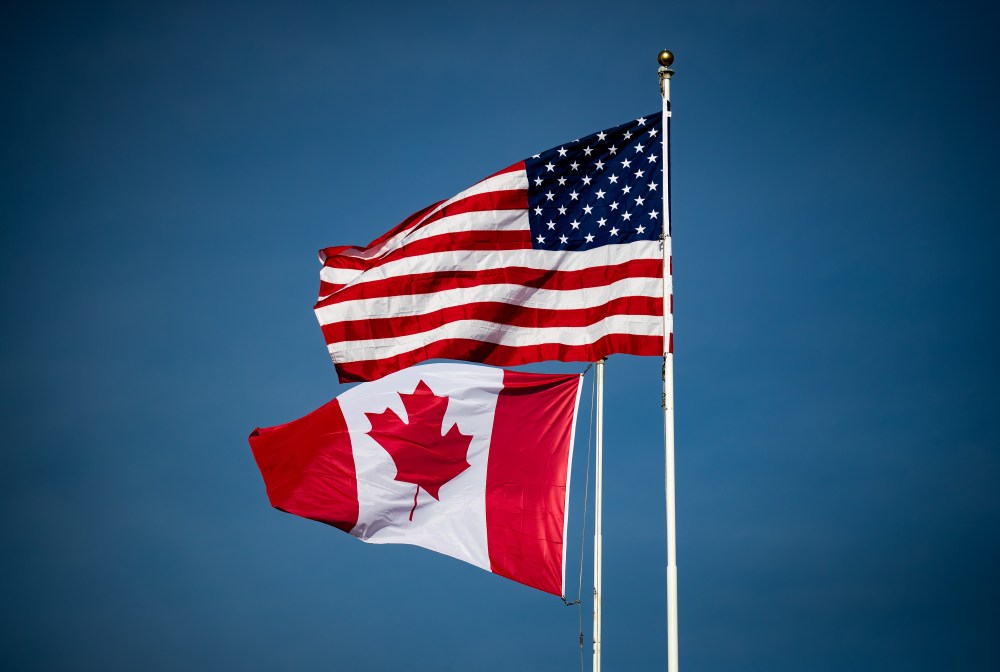
With Canada having this week applied, as promised by Prime Minister Mark Carney, reciprocal tariffs on $28 billion worth of U.S. goods crossing into this country, there’s no reason to believe relations between the governments of the two nations are going to improve anytime soon.
And while there’s little ordinary citizens can do to directly affect the way things are unravelling at the highest political levels, Canadians can — and should — make their feelings known simply by making informed choices about how and where they spend their tourism dollars.
According to Statistics Canada figures, Canadians made 25 per cent fewer border crossings into the U.S. in 2025 than in the previous year and spent $3.3 billion less on U.S. travel. The impact has been felt most sharply in states along the Canada-U.S. border and more southerly destinations (including Florida, Arizona and Texas) popular with so-called “snowbirds” who spend their winters in warmer climes.
There was a slight uptick in U.S. travel this year, but whatever enthusiasm seemed to be returning will no doubt be dampened by the recent barrage of back-and-forth tariffs and Trump’s continuing irrational anti-Canadian tirades (including his juvenile, fit-of-pique decree attempting to rename Lake Ontario).
With this fall’s U.S. midterm elections looming and the impacts of Canadian boycotts being felt in traditionally Trump-supportive states such as Montana, Wisconsin, Iowa, Florida and Texas, personal spending decisions on this side of the border will make it decidedly more difficult for Republican candidates to defend and justify their mercurial leader’s antics.
Officials in U.S. states hardest hit by Canadians’ changing tourism preferences have argued it’s unfair for businesses and destinations that continue to welcome and appreciate visitors from the north to bear the brunt of Canada’s growing distaste for all things Trump.
But we are, as the prime minister described last week, in a trade “war” after having been “attacked” last month during the final stage of failed Canada-U.S. trade talks, and in any conflict between nations there are bound to be civilian casualties and collateral damage.
It’s unfortunate that friendly Americans whose livelihoods depend on tourism, largely from Canada, should suffer the economic consequences of their president’s absurd behaviour, but as long as Trump continues to be Trump, their lamentations should necessarily fall on deaf ears here.
As Trump continues — and make no mistake, he will — to rail frantically against “unfair” Canadian businesses, “nasty” Canadian politicians and even the “unacceptable” currency exchange rate, Canadians should continue to take a common-sense and home-focused approach to vacation planning and consumer spending.
That might be a more difficult posture to maintain as the leaves fall and the chilly autumn winds remind us that snowbird season is almost here.
What makes it easier to remain resolved is that every tourism industry effort to persuade us the U.S. is still a friendly neighbour is followed by yet another Trump-issued harangue reminding us it absolutely is not.
» Winnipeg Free Press