
Family awaits answers after fatal animal attack
Advertisement
Read this article for free:
or
Already have an account? Log in here »
We need your support!
Local journalism needs your support!
As we navigate through unprecedented times, our journalists are working harder than ever to bring you the latest local updates to keep you safe and informed.
Now, more than ever, we need your support.
Starting at $15.99 plus taxes every four weeks you can access your Brandon Sun online and full access to all content as it appears on our website.
Subscribe Nowor call circulation directly at (204) 727-0527.
Your pledge helps to ensure we provide the news that matters most to your community!
To continue reading, please subscribe:
Add Brandon Sun access to your Free Press subscription for only an additional
$1 for the first 4 weeks*
- Enjoy unlimited reading on brandonsun.com
- Read the Brandon Sun E-Edition, our digital replica newspaper
*Your next Free Press subscription payment will increase by $1.00 and you will be charged $20.95 plus GST for four weeks. After four weeks, your payment will increase to $24.95 plus GST every four weeks.
Read unlimited articles for free today:
or
Already have an account? Log in here »
WINNIPEG — The family of a 21-year-old man who was fatally attacked by an animal in western Manitoba is waiting for answers after investigators ruled out a bear attack based on their preliminary findings.
Moses Campeau was walking on a road to a friend’s house in Sapotaweyak Cree Nation, about 600 kilometres northwest of Winnipeg, when he was fatally injured Sept. 9, his mother, Paula Campeau, said Monday.
“Moses was a kind and gentle giant,” she said. “He was a person who (people) would ask to come and help them, and he would go without even hesitating.”
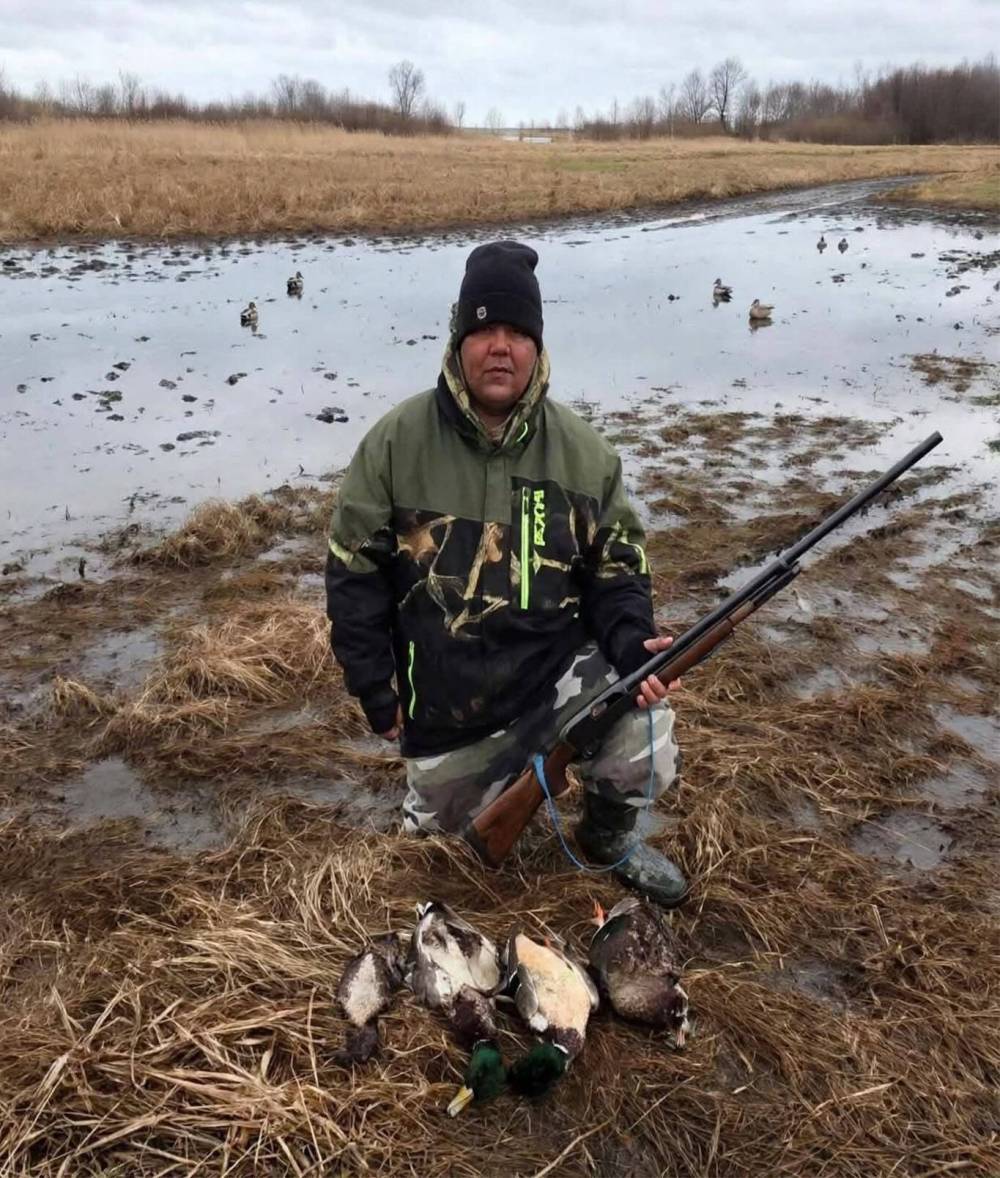
Moses Campeau, 21, was an avid outdoorsman, his grieving mother said. (Facebook)
Manitoba RCMP said officers from the Swan River detachment responded to a report of a suspicious death at about 3:10 a.m. The scene was held and the RCMP’s major crime services took over the investigation.
Emergency services were dispatched from Swan River shortly before 3:15 a.m. and arrived at the scene at 4:21 p.m., Shared Health confirmed Monday. After an autopsy, the preliminary cause of death was determined to be an animal attack, police said.
“The type of animal responsible for the fatal attack has not been determined,” RCMP spokesman Kevin Engstrom wrote in an email.
Manitoba Conservation was notified of the findings.
“While the work is continuing to make a determination on what kind of animal may have been involved, the preliminary investigation has been able to rule out a bear attack,” a provincial spokesperson told the Winnipeg Free Press.
Manitoba Conservation’s predator attack team is involved in the investigation. Community members have been patrolling the area.
Paula Campeau believed her son was attacked by a black bear. She said he had severe wounds to his stomach and thigh from being bitten, and he had defensive injuries to his right arm while he fought for his life.
His clothes were “shredded,” the mother said.
She said the animal was scared off by an approaching pickup truck, which was occupied by two women who saw her son lying in the road.
Paula Campeau’s niece and granddaughter went to his aid after learning about the situation. She said her son was alive while they comforted him and waited for paramedics.
“They tried to cover up those wounds, but they were severe. My niece said he was bit really bad,” she said. “(My granddaughter) was lying next to him and said, ‘Moses, you’re not alone.’”
Paula Campeau said her son reached toward her niece, who was screaming for help and shouting his name.
“I think he reached out to her to comfort her, just to let her know, ‘I’m OK, don’t cry,’” she said.
Her granddaughter tried to revive Campeau after he stopped breathing.
Paula Campeau said RCMP major crime investigators based in southern Manitoba initially responded in case her son’s death was a homicide.
When it was determined he was killed by an animal, an investigator told her at that time the possibilities included a large dog, a wolf or a small bear, she said.
Paula Campeau said loose dogs, which tend to roam in packs, were not seen in the area, and neither was a wolf.
She said a bear and two cubs were recently spotted in Sapotaweyak, with a lone cub seen over the weekend near the spot where her son died. She fears the bears could be shot.
“Move these things further away. That’s what I want, that’s what I’ve asked,” Paula Campeau said.
She urged Sapotaweyak residents not to walk alone and to report wildlife sightings now and in the future.
“This is wildlife. They’re not to be normalized. I think that’s where we fell short is we normalized it, and someone got hurt,” she said. “Someone paid a price.”
Campeau was a carpenter and an experienced outdoorsman who loved to hunt, trap and fish, his mother said. He helped with preparations for traditional sweat lodge ceremonies.
Paula Campeau said her son was preparing to obtain a commercial fishing licence that has been in his family for decades, after previously working for a lumber and logging company.
“He was a very strong man. He was very kind, he was very quiet and he was witty in his little humour,” she said.
Sapotaweyak Chief Nelson Genaille said Campeau stepped up to help when the community battled floodwaters earlier this summer.
A community notice published by Genaille and Sapotaweyak councillors Thursday said they were notified the death resulted from a “wildlife attack.”
“I’ve never heard of this happening (in the community),” Genaille said, noting bears and wolves are not uncommon in the area. “We’ve hired some extra security personnel to check the perimeter of the community.”
Manitoba Conservation set up cameras in the area, the chief said.
The community notice asked residents to be extra cautious, and to avoid walking alone or allowing children to be outside alone. Residents were told to avoid walking around the community at night.
They were advised to call Sapotaweyak’s office, First Nation safety officers and Manitoba Conservation if they see wildlife in the community.
» Winnipeg Free Press, with files from Maggie Macintosh